
How to connect a dishwasher yourself
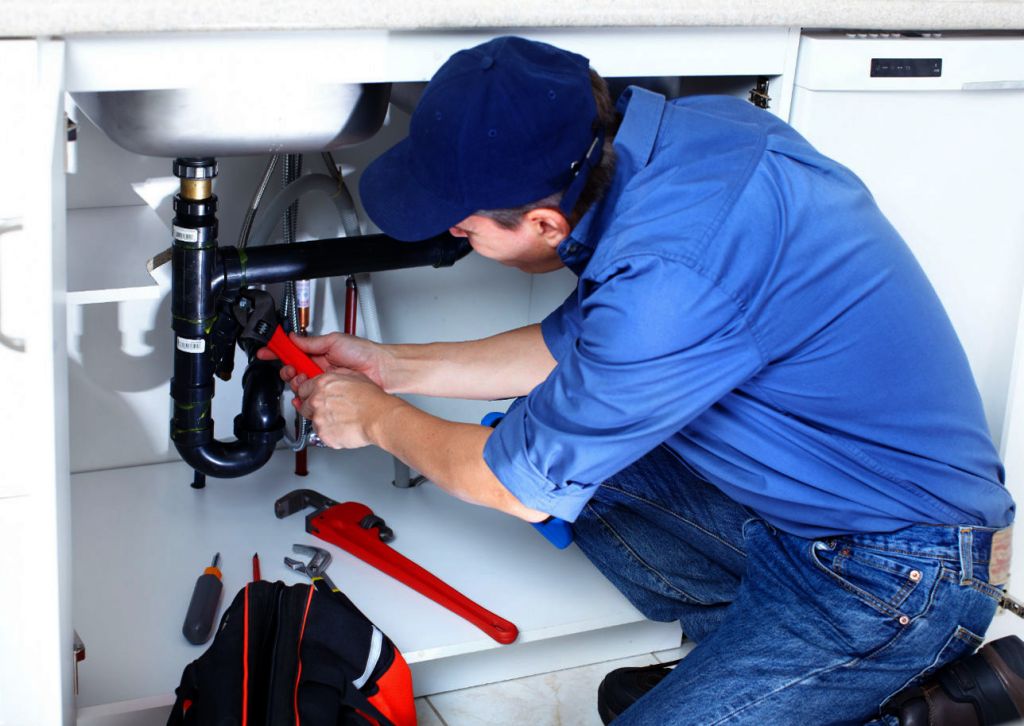
After purchasing a dishwasher, there's only one step left to the delight of clean dishes: connecting it to the drain, water, and power supply. Many people, without a second thought, call a professional, completely trusting them with this work. Others, on the other hand, decide to save money and begin researching the process to connect the appliance themselves. And that's a good idea: by learning the ins and outs, you'll be able to accurately determine how difficult or simple the process is. If you have the time and inclination, this article is for you; we'll explain in detail how to connect a dishwasher yourself.
Procedure for performing work
Let's start by deciding where to begin connecting the dishwasher. Is it better to connect the drain or the water first? This question arises because some instructions suggest installing built-in appliances first, then connecting them to the drain. But imagine the hassle of accessing the back of the dishwasher once it's already installed. Therefore, the only correct sequence can be:
- connecting the machine to the drain;
- connection to water;
- connection to the electrical network;
- trial testing;
- installation in a niche or in a designated place.
All these stages are preceded by minor preparatory work to unpack the machine and prepare the necessary tools and components.
Important! After the machine has been delivered to the installation location, allow it to sit for a while; do not immediately plug it in.
Necessary tools and possible difficulties
To properly connect the dishwasher, in addition to a screwdriver and pliers, you may need a drill, a level, and also:
- clamps;
- siphon with an additional branch;
- a brass or bronze tee tap, but not silumin;
- spanner;
- nippers;
- grounded socket.
It's also worth noting that installing dishwashers of different brands may present some challenges. For example, a short inlet or drain hose or a short electrical cord may cause problems. In these cases, you'll have to purchase additional components separately. The included gaskets are often inappropriate, so many professionals use FUMKA to insulate the threaded connections. Here are some other dishwasher connection considerations:
- With Bosch, it's important to position the sealing gasket correctly, strictly according to the instructions. If it's upside down, a leak will occur after 2-3 washes. Bosch has a very sensitive water inlet valve, so you need to ensure the flow-through filter is connected immediately during installation.
- As for the well-known Siemens dishwashers, they are among the most unpretentious when it comes to connection, but they are demanding in terms of niche size and fastenings.
- Electrolux dishwashers are sensitive to tilt. The tilt should not exceed 2 degrees, so a level may be required when leveling the dishwasher on the floor.
Connecting the drain and water
To connect to the sewer system, you'll have to replace the regular siphon with one that has a nipple. If you're connecting a dishwasher and a washing machine, there should be two nipples. When installing a compact dishwasher under the sink, a special siphon will be required., we wrote about this in the article Compact under-sink dishwashers.
Once the trap is reinstalled, you can connect the dishwasher's drain hose. To do this, place the end of the dishwasher's drain hose over the spout of the trap and tighten it with a clamp. This will ensure a secure connection.
When connecting the dishwasher to the drain, you must remember:
- create a V-shaped bend at the junction of the hose and the fitting, which will ensure the most natural drainage of water from the machine, and at the same time, the water will not flow back;
- There should be an elbow at the bottom to prevent odors from forming in the dishwasher. The dishwasher wiring diagram clearly shows the location of the drain hose, including the bend and elbow.
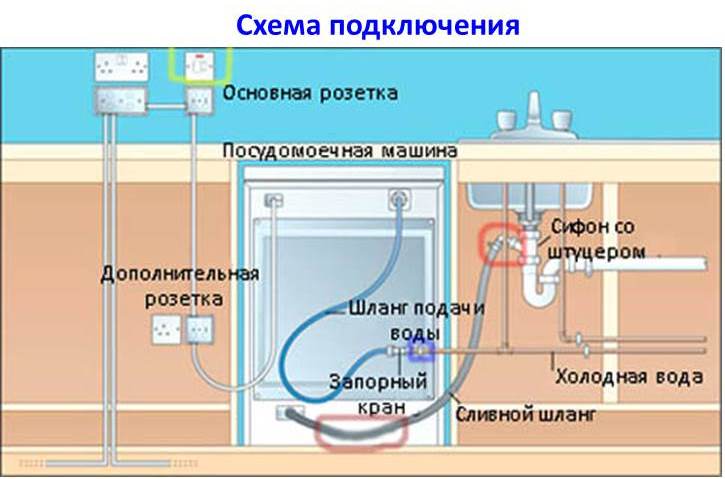
Please note! If possible, avoid extending the drain hose, as this will put unnecessary strain on the pump and cause it to fail quickly.
Some people, instead of connecting the drain hose to the trap, run the hose over the sink. This is one thing if you have a compact countertop dishwasher. Even then, we wouldn't recommend this method. However, if the dishwasher is floor-standing, you'll have to pump the water up high, which will quickly damage the pump. Furthermore, this method is unsafe; the hose could slip off the sink, causing a flood in the kitchen.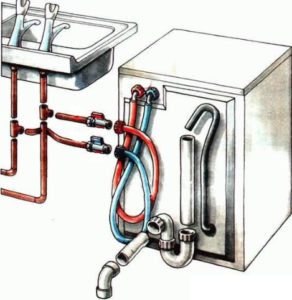
The best option is to connect the water supply to the dishwasher through a faucet. To do this:
- turn off the water going to the mixer;
- disconnect the cold water hose from the mixer, removing the old insulation;
- connect the tee with a tap to the cold water pipe;
- Connect the mixer hose to one outlet of the tee, and the coarse filter to the other; connect the dishwasher inlet hose directly to the filter, while insulating all connections with fumka.
The inlet hose must be screwed on by hand quite tightly; in this case, no wrenches are required.
Important! It is recommended to connect to cold water, as it is cleaner than hot water. However, some dishwashers can be connected to both hot and cold water.
Connection to the electrical network
The dishwasher must be connected to the mains only through a separate grounded socket. Triple adapters and extension cords are not allowed, and it is also prohibited to connect a refrigerator and a stove to the same outlet at the same time as a dishwasher. Therefore, you should consider installing a car outlet during the electrical installation phase. Otherwise, it's best to call a professional to run the wires from the electrical panel and install a grounded outlet.
Trial testing
The final step in connecting the dishwasher should be testing it. To do this, you can run a test wash without dishes, using salt and detergent. This allows you to check whether the plumbing has been installed correctly. Pay particular attention to how the water is being drawn in and whether there are any leaks at the connections. If all goes well, We install the dishwasher in the designated place or push it into a niche.
The dishwasher connection process is now complete. We hope you understand how to connect a dishwasher yourself. In addition to this article, we recommend watching a video on connecting a dishwasher.
Interesting:


2 reader comments
Add a comment
Headings
Washing machine repair




For buyers




For users


Dishwasher




If the overflow valve is not included?
The author is clearly incompetent, "connection through a mixer"!? But the description is before the mixer.
The height of the glorious hose is not specified - only "badly in the sink".
Providing a dedicated outlet from the electrical panel is nonsense; in modern apartments, all outlets are pluggable. A dishwasher's power output is lower than that of a kettle or iron.
However, there is no indication that the socket requires a grounding contact, which is important both for electrical safety and for protecting the control unit. If your control unit fails, it is 90% due to a lack of grounding or poor grounding.