
How to connect a dishwasher to a siphon?
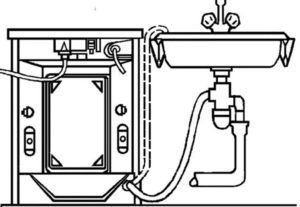 After purchasing a dishwasher, users are faced with the question of how to quickly and easily connect it to a siphon, while saving money. To avoid investing in additional plumbing, connecting the dishwasher to a siphon is the optimal option. This is what we'll discuss in this article.
Will a regular siphon work?
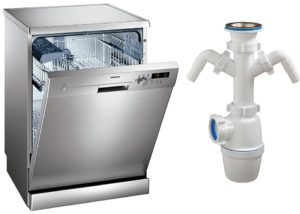
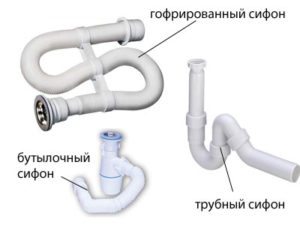
A standard siphon, which is most often installed on a sink, will not work. It will definitely have to be replaced with a siphon with a nipple, or maybe even with two. The connection diagram for a dishwasher to a siphon with a similar design is very simple, which is what attracts many owners to do this work themselves.
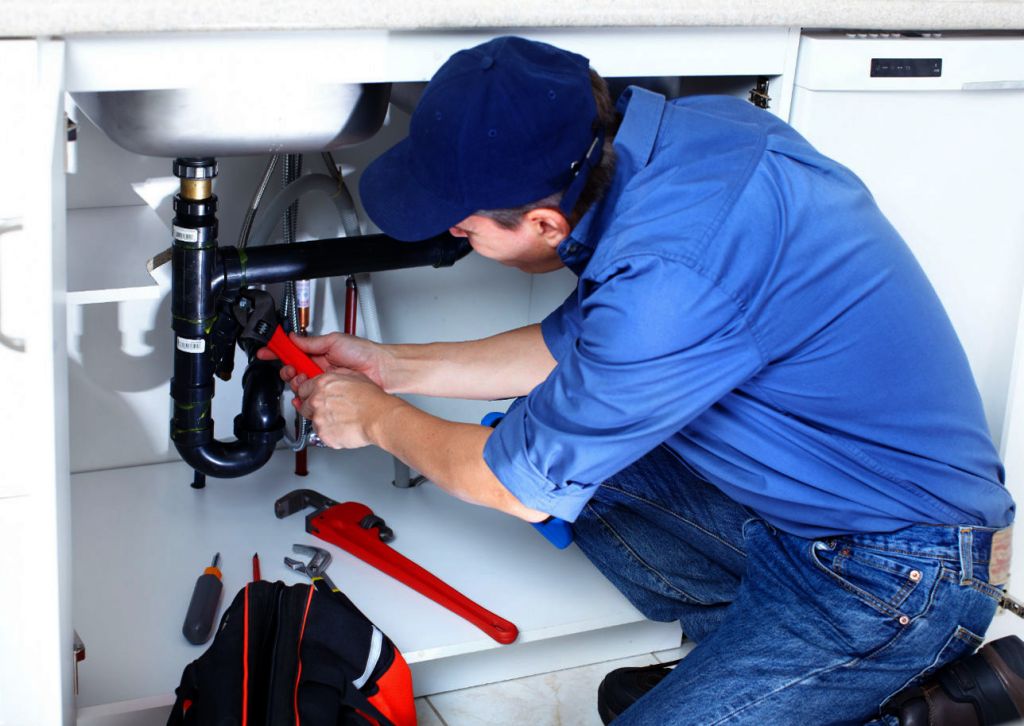
Rebuilding a sewer drain is also easy; all you need is a pipe with an additional outlet and a rubber seal. No special tools are required; the work is done by hand. Be careful when inserting the seal, as it will prevent waste from leaking out of the pipe and onto the floor.
Remember! Connecting dishwashers and washing machines directly to the sewer system can cause a foul odor over time, so it's best to install a non-return valve in this type of connection.
The problem is that bending the hose at a certain height only prevents backflow. If you use the dishwasher frequently, the water will flush out accumulated waste. Otherwise, when the hose dries out, you'll immediately notice unpleasant odors. This problem is sometimes encountered by summer residents who go home for a week or two.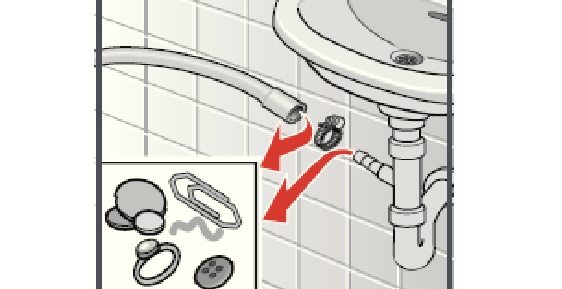
Thus, connecting the dishwasher's drain hose to the siphon is possible. Simply attach the end of the dishwasher's drain hose to the side fitting of the siphon, then secure it with a clamp, and the drain is ready. The hose bend will be ensured by the fitting being located quite high from the floor.
We provide water supply to the PMM
To connect the water to the dishwasher, it's best to purchase a three-quarter-inch tee valve, which will be used for the water inlet. It's installed in place of the standard connector on the faucet. Screw the tee valve between the cold water supply pipe and the hose going to the faucet, using linen or other thread-locking material.
Important! Don't forget to turn off the cold water supply before starting work.
Next, screw the dishwasher's inlet hose to the outlet of the tee, being careful not to apply excessive force, as the nut on the hose is usually plastic. When you first turn on the dishwasher, be sure to check for any water leaks. The problem may not appear immediately, but may take 10-15 minutes, so you'll need to keep an eye on it.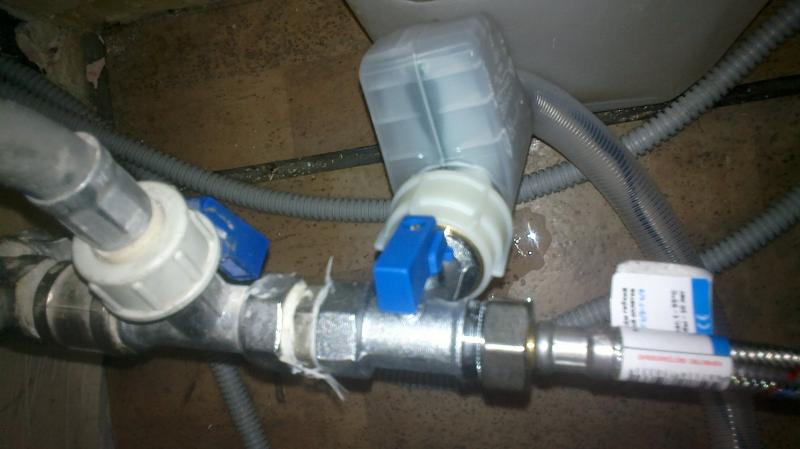
Basic requirements for connecting a dishwasher
When connecting your "home assistant" yourself, remember to follow certain requirements. This applies not only to safety precautions but also to operating instructions that will make your dishwasher convenient to use.
First of all, the dishwasher must be connected to a 220V power supply via a circuit breaker in the electrical panel. In fact, any water heating appliances, whether a boiler or a washing machine, must be connected via circuit breakers. There are two options here:
- via a differential circuit breaker;
- via a residual current device (RCD) in conjunction with the circuit breaker.
But forget about traffic jams and automatic machines! Your safety and the safety of your living space depend on this in the event of a wiring breakdown. It's not worth the risk.
As for installing an outlet directly under the sink, avoid such locations. While it may seem more convenient for plugging in the power cord, a clogged drain that causes a leak can cause a short circuit and, worst of all, a fire. Running the dishwasher through an extension cord behind the appliance is also not recommended. If this is unavoidable, route the cord away from hoses, keeping the electrical cord as far away as possible from potential water leaks.
When installing the dishwasher, leave at least 5 cm between it and the wall. This will prevent the drain and water supply hoses from becoming pinched and ensure proper water circulation. Otherwise, an error message may appear on the dishwasher's display.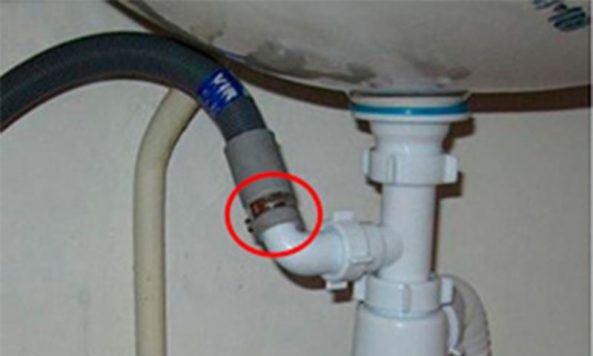
The next requirement for connecting a dishwasher is a level surface. Uneven floors are one of the causes of water leaks. For example, Electrolux dishwasher manufacturers allow a tolerance of only 2 degrees. You can check the installation of your dishwasher using a spirit level and adjust the feet if necessary. You can tighten the feet to the maximum, as long as they remain level.
Another question that arises when connecting the dishwasher to the water supply is hot water. The answer to this question should be found in your dishwasher's manual. Not many dishwashers can be connected to hot water, so if this operating instruction is not followed, the appliance may fail long before the warranty period.
Important! Even when connected to a hot water supply, the maximum water temperature should be less than 60 degrees Celsius. This is not always the case.
Experts recommend cold water not only because of the water temperature, but also because of dirt, which is more common in hot water than in cold water. If hot water is supplied by a private gas boiler, then such a connection is economically feasible. Otherwise, you won’t be able to save on electricity.
When connecting and installing the dishwasher, the inlet hose may be insufficient. The standard length of this hose is no more than 1.5 meters, so it may need to be extended. This is done by extending the existing hose, purchasing the required length. This is because the existing hose may have a leak protection feature, meaning hidden wires leading to a valve that shuts off the water in the event of a leak. Therefore, without cutting the existing hose, simply extend it to the required length.
Interesting:
Readers' comments
Headings
Washing machine repair




For buyers




For users


Dishwasher




Add a comment