
How to connect a top-loading washing machine?
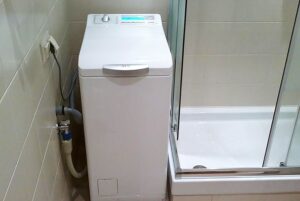 After purchasing a new washing machine, people wonder whether they can save money by connecting it themselves, or whether they'll have to call a technician. The truth is, anyone can install it; you just need to follow the instructions and observe safety precautions. Let's explore the nuances of the upcoming procedure.
Where to place the equipment?
Connecting a top-loading washing machine begins with determining the location for the machine. It's crucial to think through this step. The appliance is connected to pipes, so changing its location in the future will be difficult.
It is desirable that communications be located in close proximity to the installation site of the automatic machine.
The most suitable location for a top-loading washing machine is a bathroom or toilet. Many users also place washing machines in the kitchen, but with a top-loading machine, it's important to understand that hiding it under the countertop isn't possible. In these rooms, the appliance can be easily connected to the sewer, water, and electricity lines.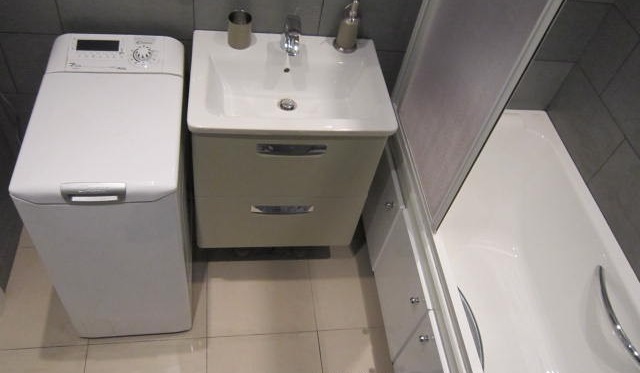
If desired, the washing machine can be placed in a hallway or a storage room. However, the connection will be complicated by the distance to the utility lines. The drain and inlet hoses will need to be extended.
Another important point: the flooring under the automatic washing machine must be level and durable. This will ensure greater stability. It's best to install your "home helper" on tile or concrete. Laminate is not recommended, as it can bulge at the first leak.
We organize power supply
If you decide to connect your washing machine yourself, it is important to familiarize yourself with electrical safety regulations. Most automatic machines are characterized by high energy consumption – about 1.5-2.5 kW. In addition, the device comes into contact with water during each wash.
Therefore, when connecting an automatic machine to the power supply, it is important to follow several basic rules.
- A separate power supply must be provided. To achieve this, a separate line will need to be installed from the electrical panel to the machine. When installing the wires after the renovation, they can be hidden in special plastic boxes. This will help preserve the appearance of the room.
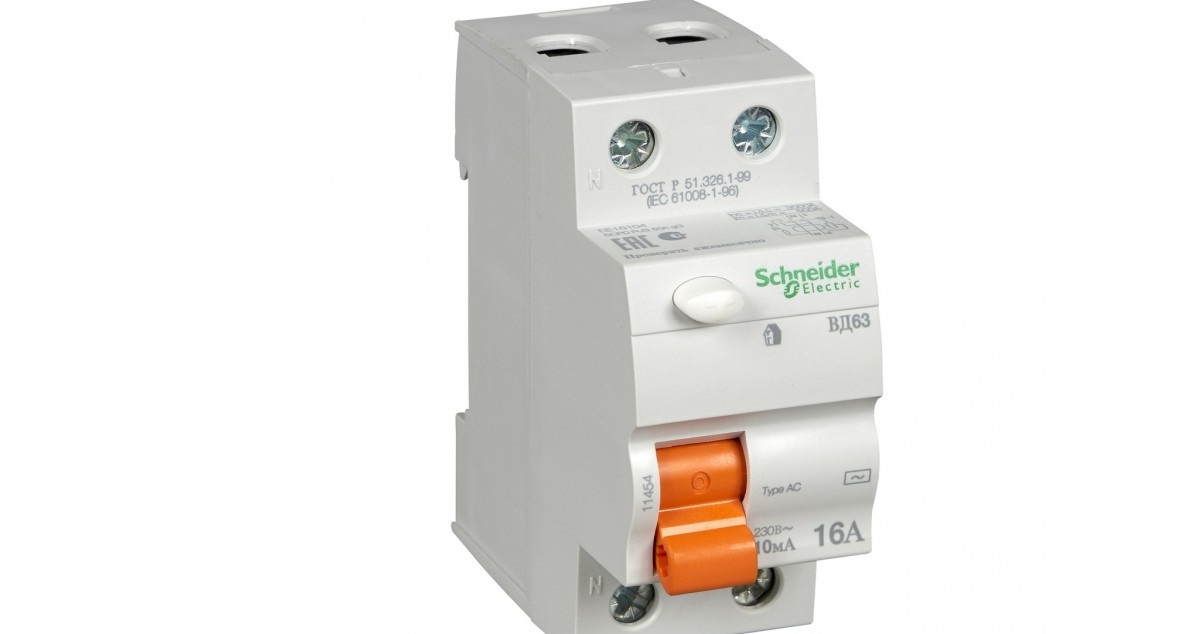
- Be sure to add a residual-current device (RCD) to the circuit. It will protect the device from power surges and provide an immediate response to any electrical leaks. The sensor is installed in the distribution panel.
- It's important to use wiring diagrams that are suitable for automatic washing machines in all respects. For example, it's recommended to use three-core wires with a cross-section of 1.5 square mm.
- It's important to connect the outlet according to the wiring diagram. A grounding wire must be present and connected to the appropriate busbar in the distribution panel.
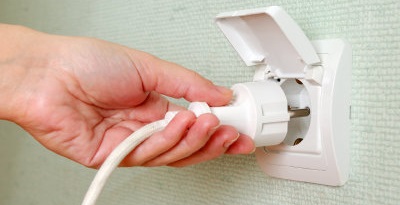
Another important consideration is the choice of outlet. It's recommended to use moisture-resistant models with spring-loaded contacts. These devices have a protective cover that prevents water from getting inside.
It is prohibited to connect the washing machine to the network through an extension cord - this is unsafe.
We provide water supply to the machine
Before you begin installing the machine yourself, make sure that this does not void the warranty. Many manufacturers require that a washing machine be connected by a certified technician; otherwise, if the appliance breaks down, the owner will not be able to count on free repairs. After weighing all the pros and cons, make a decision.
To begin, the user should understand the basic rules that must be followed. It is imperative that:
- The water supply pressure was at least 1 atmosphere. If the pressure was lower, an additional pump would need to be installed;
- The water was of adequate quality. In Europe, tap water purity standards differ significantly from those in Russia, so it's best to install an additional filter before washing machines from foreign manufacturers (Bosch, Samsung, Electrolux, Miele, Ardo).
If a washing machine was already installed in the chosen location, connecting the new vertical unit will be straightforward. All outlets are already arranged, meaning all you need to do is run the appliance's hoses to them and secure the connections. Things will be more challenging if the machine is being installed for the first time.
To connect the washing machine to the water supply, you can use a compression coupling or fitting.
The coupling is primarily used for older cast iron pipes. It allows for the installation of a shut-off valve, which regulates the water flow to the appliance. The included flexible tube connects one end to the faucet and the other to the washing machine's inlet hose.
The fitting is used for metal-plastic pipes. The tee is installed in the pipe, and the inlet hose of the automatic washing machine is connected to its outlet through a shut-off valve. Before connecting, it is important to remember to shut off the cold water supply to the apartment.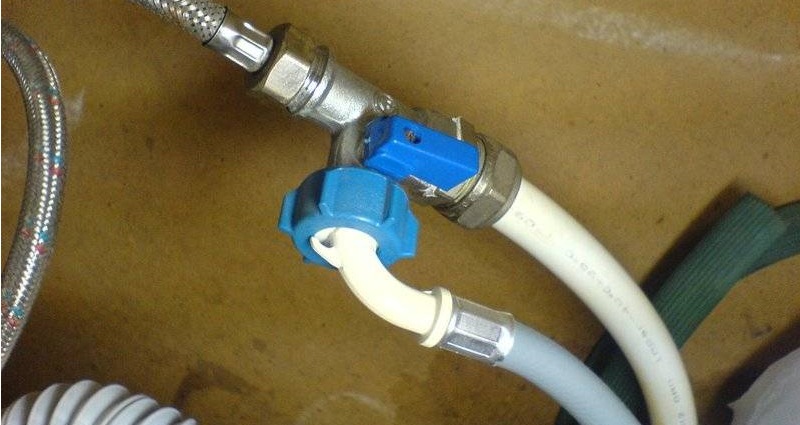
There are top-loading washing machines that require a hot water connection. In this case, you can use any of the methods described above. Use either a compression fitting or a special tee.
Sometimes the size of the hose included with the washing machine is not sufficient for connecting to the pipe – it turns out to be too short. It is not recommended to extend the inlet hose; it is better to purchase a new one of the appropriate length. They are sold in specialized stores.
Residents living in homes without a water supply can also use a self-service water dispenser. In this case, the connection is handled in a special way. For this purpose, the following is used:
- plastic water barrel;
- pump;
- hoses;
- shut-off valve and other accessories.
In this case, you can simply place the tank 3 meters above the machine to create the necessary pressure. A tap is installed in the tank, and the inlet hose of the automatic washing machine is connected to it.
A more expensive connection option is using a pumping station. This method can be made cheaper by using a motor and pump from an old washing machine. This method has long been used by DIYers at summer cottages. You can find information on how to set up the process online.
Discharge of sewage
Ensuring uninterrupted drainage is another important consideration when installing a new washing machine. There are several ways to ensure proper drainage. Let's look at each option.
- Direct the machine's drain hose into a bathtub, sink, or toilet. This is the simplest and cheapest method, requiring minimal time and effort. Many washing machines come with a special hose hook with fittings. If you choose this option, keep in mind that the end of the hose should be at least 40-60 cm above the bottom of the machine. While this can be done in just 3 minutes, it's unsightly, so it's best to use this as a temporary solution.
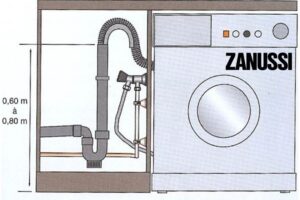
- Connect the washing machine to a trap. This is the most popular and successful method. The drain hose of the automatic washing machine is connected to the side outlet of the trap located under the bathtub and secured with a clamp. The corrugated pipe will be hidden from view, so the appearance of the room will not be affected.
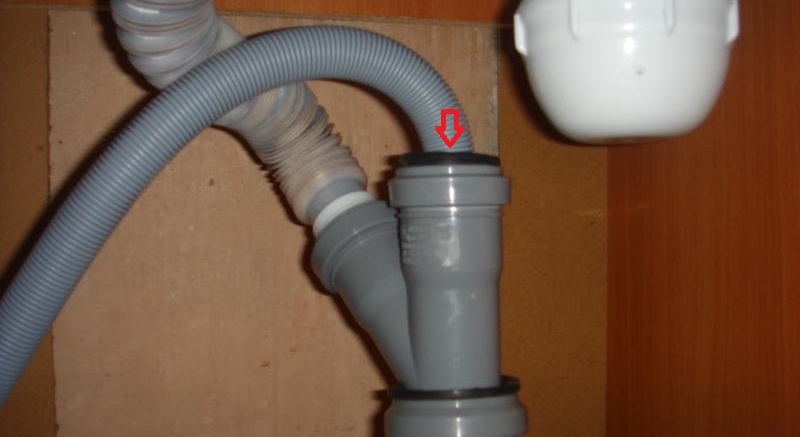
- Connect directly to the sewer pipe. This requires a vertical pipe 60-90 cm high and at least 5 mm in diameter. To ensure a watertight seal, install a rubber seal at the junction of the drain hose and the pipe. The connection is made using a special tool.
It is very important to observe the connection height - the drain hose should be located at a height of 60-70 cm from the point of outlet into the sewer.
Exceeding the recommended values will increase the load on the pump. The same effect can be achieved by connecting an excessively long drain hose to the machine. Therefore, it is recommended to place the washing machine no more than two meters from the drain pipe.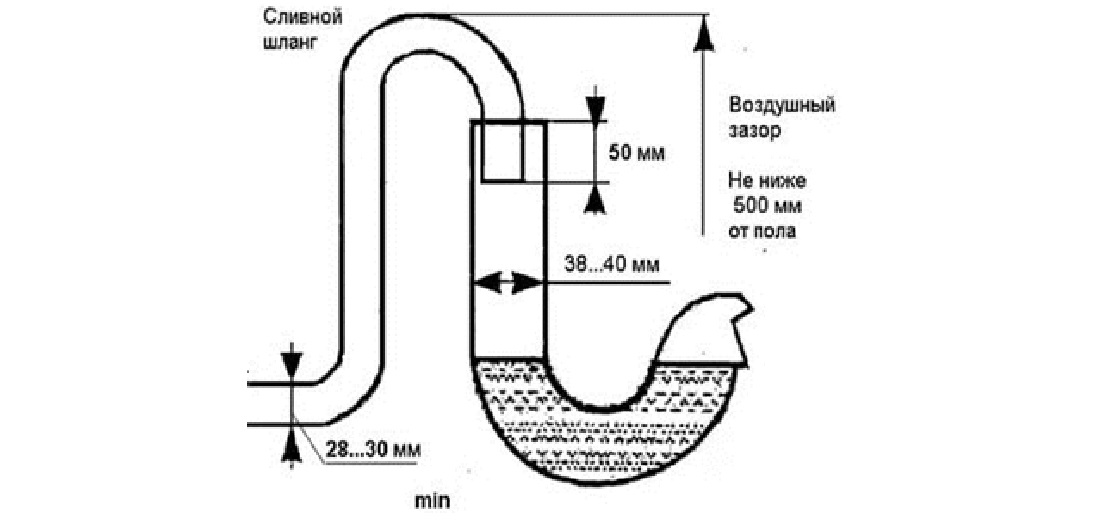
The best option is to connect the washing machine to a siphon. It's best to purchase and install a special device with a check valve. This will prevent unpleasant odors from entering the machine from the sewer. Directing the hose into the bathtub is the simplest option, but it's important to understand that you'll have to clean the plumbing after each use. Therefore, it's better to spend half an hour connecting the corrugated hose to the siphon than to spend five minutes a day cleaning the hot tub.
Interesting:
Readers' comments
Headings
Washing machine repair




For buyers




For users


Dishwasher




Add a comment