
How to connect a dryer?
 More and more people are choosing freestanding dryers over combined dryer-washer units. Unlike combination units, they dry all your laundry much more efficiently and quickly. However, connecting a dryer to your clothes is a bit more complex. To avoid this obstacle, having detailed instructions is a must. We'll provide those below.
Installation depends on the type of dryer
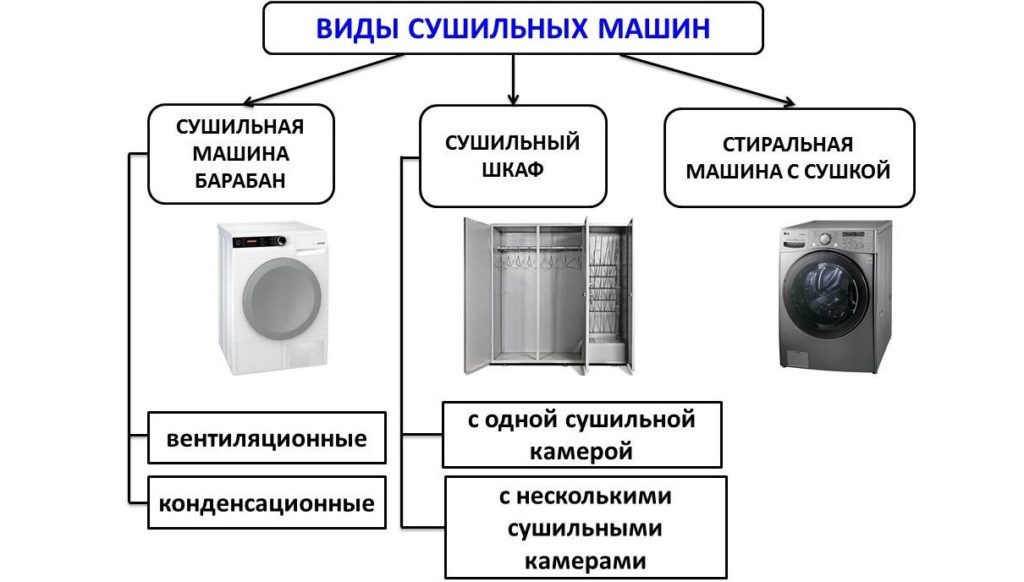
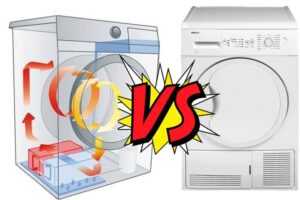
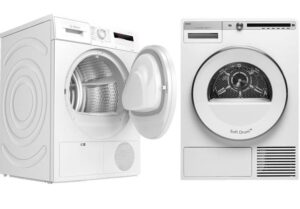
The installation process for a new dryer depends on the room and the type of dryer. First of all, it is important to decide on the type of dryer, which can be exhaust, condensation, or heat pump. The operating principles of the machines vary, which affects the nuances of their connection.
- Exhaust hoods work by removing air containing moisture into the ventilation system, so the machine must be connected to the home's ventilation system.
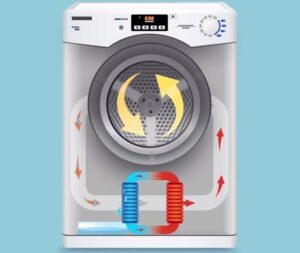
- Condenser machines direct heated air into a drum containing damp laundry, where it "collects" moisture from the fabric. The air then flows into a dedicated heat exchanger to release vapor, and the "discharged" moisture settles in a designated container. This container must be emptied, so a connection to a sewer system is required for convenience.
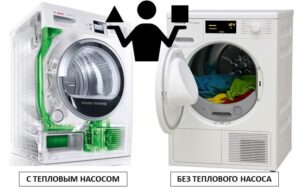
- Thermal drying units are similar to condensing models, except that the moist air passes through an evaporator rather than a heat exchanger.
The installation process of the dryer is determined by the type of unit.
Exhaust models are the most challenging to operate, as they require connection to a duct. Not all city apartments and private homes allow for easy connection to a centralized ventilation system. However, the production of such units is declining, as manufacturers are actively replacing them with condensing and heat pump units. We'll cover their installation in this article.
Connection procedure
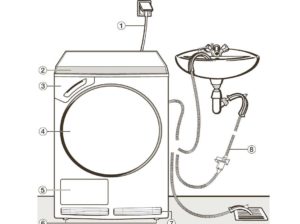
Condenser dryers and heat pump machines are installed in the same way. In fact, their installation is virtually identical to that of washing machines. The only difference is that more careful consideration must be given to the plumbing and electrical connections.
If your dryer is not connected to a drain, you will need to empty the condensate tray after each cycle.
A sewer connection is optional—you can drain the water from the container with the separated moisture yourself. However, it's much more convenient and simpler to set up automatic condensate drainage directly into the drain pipe. This is easy to do: every model has a special opening for a hose. The water is discharged into a common drain or into a sink, bathtub, or toilet.
Next we supply electricity. To ensure the supply of electricity, it is necessary to run a separate line from the distribution board or use a ready-made socket.The second option is faster and more convenient, as there's often a free outlet available for connection to the power grid. It's also safer—if the dryer's power doesn't exceed 2.5 kW, the wiring isn't at risk. Just remember that the line must be grounded, equipped with a residual-current device (RCD), and a separate circuit breaker. A 16-amp RCD and a 14-16-amp circuit breaker are sufficient.
Connecting a dryer and washing machine to a single dual outlet is strictly prohibited. Remember, this will result in increased power consumption and overloading the outlet. This could lead to excessive heating, melting, and short-circuiting.
Where to put the dryer?
The connection issue is directly related to the machine's placement in the room. The installation details depend on its location and position. Therefore, first, we choose one of four options: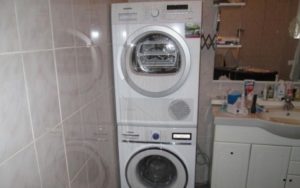
- on top of the washing machine;
- next to the washing machine;
- in a special niche or closet;
- under the sink or countertop.
Most dryer owners prefer the so-called "stack" dryer, which is installed directly on top of the washing machine. This significantly saves space, which is a desirable feature for those living in small apartments and houses. However, simply stacking one dryer on top of the other is not an option—you must follow the manufacturer's instructions.
- Check that the washing machine's depth is greater than or equal to the dryer's depth. If there's a discrepancy, the lower tier won't support the load.
- Install special anti-tip locks and caps on the washing machine body. These are included with the dryer if stackable.
- Unscrew the legs of the dryer and secure it in the caps.
- Adjust the position of the machine using a building level.
Mounting the dryer in a column without secure fixation is strictly prohibited!
Another option is to use wall-mounted structures in the form of special rails. These fasteners are more reliable, but are rare, as anti-tip fasteners are much more aesthetically pleasing.
The provided locking devices must not be ignored. They not only protect the washing machine from outgoing vibrations but also enhance the stability of the upper tier, preventing the appliance from tipping over.
If you don't want to mess with the fasteners, consider placing the dryer next to the washing machine. This method is safer and simpler, but it requires more space. It's suitable if you have a large area or can place the dryer in a separate room, closet, dressing room, or spacious hallway. Installation in this case is limited to moving the dryer, removing the shipping bolts, and leveling it with a spirit level. It's best to purchase appliances in pairs to ensure a unified style and matching dimensions in the bathroom or kitchen.
Installing a dryer in a drywall niche requires a special corner or cabinet. It's best to consider this in advance, during the renovation process. If possible, you can build a two-story structure yourself to accommodate both the dryer and the washing machine.
It's even easier to locate a dryer under a sink or kitchen countertop. Just make sure you choose the right model, ensuring it has a removable lid for built-in installation and the appropriate dimensions for the cabinets. A condensation dryer is especially well-suited for the kitchen, as easy access to the drain makes connecting it to the drain easy.
There's no reason to be intimidated by installing a dryer—the connection procedure is largely identical to that for washing machines. The main thing is to consider safety and follow the manufacturer's instructions.
Interesting:
Readers' comments
Headings
Washing machine repair




For buyers




For users


Dishwasher




Add a comment