
Connecting a washing machine without a power filter
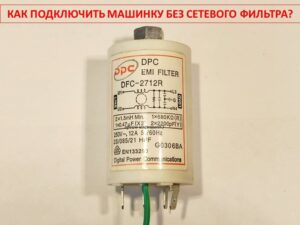 Large household appliances are sensitive to sudden fluctuations in power supply voltage, so even a small surge can damage the washing machine's control module or its motor. To prevent a sudden voltage fluctuation from burning out microelements in your "home helper," it's best to use a surge protector.
It effectively suppresses pulsed and high-frequency electrical interference, reliably protecting the expensive appliance. However, some users still try to connect their washing machine without a surge protector, which the manufacturer recommends against. Let's take a closer look at this useful component, how it works, and whether it's possible to use the washing machine without one.
Is it possible to bypass the interference filter?
Unless you have extensive experience working with electronics, you won't be able to bypass the interference filter. This is due to the fact that the washing machine's control module monitors the presence or absence of a filter. If it's in place and working properly, the control board won't interfere with the system's operation and will initiate all the necessary washing processes. However, if the filter is damaged or simply missing, the cycle will be impossible, and the machine won't even start.
The surge protector protects equipment by suppressing all frequencies other than 50 Hz, preventing interference from damaging the system's delicate electronics. If this "protector" detects a critical voltage, it will immediately shut down the appliance, terminating its current program. If the detected fault is brief and minor, it will only drain the capacitors' charge; however, if the voltage surge is extreme, the surge protector will burn out.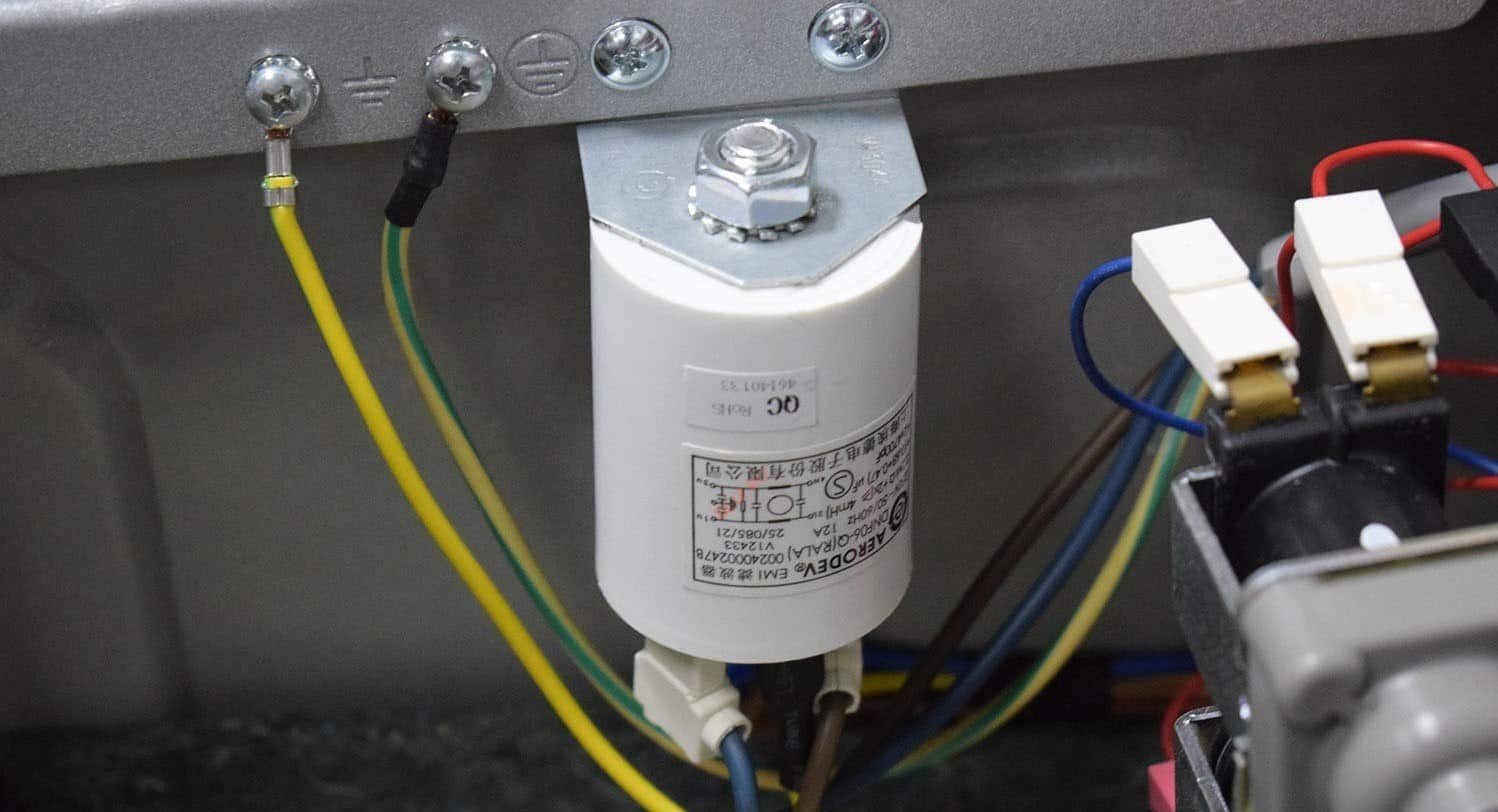
That's why it's best not to even attempt to operate a washing machine without a working filter. In this case, even a slight change in voltage can cause critical damage to the control module, electric motor, and other key components. For example, if interference occurs, the asynchronous motor will stop rotating, while current continues to flow to the winding, causing the motor to burn out. Replacing the motor will cost much more than replacing the surge protector.
The interference filter records even the slightest voltage surges, preventing the machine from current leakage.
Connecting a surge protector is also necessary for external protection. Any mode switching, as well as the activation and shutdown of the motor, causes a change in the DC current in the network, posing a threat to other electrical devices connected to the line. However, if a surge protector is installed, it controls the changes in DC current in the network, redirecting any excess to ground. This important part of the system can last for many years, as it rarely fails. What can actually damage a surge protector?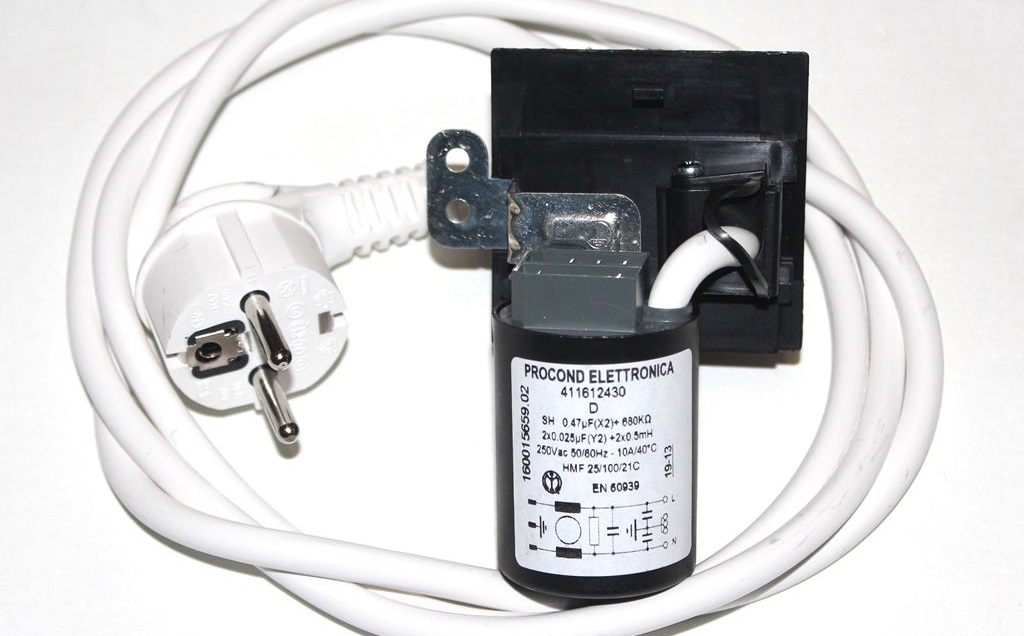
- Reduction of capacitor capacity.
- Damage caused by an extremely strong power surge.
- Burnout due to a spontaneous power outage, for example, if the owner of the equipment suddenly pulled the power cord.
Repairing a surge protector is possible, but it's a job for an experienced electrician, so it's rarely possible for the average user to handle it. If you suspect your surge protector is faulty, it's best not to attempt repairs. It's much easier to replace it yourself after testing it with a standard multimeter.
Checking the noise suppression filter
Since new washing machines have excellent protection, including against user intervention, these devices often won't even start if they detect the absence of a working surge protector. If there is no connection to it due to the element burning out, the control module will immediately turn off the device, ceasing to respond to any actions of the housewife. Because of this, the "home assistant" will not work until a new interference filter is installed.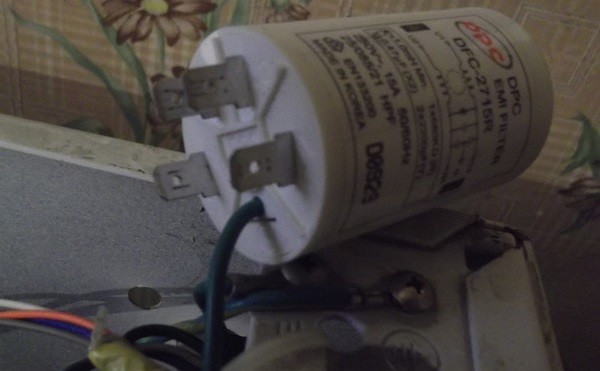
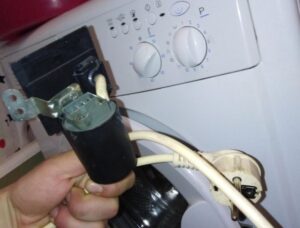
Most often, equipment fails to turn on due to a faulty power strip. That's why, immediately after testing the power cord and plug, it's important to carefully examine the capacitor. The following may indicate a faulty capacitor to the user:
- the body of the automatic washing machine started to get an electric shock;
- an unpleasant smell of burning and melted wiring appeared;
- The washing machine washes with constant interruptions, for example, it stops during operation, or changes the washing programs itself.
At the first suspicion that the interference filter is faulty, you should immediately begin a detailed diagnostic of the component. For this, you'll need a multimeter and a regular screwdriver. What to do next?
- First, disconnect the household appliances from the power supply and water supply.
- Remove the top cover of the case by first loosening the bolts on the back panel.
- Locate the area in the case where the power cord is connected.
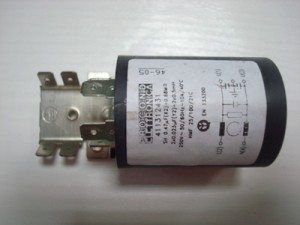
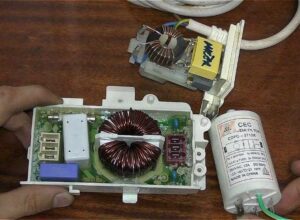
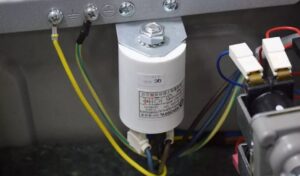
- Look for a power strip on the cord, usually shaped like a bulb.
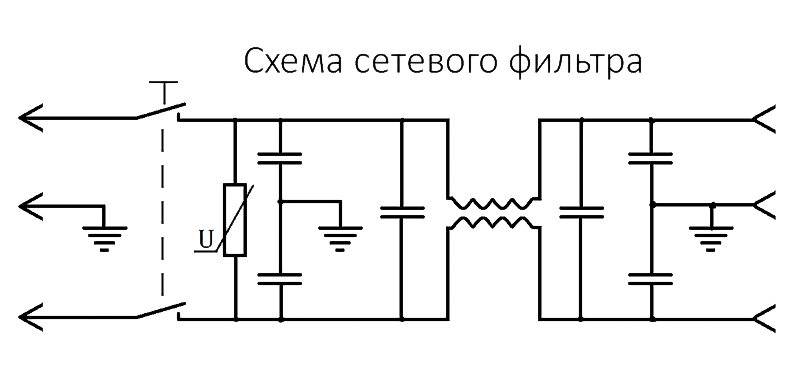
After this, you'll need to test the component with a tester. Set it to resistance measurement mode, attach the probes to the contacts, and observe the readings – the standard should be 680 kOhm. Next, measure the input resistance on the plug; the standard should be within the same 680 kOhm range. If there are significant deviations, such as extremely high readings or readings close to zero, the component is burned out and requires immediate replacement.
In addition to the interference filter, you should also test the capacitors. This is much more difficult to do, as they contain a compound that interferes with accurate measurements, but you can still try to diagnose the problem. Apply the tester's probes to the various inputs and evaluate the resulting values, which are typically around 0.47 µF. If the readings differ, the component needs to be replaced.
Be sure to take some photos of the correct wiring connections to use as a reference during reassembly.
Even a novice can handle this repair, so there's no need to call a service center specialist. All you need to do is disconnect the damaged interference filter and then install the working part in its place.
Interesting:
Readers' comments
Headings
Washing machine repair




For buyers




For users


Dishwasher




Add a comment