
How to connect a washing machine to a water tank?
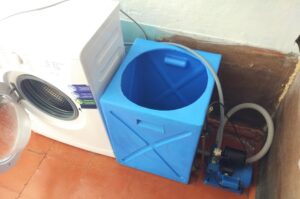 Many people mistakenly believe that in a private home that isn't connected to the central utilities, it's best to forget about an automatic washing machine. This isn't true. With some ingenuity and a little effort, you can create an independent water supply, thereby ensuring water flow to the washing machine. You can also figure out how to organize drainage. We'll explain the specifics of connecting the equipment in this case.
What is the main problem?
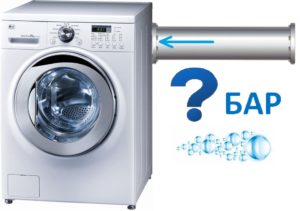
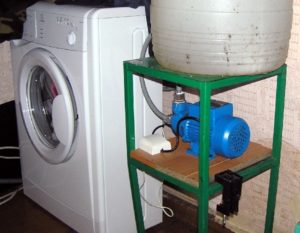
Connecting a washing machine to a water tank is easy. The biggest challenge is creating the right water flow pressure, otherwise the inlet valve won't work. Therefore, a pump is essential in the circuit.
The machine will not take water from the barrel if you simply place the container next to it and drop the inlet hose into it. To ensure the required pressure, it is necessary to either raise the tank to a height of 3-4 meters relative to the washing machine, or install an electric pump. Of course, the second option is more convenient and preferable.
A pump that provides water supply can be purchased in specialized stores.
Pumping stations come in a wide range. They are compact, multifunctional, and operate virtually silently. For example, a single pump can be connected to fill a reservoir from a well and then supply water to a washing machine.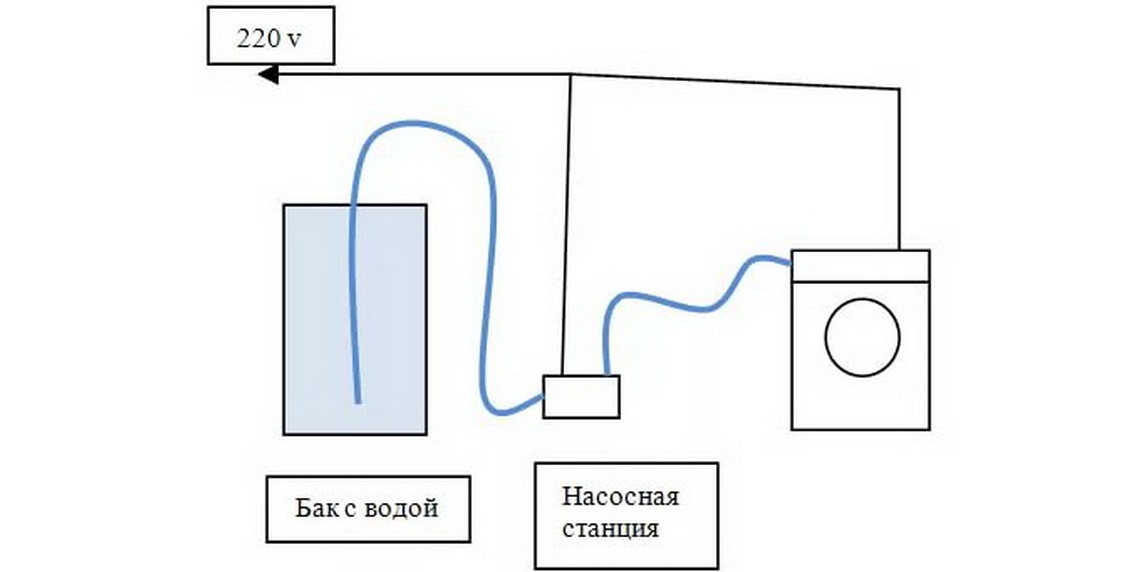
What is required for installation?
This connection method can be used for both permanent use of a washing machine in a private home and in a summer cottage. To set up an independent water supply, you will need the following tools:
- construction tape measure;
- screwdriver with indicator;
- small adjustable wrench;
- level;
- pliers;
- tape for sealing joints;
- a knife with a sharp blade.
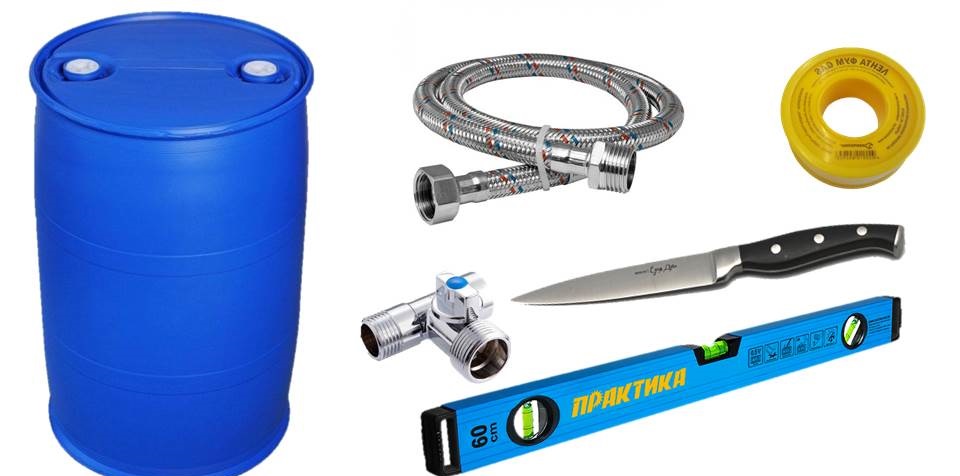
All the necessary equipment can be found in any home. The necessary materials and tools are another matter. You'll likely have to spend some money on them. You'll need to buy:
- a barrel of sufficient volume (preferably with a hinged lid);
- tee tap;
- sealing rubber bands and clamps;
- water hose;
- water supply station;
- flow filter (if necessary);
- wooden blocks or metal profiles (necessary for making the supply under the tank).
That's all that's required in the process. The biggest expense will be purchasing the pump and barrel, but it can be done for $40–$60. This is not such a significant amount that you should limit yourself in using an automatic washing machine.
Description of the connection process
Will an automatic washing machine connected to a water tank work? Of course, if everything is set up correctly. This method has been used in summer cottages for a long time, so there's nothing stopping you from using it in a private home.
Of course, you can continue to suffer through the hassle of filling your washing machine with water from a bucket for both the main wash and the rinse cycle. However, this constant monitoring of the washing machine's progress will soon become tiresome. Therefore, it's better to spend a few hundred dollars and a couple of hours of free time to save yourself the effort later. The procedure is as follows:
- install the automatic machine strictly according to the level (the floor underneath it must be level and strong);
- make a stand (50-60 cm in height) for the barrel from metal profiles or timber;
- Place the container near the washing machine on the previously prepared “pedestal”;
- Use a knife to cut a hole in the tank wall for the thread of the tee tap;
- insert a rubber seal into the hole and push in the tap (the valve should fit tightly);
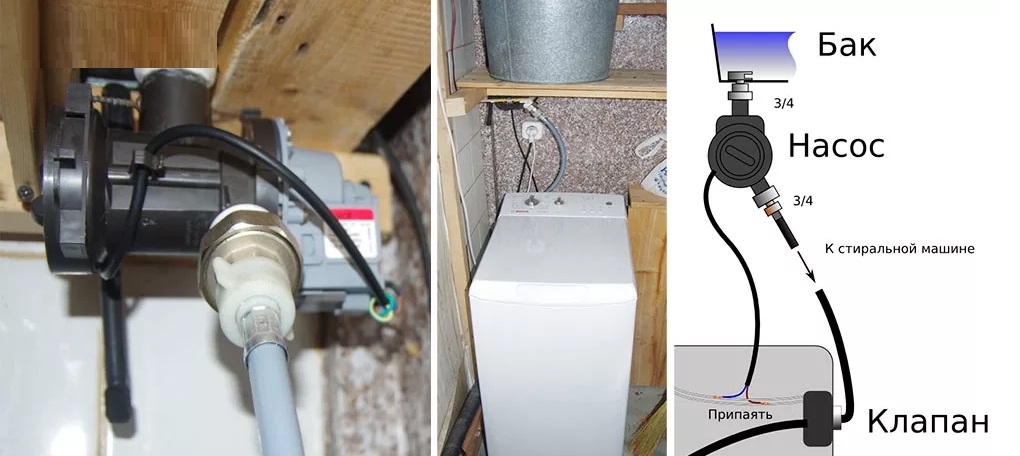
- connect the water supply station to the tee tap;
- connect the inlet hose to the pump (if it is short, extend it with a regular water supply hose using an adapter);
- Seal the joints with a special tape, and additionally secure the connection points with clamps;
- remove the top panel of the machine body, find the inlet valve and remove the rubber seals from it (this will improve the flow capacity of the part);
- Place a flow filter in front of the washing machine valve;
- Assemble the machine body and connect the inlet hose to it.
The system is now assembled, and you can test the machine's operation. Plug in the washing machine, select the "Rinse" mode, activate it, and start the pump. The water supply station will provide the required pressure, the inlet valve will open, and water will fill the tank. You can drain the water into an empty bucket or any other container of sufficient capacity.
Interesting:

4 reader comments
Add a comment
Headings
Washing machine repair




For buyers




For users


Dishwasher




How much does the pump cost?
Is it possible to install a pump from a washing machine?
Your system is not correct, where is the check valve, where is the pressure switch in the system?
Why do you need a check valve if the water tank is right next to you? 90% of pumping stations come with a pressure switch.