
Connect a washing machine to a well
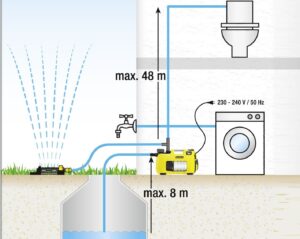 Today, automatic washing machines are installed in both city apartments and private homes without water or sewer lines. It's possible to connect a washing machine to a well and use it without any hassle, even in a country house. Let's look at how to set up a water supply to the appliance, what challenges you might encounter, and what materials and tools you'll need.
We collect the necessary materials and tools
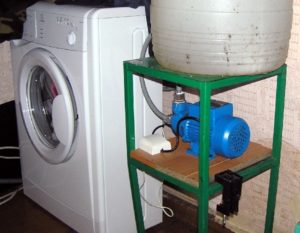
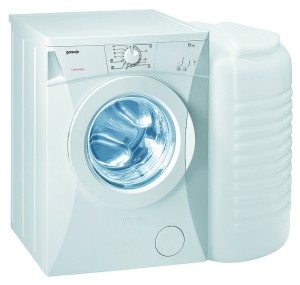
If your home doesn't have running water or sewerage, that's no reason to forego installing a modern washing machine. There are several ways to provide water to the machine. For example, you can connect it to a well or borehole, or install a reservoir from which the machine can be filled.
Homeowners often choose to connect their washing machines to a well. This way, the equipment will perform just as well as if connected to a centralized water supply. What materials and tools will be needed?
To connect a washing machine to a well, you will need a submersible pumping station.
If you don't already have a well on your property, you'll need to drill one. This is done by specialists. They have equipment that can easily drill through the soil to the aquifer. You can connect the well yourself; the following items will be needed:
- water station;
- pressure relay;
- hydraulic accumulator;
- special filter (necessary to purify groundwater from impurities);
- check valve (if the borehole pump design does not include one);
- water pipes for supplying water to the machine;
- coupling sleeves;
- sheets of polystyrene foam and sand (for insulating “outdoor” pipes);
- special shut-off valve;
- compression couplings;
- tee tap.
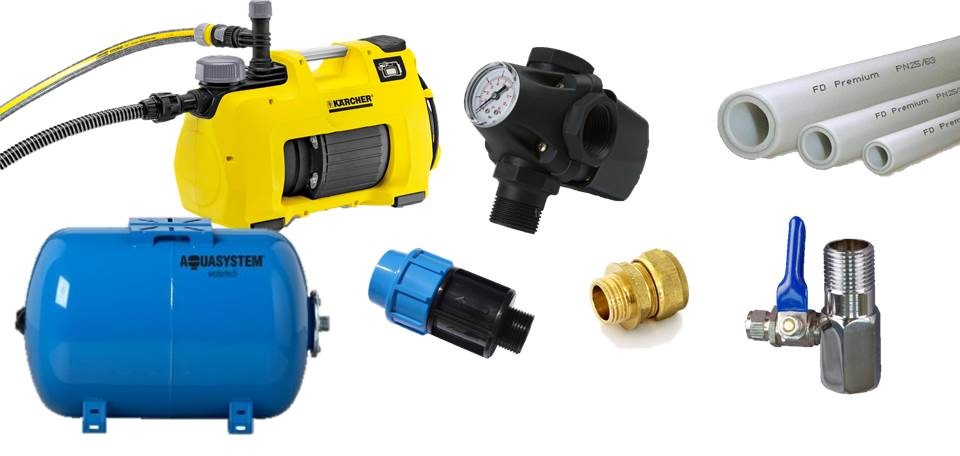
The diameters of the pipes and hoses are selected depending on the washing machine model. Modern automatic machines have inlet hoses with 3/4-inch threads. Tee valves are sold in this size.
As for tools, you'll need a trench shovel, a drill with a drill bit, a screwdriver, a wrench, an adjustable wrench, bolts, and nuts. You'll also need a regular tape measure, a knife, a spirit level, and sealant.
It's important to decide where the washing machine will be located early in the planning stage. The room must be heated to prevent the water in the washing machine and pipes from freezing. The flooring must be solid and well-secured.
It's also necessary to provide a location for drainage systems. This could be a permanently installed tank where the water will drain. It's better, of course, to drain directly into a septic tank or cesspool.
We are assembling the machine
Now it’s worth describing in more detail the algorithm for connecting the washing machine to water. The first task that the owner will face is drilling a well. A dedicated team is hired for this purpose. The cost of the service depends on the depth of the aquifer.
Well water supply helps service all plumbing fixtures in a private home: sinks, toilets, bathtubs, shower stalls, dishwashers, and washing machines.
The chosen method of connecting the washing machine has its drawbacks. Firstly, the work can only be carried out during the warm season. In Russia, this is from May to September. From October to April, drilling a well in many Russian regions will be simply impossible.
The second drawback is the relatively high cost of connection. For such convenience, you'll have to pay several hundred dollars. A well is a luxury not everyone can afford.
Once the shaft is ready, you'll need to consider purchasing a borehole pump. There's a wide selection of pumping stations available, and everything will depend on your budget and the required capacity.
The capacity of the pumping station is calculated based on the depth of groundwater.
The next steps will be as follows:
- attach a check valve to the pump pipe (if the valve is provided for by the PNS design, then there is no need to install it additionally);
- install a special filter to purify the collected groundwater;
- connect the water supply pipe (for some models of the PNS, it is recommended to use rubber hoses instead of pipes, so carefully study the technical data sheet of the device);
- connect the electric cable to the pumping station;
- proceed to installing the cable that will hold the pump at the desired depth;
- carefully connect the cable, electrical cable and pipe together using special clips or fixing clamps;
- lower the pump into the well (do this very carefully);
- fix the pump at the correct height;
- check how the pumping station works;
- Connect the pipes that will lead to the house to the water supply hose.
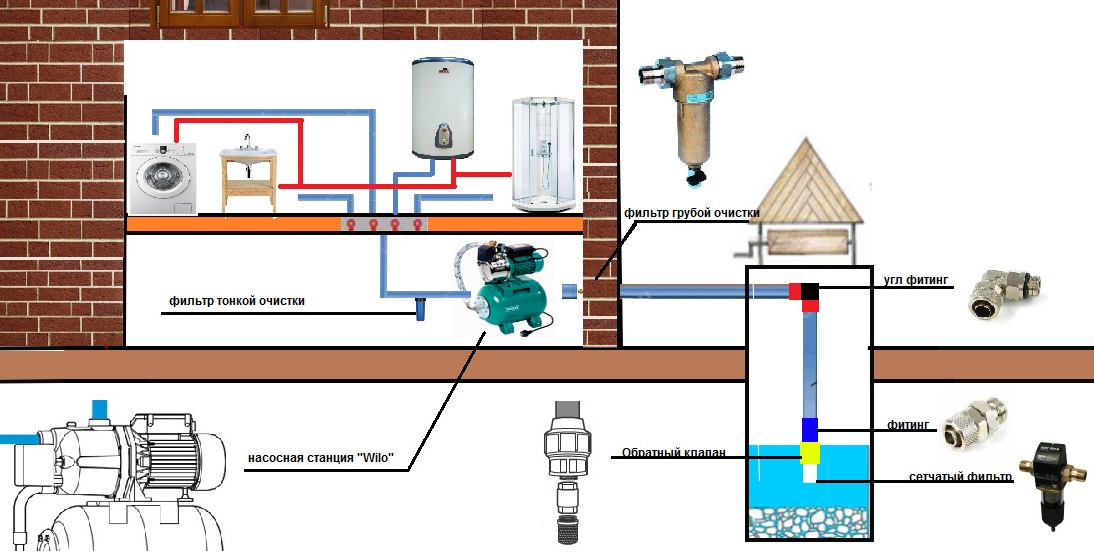
The pipe that will supply water to the house must be located slightly below the frost line. Therefore, a trench of the appropriate size will need to be dug. It is better to lay the water pipes in a straight line - this will make it easier for the pump to pump water.
Additionally, it is recommended to insulate the pipes. This can be done with polystyrene foam sheets and sand. At the entrance to the house, the water supply is "passed" through the foundation.
To automate the water supply, a hydraulic accumulator with a capacity of 50 to 100 liters and a pressure switch are usually installed.
The machine is connected to the water supply via an inlet hose. It's best to install a shut-off valve upstream of it, which can be used to shut off the water supply to the system if necessary.
If your home already has a well and a water supply, connecting your washing machine to the water supply is very simple. Simply install a tee valve in front of the bathtub faucet or connect it directly to the pipe. Then connect the washing machine's inlet hose to the outlet.
Where to put soapy water?
Once you've connected your washing machine to the water supply, you need to consider drainage. Soapy water containing detergent granules is toxic to soil, so simply "throwing" it into the ground isn't recommended. A drainage pit should be built, lined with concrete, and the wastewater directed into it.
If the house already has a septic tank, the machine is connected to the main sewer system. The washing machine's drain hose is connected to the drain pipe and connected to it using a special clamp. After this, you can start your first wash.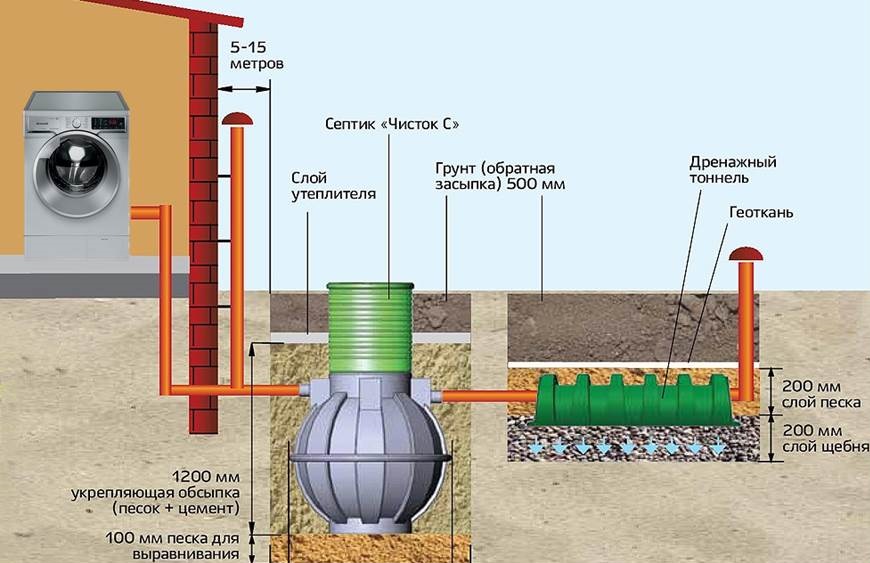
First, run a test wash without any laundry in the drum. To do this:
- plug the machine into the power supply;
- Press the network button on the control panel;
- Use the programmer to select one of the short modes;
- start the cycle.
Next, observe the machine's operation. The washing machine should begin spinning the drum and drawing water. Check for leaks at the hose connections. If the test cycle runs normally, you can begin a full wash.
Interesting:

Readers' comments
Headings
Washing machine repair




For buyers




For users


Dishwasher




Add a comment