In most cases, a washing machine heats the water itself. But some people, for some reason, believe that connecting a washing machine to hot water instead of cold will inevitably result in huge savings on utilities. We decided to dispel this myth and, at the same time, share examples of when connecting a washing machine to hot water is truly necessary. But first things first.
Is it possible or not?
The vast majority of automatic washing machines should be connected to cold water, as intended by the manufacturer. But there are models of washing machines that connect to both cold and hot water at once; as a rule, these are expensive and “smart” washing machines from well-known brands.
What happens to a regular washing machine if you connect it to hot water instead of cold, as usual? While this might not seem like a big deal, the following issues are sure to arise over time.
The washing machine's heating element will fail in no time, although at first glance it seems that it should work longer.
Wash quality will be noticeably reduced, and don't be surprised if the washing machine actually ruins some items. If water at around 60°C enters the washing machine,0C, which means that things will be washed in it, even if the washing program is started at a temperature of 300Well, the machine can't cool the water.
For example, some dyed synthetic items can only be washed in lukewarm water to prevent the dye from fading and fading. If your washing machine is set to hot water, these items won't work.
A large amount of dirt from the water supply can get into the washing machine, especially if not protect the inlet hose with at least a flow-through filter. Ideally, a coarse filter is not enough here; a fine filter is needed, and it is not cheap at all.
The inlet hose of a conventional washing machine is not designed for hot water, so it is guaranteed to wear out significantly and quickly.
As you can see, there are many downsides to connecting your washing machine to hot water, but what about the benefits? Will you benefit from the much-vaunted energy savings? Current rates show that hot water is more expensive than electricity, so you'll likely end up paying more than you save. Bottom line: if you own a standard washing machine without the added convenience of a hot water connection, save yourself the hassle and just connect to a cold water line—you won't regret it.
What is needed to connect?
If you're the proud owner of a trendy washing machine that can be connected to both hot and cold water, then the following information is for you. In this case, the washing machine has not one, but two inlet hoses, meaning the standard method of connecting to hot and cold water isn't quite suitable. You'll need:
adjustable plumbing wrench;
FUMka;
rubber or silicone ¾ inch gasket rings;
two main 3/4 tee taps with a side outlet for the filling hose;
If you plan to install a tee faucet in a visible place, for example, on a bathroom faucet, then choose a more attractive faucet with a chrome surface.
¾ adapters.
¾ flow filters.
An adjustable plumbing wrench should be used with caution to avoid damaging the surface of the chrome-plated nuts on the faucet. It would be better to stick pieces of electrical tape to the edges of the nuts while working so that the chrome does not get scratched.
Progress of work
There are different ways to connect a washing machine to hot and cold water. It's possible to easily install both main tees before the faucet; our post explains how to do this. How to connect a washing machine to a faucet, so we will not dwell on this in more detail.
You can also install tees in front of the faucet inlet hoses under the sink. This method is considered more aesthetically pleasing, as the connection point will be securely hidden under the sink. That's what we'll do.
Remember to seal all connections with FUM tape to reduce the risk of leaks.
Even though your washing machine works well, using both cold and hot water, you still need to ensure that less dirt enters the system from the water supply. So, to start, let's install flow-through filters on the faucets. Next, we'll perform the following steps.
We shut off the hot and cold water risers.
We crawl under the sink and find the junction between the metal-plastic pipe and the hoses leading to the sink faucet. We disconnect the hoses and pipes.
Next, you can screw our tees, which are already assembled with flow filters, onto both pipes through adapters.
We screw the hoses from the mixer to the tees.
We screw the washing machine's inlet hoses to the tees. FUM (Fumigation Foam) is essential here, as all connections must be airtight.
Now you can turn on the water and check how the washing machine will work when connected in this way. When checking, pay special attention to the tees and hoses, make sure that nothing is dripping anywhere.
In conclusion, connecting a washing machine to either cold or hot water is a simple task. It probably doesn't make any difference. But does your "home helper" really need it? Most likely, it doesn't, unless your washing machine is factory-installed with dual hot and cold water connections!
You can install a water splitter to ensure pressure at the hot water inlet. If your washing machine is connected to both cold and hot water, such a splitter is included with the washing machine.
My Indesit was connected only to hot water. The washing machine worked for 16 years. Today I'm replacing it. And I'll reconnect it the same way. This is the only pipe I have free.
The most reliable option is to install a three-way thermostat (mixer). They typically have adjustable outlet temperature and different temperature ranges. Mine has a range of 32-50 degrees Celsius, and both the washing machine and dishwasher are connected. Fortunately, I have my own heating system (gas boiler + water heater) and a well. This means there are filters and adequate pressure. However, in central heating and water supply systems, you need to ensure water purification and install check valves on both the cold and hot water lines, as the pressures can vary and this won't work properly.
Older machines can be connected; new ones have many automatic washing modes. Malfunctions are possible. And washing machines these days aren't what they used to be. Saving money on everything. The plastic can warp, and if you do use water, use warm water from the boiler—about 40 degrees. Washing will be quick because you don't need to heat the water.

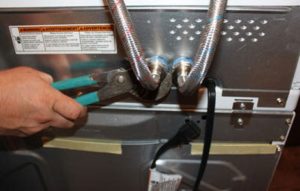 In most cases, a washing machine heats the water itself. But some people, for some reason, believe that connecting a washing machine to hot water instead of cold will inevitably result in huge savings on utilities. We decided to dispel this myth and, at the same time, share examples of when connecting a washing machine to hot water is truly necessary. But first things first.
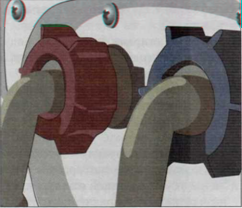 protect the inlet hose with at least a flow-through filter. Ideally, a coarse filter is not enough here; a fine filter is needed, and it is not cheap at all.
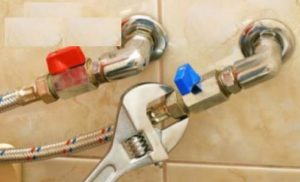 Even though your washing machine works well, using both cold and hot water, you still need to ensure that less dirt enters the system from the water supply. So, to start, let's install flow-through filters on the faucets. Next, we'll perform the following steps.
















Is it necessary to connect hot water if I have two inputs?
You can install a water splitter to ensure pressure at the hot water inlet. If your washing machine is connected to both cold and hot water, such a splitter is included with the washing machine.
My Indesit was connected only to hot water.
The washing machine worked for 16 years. Today I'm replacing it. And I'll reconnect it the same way. This is the only pipe I have free.
The most reliable option is to install a three-way thermostat (mixer). They typically have adjustable outlet temperature and different temperature ranges. Mine has a range of 32-50 degrees Celsius, and both the washing machine and dishwasher are connected. Fortunately, I have my own heating system (gas boiler + water heater) and a well. This means there are filters and adequate pressure. However, in central heating and water supply systems, you need to ensure water purification and install check valves on both the cold and hot water lines, as the pressures can vary and this won't work properly.
Older machines can be connected; new ones have many automatic washing modes. Malfunctions are possible. And washing machines these days aren't what they used to be. Saving money on everything. The plastic can warp, and if you do use water, use warm water from the boiler—about 40 degrees. Washing will be quick because you don't need to heat the water.
I have a semi-automatic machine. We connected the hot and cold circuits, but only the cold circuit washes. The hot circuit doesn't run. Why?
Open the tap