
Connecting a washing machine in a country house without running water
 The vast majority of dachas in our country lack running water. Moreover, many private homes in cities lack running water as well. As we know, connecting a washing machine requires at least a stable 220V power supply and running water; sewerage is not necessary. So, how can residents of poorly maintained houses, apartments, and dachas overcome this situation and connect washing machines? This article will discuss this.
Methods of connection to water
In the countryside or at the dacha, when there's no running water, some handymen manage to get their washing machines running by pumping water through the detergent drawer with a bucket. The method is simple and ingenious, but it begs the question: what's the point of buying an automatic washing machine? The point is that when water is poured into the washing machine through the tray, you need to restart the washing program each time:
- open the tray and pour in the powder, put the laundry into the drum;
- we start the washing program;
You can select any program; it will not affect the washing process.
- open the tray and pour water into it using a bucket;
- the washing machine freezes;
- we start the washing program again, the washing starts, the water is drained at the end;
- the washing machine freezes;
- pour water for rinsing through the powder tray;
- we start the washing program again, rinsing begins, the water is drained;
- The spin cycle starts, after which the washing program is successfully completed.
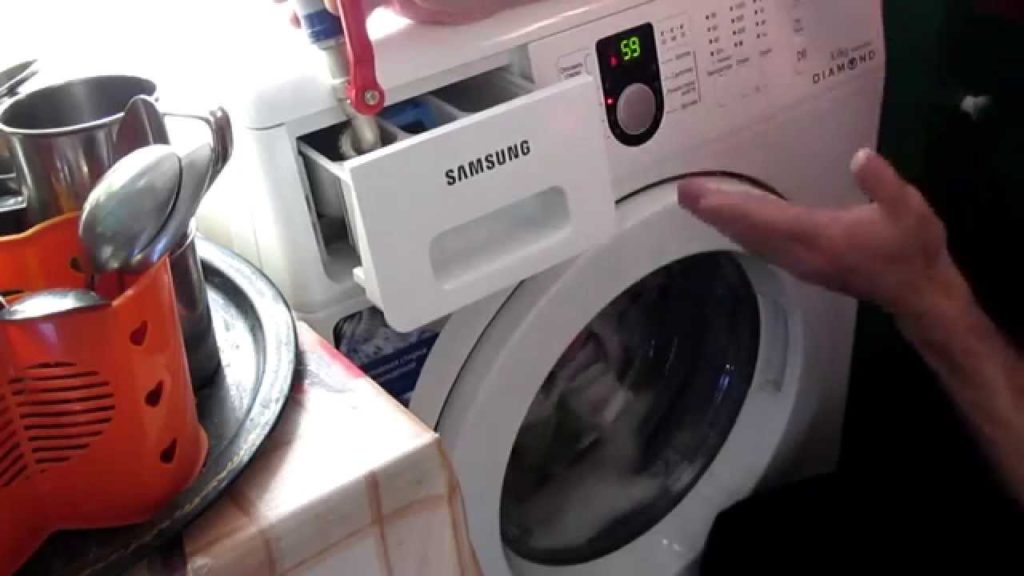
Actually, doing laundry this way is a dubious pleasure. You have to stand next to the washing machine with a bucket at the ready. What kind of automatic washing machine are we even talking about? Wouldn't it be simpler in this case? use the Malutka washing machine, which operates in semi-automatic mode, so at least you won’t have to spend money on an automatic washing machine.
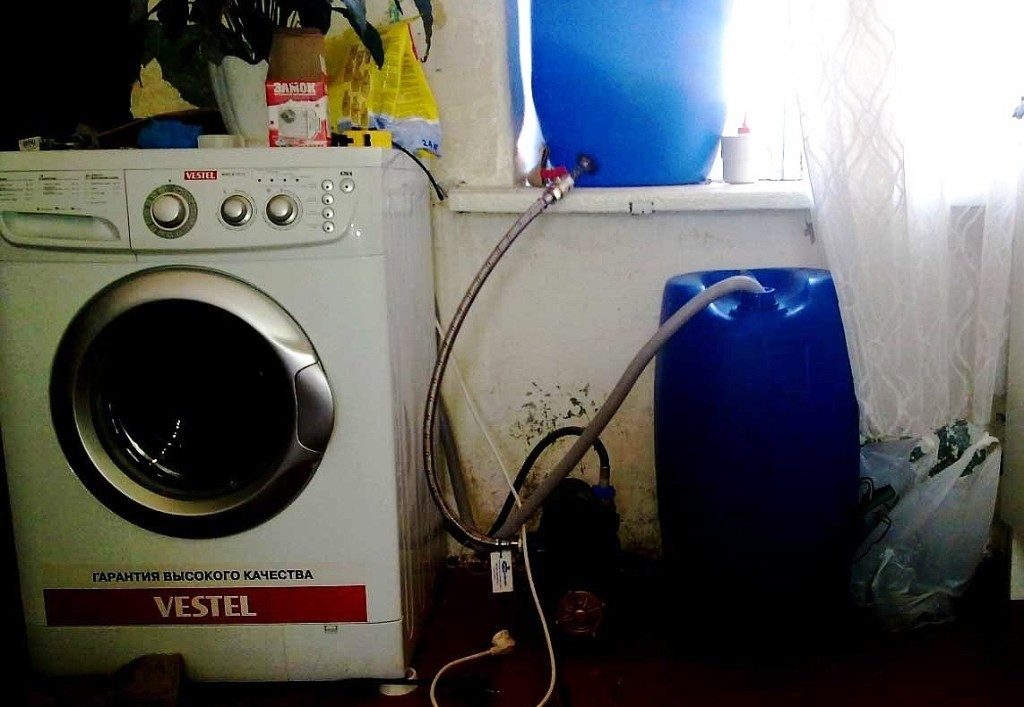
Another way to connect a washing machine in a country house without a water supply is to place the water tank higher above the machine, extend a long hose from it, and then connect the inlet hose of the "home helper" to this. Experience shows that in order to start a washing machine, the tank must be hung at least 10 meters above the washing machine. If you have a low house at your dacha, you can discard this method right away.
To prevent your washing machine from freezing while filling with water, ensure a minimum of 1 bar of pressure is applied to the inlet valve. This pressure can be achieved by feeding water from a high-mounted reservoir.
If there's no running water but you need to connect your washing machine, you can drill a well and install a pumping station that will draw water from underground and supply it to the washing machine. If you have the funds, this method is perfectly acceptable. However, there are a few caveats:
- Well drilling must be taken care of in advance in the summer;
- the deeper the groundwater lies, the more powerful the pumping station must be;
- Well water must be of good quality and not contain large amounts of metal salts and other impurities.
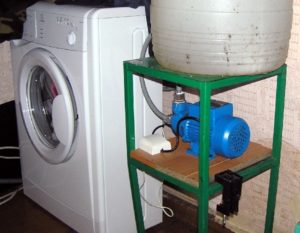
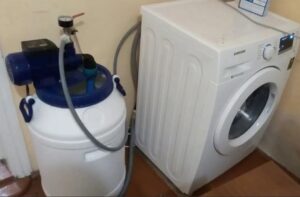
Our experts believe the most suitable method for connecting a washing machine to a water tank in a country house without running water is to use a pressure pump. This method involves installing a large water tank next to the machine. A faucet is installed in the tank, and a hose with a pressure pump is connected to it. The pump supplies water from the barrel to the inlet valve of the washing machine under pressure, simulating the pressure of the water supply. Effective and minimal costs.
What will you need?
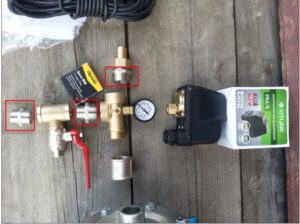 Having decided to install a washing machine without running water, let's gather the necessary tools. To do this, you'll need to rummage around in the garage or storage room and pull out a tape measure, a small adjustable wrench, pliers, a spirit level, caulking tape, a screwdriver indicator, and a sharp knife. The tools shouldn't be a problem. Materials are another matter. You'll need to run to the store to buy:
- 3/4 inch tee tap;
- rubber gaskets and clamps;
- water supply hoses and flow filters;
- injection pump;
- electromagnetic valve.
The hose length, diameter, and faucet and valve configuration will depend on the specific connection requirements of your specific washing machine model. Installation will require consideration of numerous small, difficult-to-predict details.
Connecting it yourself
We've smoothly moved on to describing the work involved in connecting a washing machine to water at a dacha without running water. In this case, it is possible to offer only a general description of the process, since, as we have already mentioned, much will depend on the technical features of a particular washing machine model. We do the following.
- We install the washing machine level on a solid, reliable floor near a reliable electrical outlet.
- Place a plastic or metal barrel with a capacity of at least 50 liters next to the washing machine.
- The top of the barrel should have a hinged lid to make it easy to pour water.
- We knock together a reliable stand for the barrel from wooden blocks, placing it at a height of at least 500 mm from the floor.
- We make a ¾-inch hole in the barrel wall at the very bottom for the faucet thread, insert a rubber seal into the hole, and push the faucet in. The tee faucet should fit snugly.
- Next, we connect the injection pump to the tee.
- We connect the hose to the pump.
- We connect the hose through the adapter to the inlet hose of the washing machine.
All connections must be tightened with plastic or metal clamps.
- We remove the top cover of the washing machine, find the inlet valve and remove the sealing rubber from it. This measure will improve the valve's throughput.
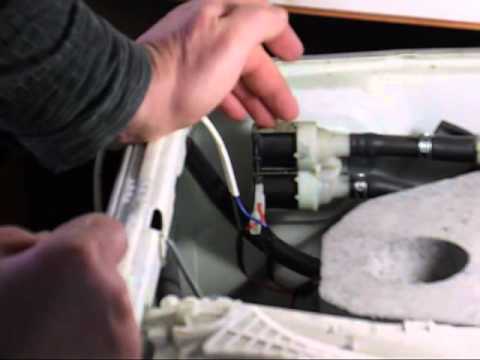
- We install a flow filter in front of the inlet valve and we can begin testing.
In conclusion, the lack of running water at a dacha in modern times is certainly a challenge, but not a disaster. Even in such a situation, you can comfortably wash your clothes in an automatic washing machine, as long as you connect it correctly. We've covered this in our article. We hope this material was accessible and understandable. Good luck!
Interesting:
Readers' comments
Headings
Washing machine repair




For buyers




For users


Dishwasher




Add a comment