
How to change a bearing in an LG washing machine
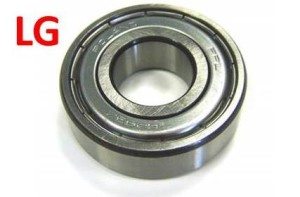 If your "home helper" starts making a loud noise when washing and spinning at high speeds, there's a chance there's a problem with the bearings. Replacing the bearings in an LG automatic washing machine isn't particularly difficult, but it can be quite a hassle. A skilled hand can easily handle this job, provided all steps are followed in accordance with the step-by-step instructions provided in this article.
Getting ready to repair your LG washing machine
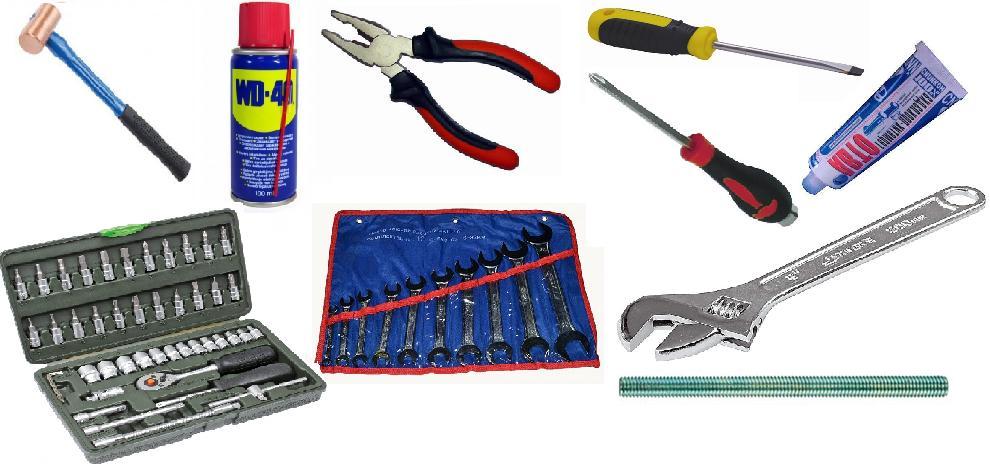
Replacing the drum bearings in an LG automatic washing machine is a job that requires careful preparation. The better you prepare, the faster and more efficiently the job will be completed. Start simple, gather all the necessary tools, namely:
- hammer with a bronze striking part;
- WD-40 lubricating fluid;
- pliers;
- Phillips and flat head screwdriver;
- medium-sized adjustable wrench;
- set of heads and open-end wrenches;
- automotive sealant;
- a metal hairpin about 40 cm long.
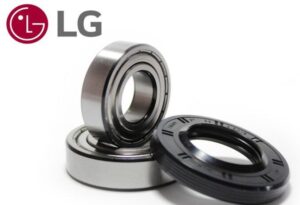
Once you've gathered your tools, you need to decide on the components, primarily bearings and seals for the drum of your LG automatic washing machine. Choosing where to buy them isn't difficult; it could be a specialized appliance parts store or an online store. The key is knowing what to buy.
Unfortunately, Different LG washing machine models come with different components, and if you don't know which ones are installed in your model, you can easily get confused. Before purchasing new seals and bearings, check the LG washing machine components table.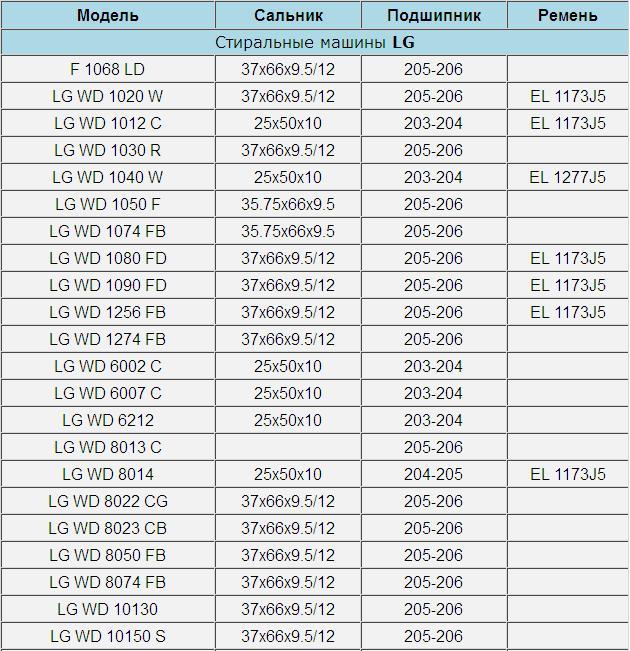
So, now that you've purchased the components, you can begin preparing the work area. It's best to take the washing machine to a workshop or garage for repair, as there's space and special equipment to make the job easier. But if you're fixing it at home, no problem. Clear out some space in the room to accommodate the machine and its parts, and then get to work.
How to get to the washing machine's drum
The first step in working with an LG washing machine involves accessing and removing the drum. Accessing the drum isn't as easy as it might seem, and the first obstacle is the washing machine's walls and panels. First, let's remove the top cover, as well as the bottom and top panels.
To remove the top cover, unscrew the two fasteners located at the top of the rear panel of the appliance. After removing the screws, pull the cover toward you and lift it slightly – it will come off easily. Now remove the top panel. To do this, walk around the front of the LG washing machine, pull out the detergent drawer, and locate a screw in its recess on the side. Several more screws are located above and to the right of the dashboard; remove them all, after which the top panel will come off.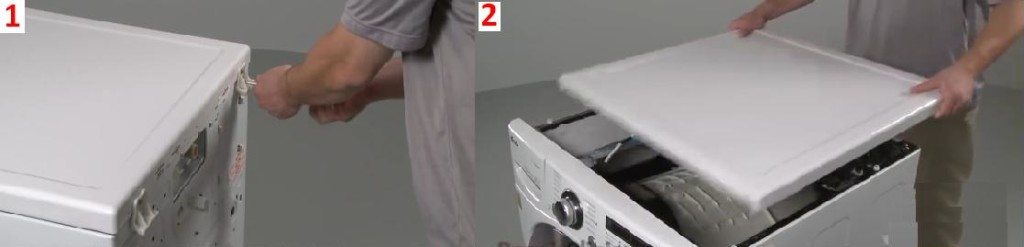
To completely remove the top panel yourself, you need to carefully disconnect all the wires connecting the control panel and the washing machine's electrical components. While we don't think this is necessary, let it dangle; the key is to work carefully to avoid snagging or tearing any wires.
The bottom panel is secured with special plastic clips, so to remove it, bend each clip back and forth with a flat-head screwdriver. Now you need to remove the front panel of the washing machine. It's important to note that simply unscrewing it and removing it like the dashboard won't work – the rubber seal located near the hatch is in the way, so you'll need to remove that seal. Here's how:
- We lift the thin wire clamp that encircles the cuff and remove it.
- We hook the rubber cuff with our fingers and pull it out of the groove (but do not take it out).
- We turn off the sensor responsible for blocking the hatch.
- We unscrew two screws and remove the sensor.
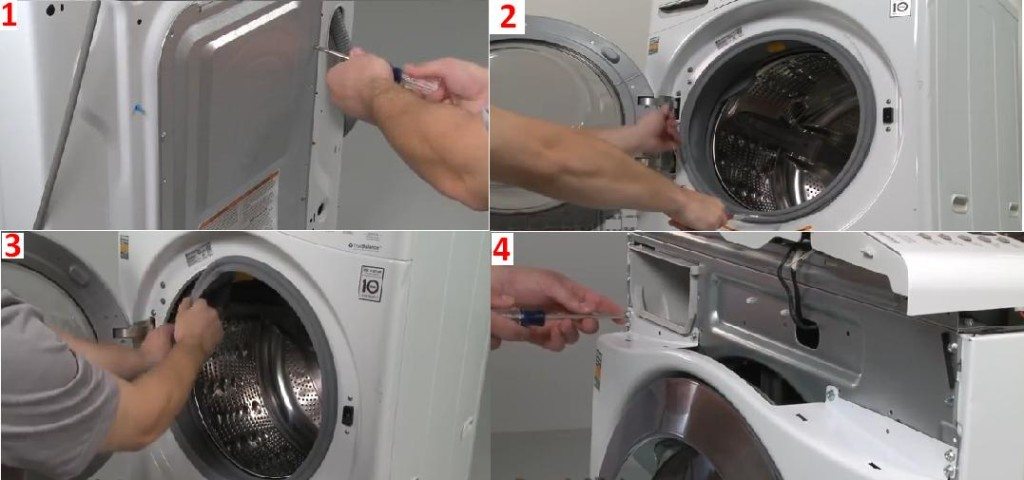
Now that the cuff is no longer holding the front panel of the washing machine, you can begin unscrewing the front panel fasteners. They are located behind the drain valve, behind the drawer, in the upper left, upper right, and lower right corners, and behind the control panel. Once the screws are removed, the front panel will come off.
 Now our task is to free the tank from the fasteners and wires that are preventing it from being disconnected. What needs to be disconnected?
- Fasteners for the fill valve.
- Drain pipe.
- Wires from the heating element.
- Engine wiring.
- Wiring from the fill pump.
- Counterweights (bottom and top).
- Pipe from water level sensor.
- Fasteners for shock absorbers.
Important! Once you've unscrewed and unhooked everything according to the list, the tank will come off. It's best to have two people working together to remove it: one to unhook the springs, and the other to lift the tank and pull it out of the machine.
Features of disassembling the tank and replacing bearings
Let's begin disassembling the LG washing machine's drum. First, we remove the fasteners (screws or latches) that hold the two halves together. Separating the drum into two halves exposes the drum pulley and its fastener, which we then need to unscrew.
Please note: If any bolts are difficult to remove, lubricate them with any lubricant you have on hand (WD-40 is best), wait 10-15 minutes, and try again.
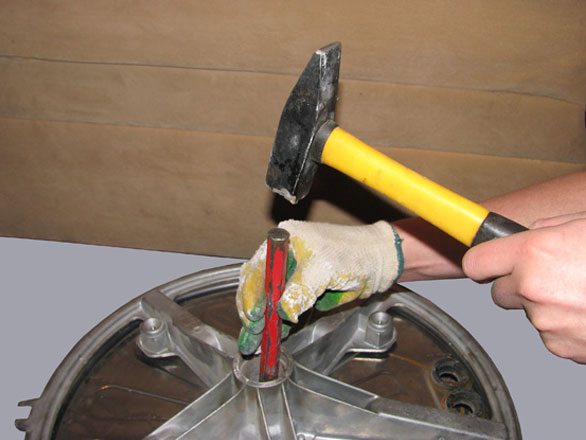
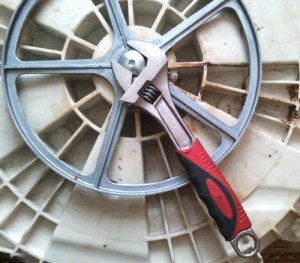 After unscrewing the fastener holding the drum pulley, we carefully pull it out and screw the bolt back in. This little trick will help you knock the drum out without damaging the shaft. Next, we press a metal pin against the bolt we just screwed in and begin tapping it with a hammer – our goal is to gradually knock the shaft out. Never hammer on the stud with significant force, as this could ultimately result in costly repairs!
After removing the shaft and bushing, we must carefully inspect them for damage. To better determine the extent of wear on the shaft, attach the bearing to it and spin it. If there is any play between the bearing and the shaft, the shaft must be replaced. You can read more about disassembling the washing machine drum in the article. How to disassemble a washing machine drum?
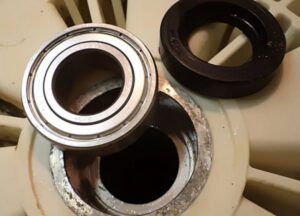
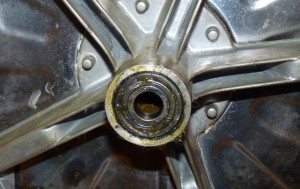
Let's begin replacing the seals and bearings. Take the rear of the drum and pull the seal out of the hole in the middle. This is easy: just take a flathead screwdriver and pry it out. Old bearings are more difficult—they'll need to be carefully knocked out. Take a pin, press it against one end of the bearing, then the other, and tap it out with even hammer blows.
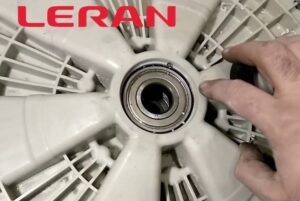
After removing the bearings from the drum, clean the bore of any shavings and oil. The new bearing should only be installed in a very clean area. Carefully push the new bearings into the bore completely. Next, lubricate the seals and replace them—the replacement is complete. Reverse the above steps to reassemble your LG automatic washing machine.
Important! When assembling the two halves of the tank, experts recommend sealing the seam with automotive sealant to ensure better adhesion and a tight seal.
What should not be done when replacing bearings?
Every stage of the LG washing machine bearing replacement process, including assembly and disassembly, can be fraught with errors, which in turn can lead to repair problems. Experts have identified a number of common mistakes made by newbies attempting to repair a washing machine for the first time. So, what do they do:
- The wires of the door lock sensor are torn off when removing the front wall of the washing machine.
- They tear the cuff of the washing machine hatch while trying to pull it out, while first forgetting to remove the clamp.
- They cause damage to the pulley if an unsuccessful attempt is made to remove it from the axle.
- They break off “stuck” bolts by applying too much force to them and without trying to lubricate or heat them first.
- The wires of the temperature sensor and heating element are torn off.
- The filler pipe is torn off together with the hose.
- Pressing bearings out of the drum causes damage. Bearing replacement ends with replacing the drum.
Be sure to pay attention to the mistakes mentioned above and never repeat them. And if you're unsure about your ability to carry out the repairs yourself, contact a professional who will do the job quickly and efficiently.
In summary, replacing bearings and seals on an LG automatic washing machine is entirely possible without the help of a professional. However, keep in mind that without experience, you risk even more expensive repairs. As the saying goes, one wrong move and...!
Interesting:
Readers' comments
Headings
Washing machine repair




For buyers




For users


Dishwasher




Add a comment