
Connecting the washing machine to the sewer system
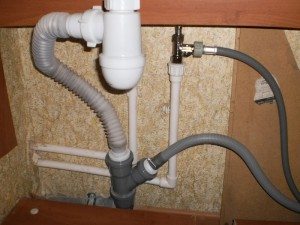 When installing and connecting a washing machine, the question arises of how to properly drain wastewater. The most efficient method is to connect the drain hose directly to the sewer line, but it's also the most labor-intensive. We'll describe the drainage process in detail and begin with the preparatory work.
Preparing tools and components
Any major project requires careful preparation, and connecting a washing machine to the sewer system is no exception. If you're installing an old machine after moving, arranging for drainage may require some tools and components, whereas when installing a new machine, some components are already included with the machine.
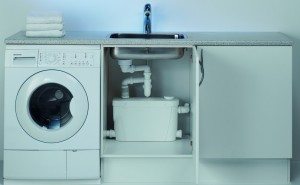 But preparations must begin with determining the installation location. There are three possible options:
- In the bathroom, which is very convenient, since any outlet, including the drain, is practically at hand.
- In the kitchen next to the sink.
- In the hallway.
Once you've identified the location, prepare the necessary tools to avoid searching for them while setting up the drainage. You may need:
- various screwdrivers;
- keys;
- a pipe cutter if necessary to cut into a drain pipe;
- welding for metal-plastic pipes;
- siphon, regular or with a check valve;
- plastic tee;
- silicone sealant;
- sealing rubber bands;
- a corrugated drain hose of the required length if the factory one is too short.
Please note! Joining hoses together is not recommended, as additional connections pose an increased risk of water leaks. A hose length of no more than 3 meters is considered optimal, as the longer the hose, the greater the load on the pump, so the drain should be closer.
Another step in preparing the washing machine for connection is removing transport boltsOnce the machine is fully prepared for connection to utilities, you can move on to the main work.
Methods of connection to the sewer system
Before you arrange the drain and connect the washing machine to the siphon, you need to install the siphon itself on the sink. If the siphon does not have a separate outlet for household appliances, then a plastic tee will also need to be connected to it.With this connection, unpleasant odors from the sewer can enter the drum where the laundry is stored after the wash cycle.
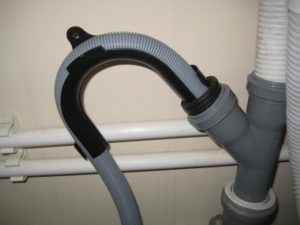
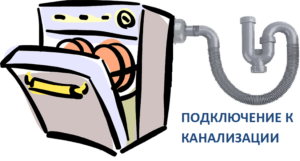
Therefore, it's essential to create an "air barrier" in the trap. For this purpose, the trap has a special branch connected to a corrugated pipe. It's curved so that water stagnates in its bend, creating a reliable seal that prevents sewer odors from entering the washing machine's tank. This seal also allows wastewater to drain from the washing machine and is refreshed with each flush.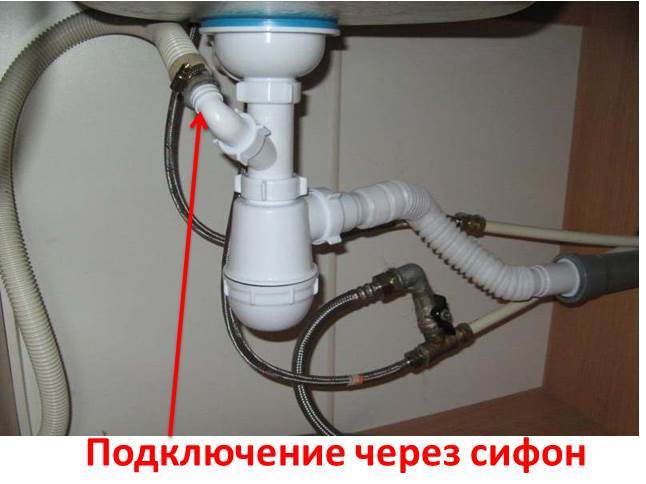
Instead of a simple trap, you can use a trap with a check valve. This prevents not only odor but also wastewater from entering the machine, making drainage much more efficient. If the trap becomes clogged, wastewater can fill it and flow back into the machine by gravity. To prevent this, a valve is built into the trap.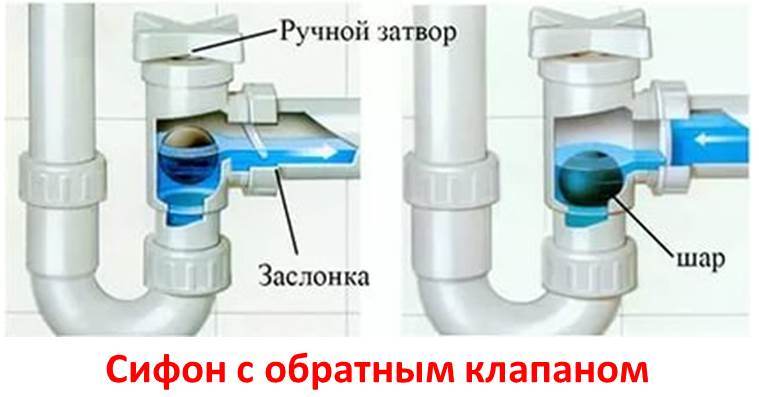
After installing the trap, you need to connect the hose to the trap branch. This is easy: just tighten the clamp.
In some cases, the washing machine drain hose is connected not through a trap, but to a branch of the sewer pipe. In this case, a sealing adapter ring will be required. This adapter allows the hose to fit into the wider opening of the pipe. This method is more labor-intensive than the previous one. However, it is reasonable to use it in cases where the washing machine is placed at a distance of more than 2 m from the sink siphon.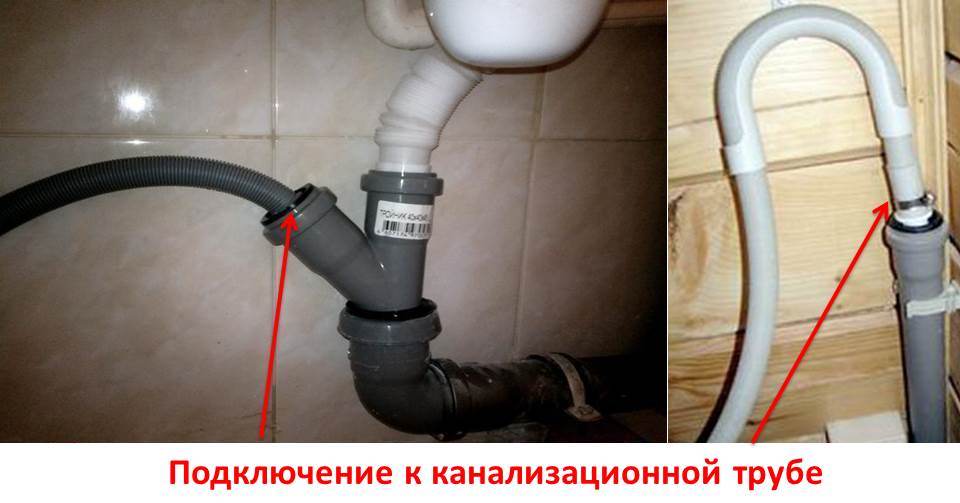
The photo shows a direct connection without a siphon adapter (left) and with one (right). This adapter creates an air seal, preventing sewer odors from entering the machine.
When organizing the drainage of waste water from the machine through a siphon or directly, The distance from the floor to the drain point must be taken into account. The end of the hose must be at least 50 cm above the floor. The maximum height the drain hose can reach above the floor is 100 cm. These figures depend on the capacity of the drain pump.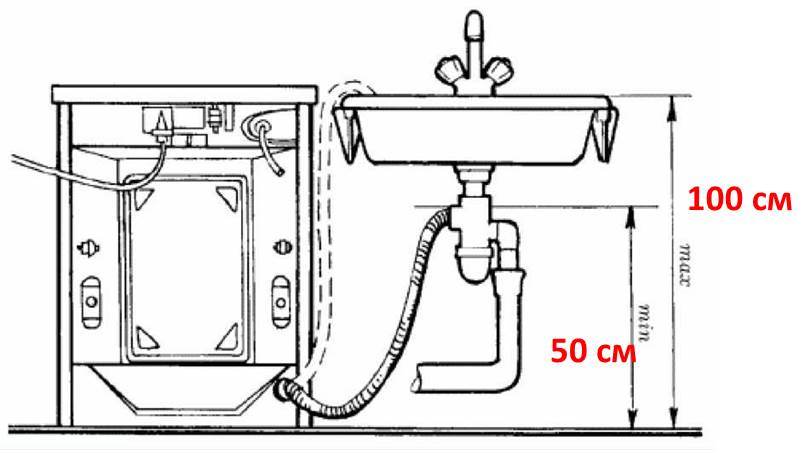
Connecting the washing machine drain hose through a trap or directly to the sewer is considered the most reliable drainage method. It minimizes the risk of water leakage if the hose is accidentally touched. Furthermore, from an aesthetic perspective, this is also the best option, as the hose is usually hidden behind the machine or kitchen cabinets.
Other methods of draining waste water
The simplest way to drain a washing machine is to run the drain hose over a sink, bathtub, or toilet. This requires a plastic hook-shaped attachment to hold the hose in place on the sink or bathtub.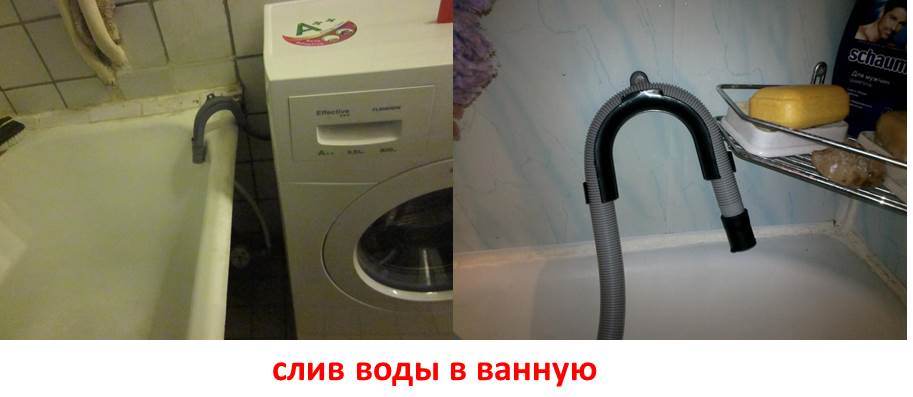
This method of drainage is the least reliable and has several disadvantages:
- The water pressure can knock the hose off the bathtub rim, causing all the water to spill onto the floor. Pets and small children can also knock the hose off.
- After each wash, you will have to thoroughly clean the bathtub, sink or toilet.
- This method of drainage is not aesthetically pleasing, especially when it comes to the sink, as pouring waste water from washing socks and underwear into the sink and then washing dishes in it is, at the very least, unhygienic.
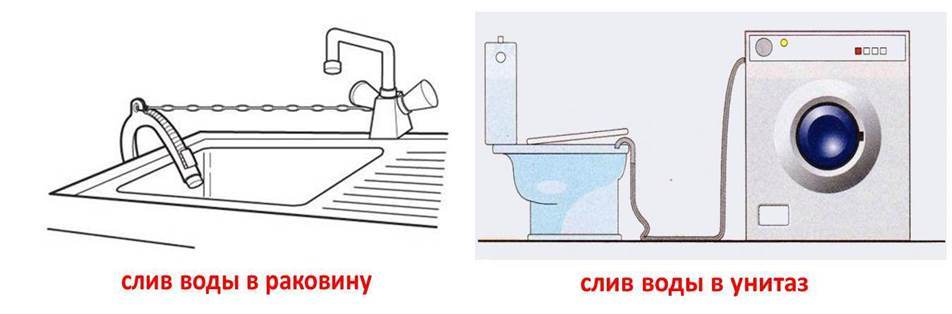
Important! If you decide to use this method to drain your machine, remember that the drain hose should not exceed 4 meters in length, as a larger volume of waste water can remain in the hose and stagnate, causing an unpleasant odor.
Therefore, you can connect your washing machine to the sewer system yourself if you have the desire, tools, and time. And don't skimp on components, as a reliable and proper connection is the key to trouble-free and trouble-free operation of your washing machine.
Interesting:
5 reader comments
Add a comment
Headings
Washing machine repair




For buyers




For users


Dishwasher




Thank you, you're a smart man.
The machine freezes. Ariston. It fills with water, spins a circle, and then starts again. We don't know what's wrong. Please tell me.
Water may be draining into the sewer by gravity. This could be caused by a stuck check valve in the washing machine, if one is present, or by a very low drain position.
Thank you, this was exactly the situation.
And if the smell is present only when the machine starts to fill with water, and then disappears, what could it be?