
Is tumble drying necessary?
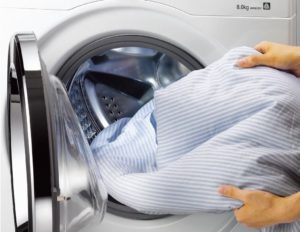 Not everyone enjoys running from the washing machine to the balcony with a basin and clothespins, hanging freshly washed clothes. More appealing is the prospect of taking dry laundry out of the drum and immediately putting it away in a closet or on an ironing board. Washer-dryer units offer this option, but the high cost and lack of reviews make it difficult to decide. Let's figure out whether buying a washer-dryer is worth it or whether it's better to stick with the old-fashioned approach.
What's the special thing about machines with dryers?
While conventional washing machines deliver clean but damp laundry at the end of the cycle, multifunctional machines include a drying function after washing, eliminating the need to hang clothes. This is made possible by equipping the machine with an additional heating element. In addition to the first heating element, located below the drum and heating the water, a second element is used to heat the air. The drying system is simple.
- The heating element heats up, and the heat is distributed by a fan through a special air duct system.
- Hot air passes through wet laundry, the resulting condensate settles in a designated reservoir, and then exits through the drain.
- The drum rotates slowly in different directions, ensuring uniform and complete drying.
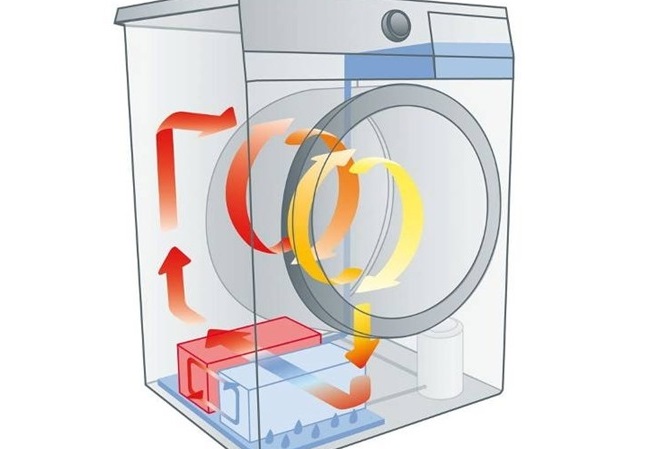
The control panel has also been redesigned, featuring a separate control for adjusting the drying function. There are no other significant differences—the rest of the washer-dryer's design is identical to a conventional automatic washer-dryer.
Features of the drying operation
It's important to understand that multifunctional units are much more complex technically, so there are many shortcomings and pitfalls. Drying is becoming an add-on to the machine, which is why manufacturers are paying more attention to the quality of washing and spinning, rather than drying technology. But leading home appliance brands say they are ready to offer improved products in the near future.
For now, many machines offer the simplest drying option—a timer. The user sets the cycle time and monitors the results. However, items often end up quite damp or, conversely, overdried, which can be corrected by varying the cycle time.
Less common are "advanced" models that offer automatic drying. This drying process continues until a certain residual moisture level is reached. The technology here is more complex: a thermometer sensor is installed at the bottom of the condenser, measuring the amount of moisture released. Based on these readings, the intelligent Fuzzy Logic system calculates the humidity level and compares it with the set value. If the balance is reached, the cycle ends.
It is better to keep items damp, as overdrying weakens the fabric fibers and makes them brittle.
But the user doesn't need to calculate the desired moisture level in percentages. Manufacturers have systematized the data, and the machine immediately offers a drying level selection: from "very dry" to "iron" to "cupboard." All that's left to do is turn the lever to the desired setting and wait for the cycle to complete.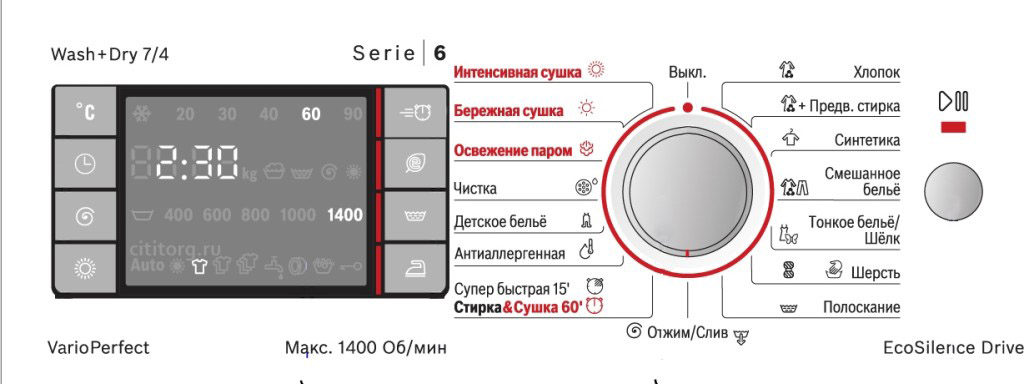
Dries less than it washes
Combination washing machines have a drawback: they can only dry half of their standard capacity. For example, the Electrolux EWW 16781W model limits the maximum load during washing to 7 kg, and the drum can only be filled to 3.5 kg for drying. This distribution of kilograms is quite inconvenient in everyday life.
Many people doubt the need for a washing machine dryer if they have to do two drying cycles after one cycle. During large loads, this wastes precious time and consumes more energy.
Washing and drying machines are less energy efficient than standard models: the energy efficiency class is often at level “B”, and often drops to “C” and “D”.
Manufacturers are trying to solve this problem by improving drying technology. Theoretically, it's possible to equalize performance, and some brands are already making significant strides. A prime example is the Hotpoint-Ariston ARMXX D129, which has a 7 kg washing capacity and 5 kg drying capacity. But the vast majority of machines still dry much less than they wash, which is something to be prepared for.
Do the washing machine and dryer break down more often?
Another argument against purchasing multifunctional units is their unreliability and short service life. There's a common misconception that technologically "complex" dryers are more likely to fail and costly to repair. While this is logical, it's unlikely that manufacturers would knowingly release a low-quality product, risking their reputation.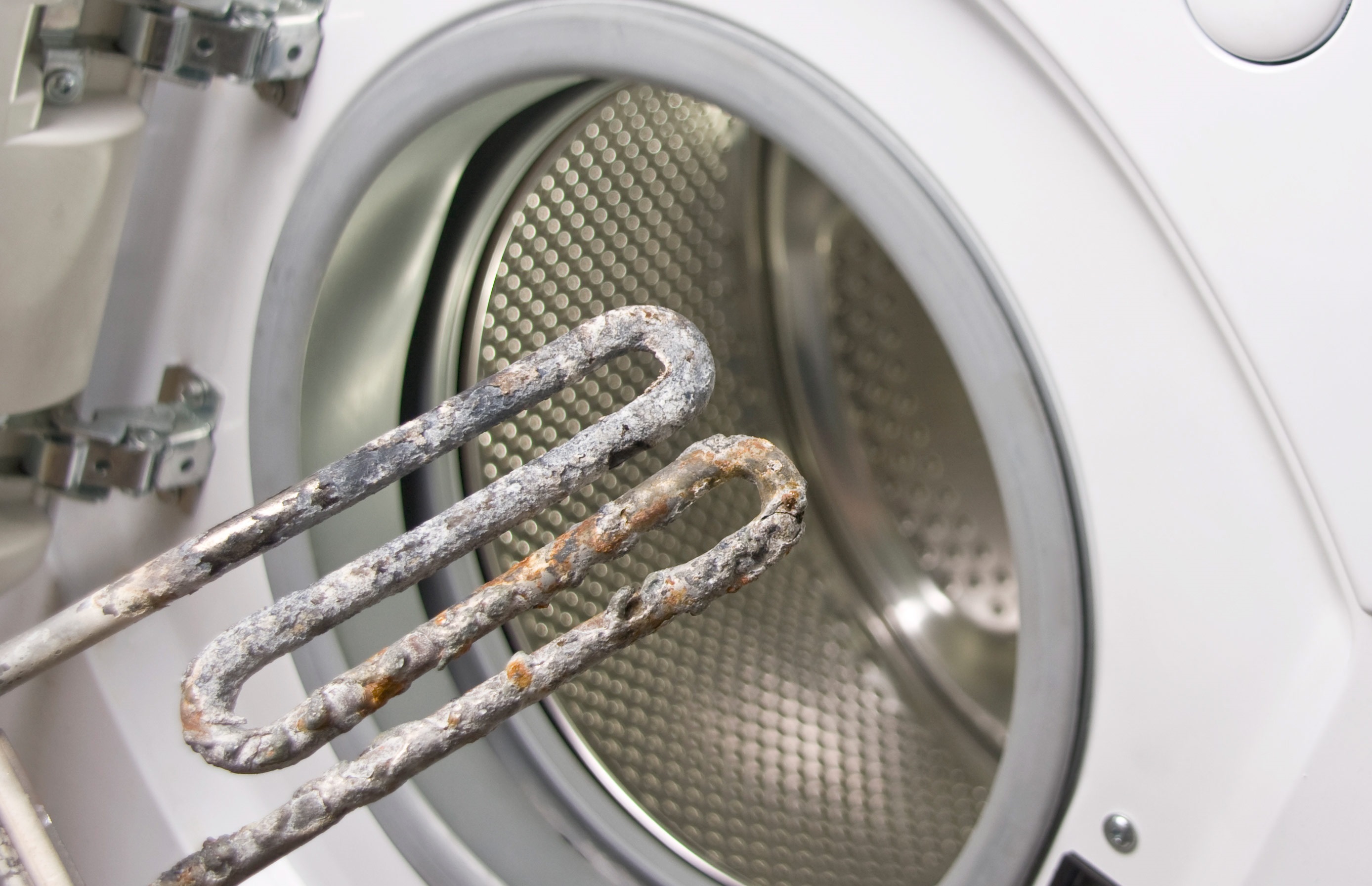
Repair technicians for large household appliances claim that the presence of a drying function doesn't affect the overall lifespan of an automatic machine. Combination units break down, not because of their complex design, but because of improper operation. Failure to follow instructions and negligence in following manufacturer recommendations lead to premature problems and repairs. For example, most combined dryer-washing machines "burn out" simply because the maximum load capacity is exceeded. In an effort to finish the wash cycle quickly, owners load their machines with all the laundry, ignoring the instructions' limitations.
Should I buy such equipment?
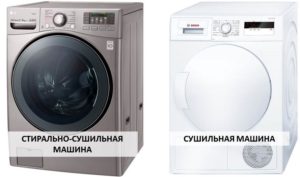
Whether a combined washing machine and dryer are necessary in the home is a personal decision. However, experts recommend choosing single-function units instead of combination units, meaning purchasing a separate dryer and washer. You just need to find sufficient space and buy similar-sized machines to dry your entire load at once.
Besides saving time, this option has several additional advantages: a wide range of programs, the ability to choose narrow models, and a wide selection of products. However, it also has its drawbacks: it requires twice as much space and costs twice as much money. You won't save money – a high-quality dryer is no cheaper than similar models. For example, the Bosch WTE-86302BY costs $450–$470, and the Gorenje D 65225 costs $600–$620.
A modern interior design trend that allows you to save space is to place your dryer directly on top of your washing machine.
If space and finances are tight, and you don't want to hang your laundry on clothespins, it's recommended to get a washer-dryerAn upgraded machine costs approximately 1.5 times more than a standard washing machine, but you can find a reasonable option starting at $150.
When choosing a model, we focus on two key factors: the availability of advanced residual moisture drying and the capacity of a single cycle. We also try to find a machine with the highest possible energy efficiency rating and suitable modes. Most importantly, follow the manufacturer's recommendations and carefully read the user manual.
Interesting:

Readers' comments
Headings
Washing machine repair




For buyers




For users


Dishwasher




Add a comment