
What is polynox in a washing machine?
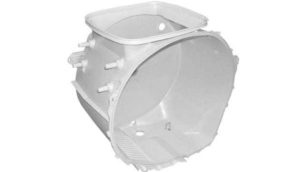 Washing machine salespeople often mention the strange term "Polinox" when describing their appliances. It's clear without much thought that this is some new material. But what parts of the washing machine are made of this material, and how does this affect its performance?
Negativity immediately comes to mind, as everyone knows that modern automatic washing machines last much less than those produced 10-15 years ago. Maybe it's all down to this Polynox, let's figure it out.
What kind of material is this?
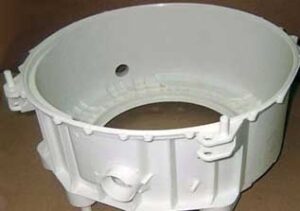
Polinox is nothing more than a commercial name for polypropylene, the characteristics of which are slightly modified by the addition of special chemical additives. In a washing machine, this material is used to make tanks., and recently, tanks made of Polynox have become very common. What's the reason?
- it is cheap;
- easy to process;
- parts made from it have good characteristics.
Polinox isn't the only plastic used for the drums of modern automatic washing machines. Electrolux washing machines, for example, have drums made of Carborane, a slightly stronger and more flexible material, but also almost 1.5 times more expensive. Almost all Candy washing machines feature drums made of Silitek. This plastic, too, is almost indistinguishable from Polinox in its properties, so in terms of performance, both Polinox and Silitek are roughly equivalent.
Note! Manufacturing washing machine parts from plastic is easier and cheaper, meaning the manufacturer can sell washing machines at a much lower price.
Plastic tanks
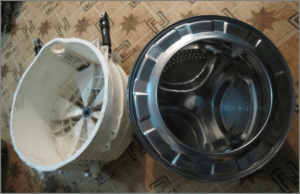 The motivation for a manufacturer seeking to reduce the cost of washing machines is understandable. The lower the cost, the lower the final price of the product, which means it becomes more attractive to consumers and is purchased more often. But what kind of machine will it be if such a crucial component as the drum is made of plastic? Will it be reliable and durable? To answer these questions, let's consider the pros and cons of plastic drums, starting, as usual, with the pros.
- Plastic vibrates less, which means the washing machine makes less noise during operation.
- The plastic tank has less heat transfer, which means the water heated in it for washing stays hot longer.
- Plastic is a lightweight material, which means a car with plastic parts will be lighter.
- Polynox does not rust or rot from moisture, in this sense its durability is beyond doubt.
- Polynox is much cheaper than metal, so if you buy a washing machine with a plastic tank, you immediately save up to 8% of its cost.
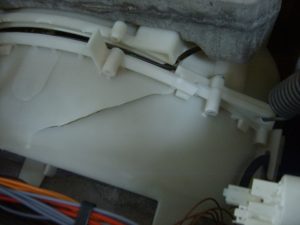
Plastic tanks have both advantages and disadvantages. The main drawback is their comparatively lower resistance to mechanical damage. Washing machine repair specialists often report that plastic tanks crack when struck. They are often damaged by users attempting to repair their washing machines themselves (by piercing them with a screwdriver or dropping a concrete counterweight on the tank). Washing machine tank repairmay end up being quite expensive.
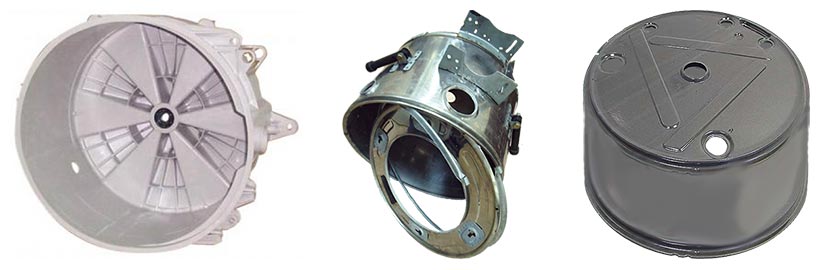
Fortunately, manufacturers are constantly working on the formulas of the plastics they use in washing machine production, so the most modern washing machines already have a much more durable tub.
In 3-5 years, machines with plastic parts will be as durable as a washing machine with a stainless steel tank.
Metal tanks
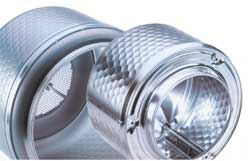
 High-quality stainless steel is a traditional, proven material for washing machine drums. Just look at the old Soviet-era semi-automatic washing machines that now litter almost every garage or shed. The machine may no longer be in use, but its stainless steel drum continues to function and, what's more, looks like new. Durability isn't the only advantage of a stainless steel drum.
- Steel tanks are extremely durable and resistant to mechanical damage.
- Such tanks are resistant to almost any aggressive chemicals and high temperatures.
- Due to dampness, mold and mildew do not form on them, and microbes also multiply less on them.
Metal tanks also have many disadvantages. The main disadvantage is the high cost, and the higher the quality of the steel, the more expensive the tank. Metal tanks emit significantly more heat, meaning the water in them will cool faster and require more energy to heat it. Another problem with metal tanks is vibration. When the drum rotates quickly, the tank will also make a considerable clanking noise, so don't expect a quiet machine with a steel tank.
Please note! A bra underwire accidentally dropped into a plastic washing machine tub can easily puncture it, but this won't happen with a stainless steel tub.
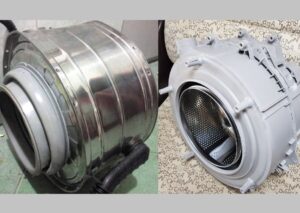
So what's the conclusion? The conclusion is that there's no need to fear modern technology. A plastic tank is far from the worst option; its advantages far outweigh its disadvantages, and the more time passes, the better plastic parts become. After all, a stainless steel tank has its own fair share of disadvantages!
Interesting:


Readers' comments
Headings
Washing machine repair




For buyers




For users


Dishwasher




Add a comment