
How to use a Samsung dishwasher?
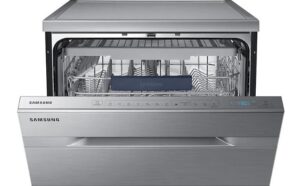 To ensure your kitchen appliance continues to delight you with its high-quality performance for many years to come, it's essential to use your Samsung dishwasher correctly. After all, careless and irresponsible handling often leads to premature failures and breakdowns. We'll explain how to use your dishwasher to avoid unpleasant consequences.
Procedure for using PMM
The instructions for absolutely every dishwasher state that you shouldn't load dishes into the dishwasher the first time you use it. A test run is required beforehand. Why is this necessary?
- During assembly, so-called production contaminants remain inside the dishwasher: from traces of oil and dust to dirt and bacteria from the hands of those who assembled it. Putting food we use in a dirty chamber is unwise, so the inside of the dishwasher needs to be thoroughly cleaned.
- The second purpose of a dry run is to check the dishwasher's functionality. Observe whether the machine completes all wash cycles without issue and whether the installation and connection are properly completed. Only after ensuring everything is working properly can you use the dishwasher to its full potential.
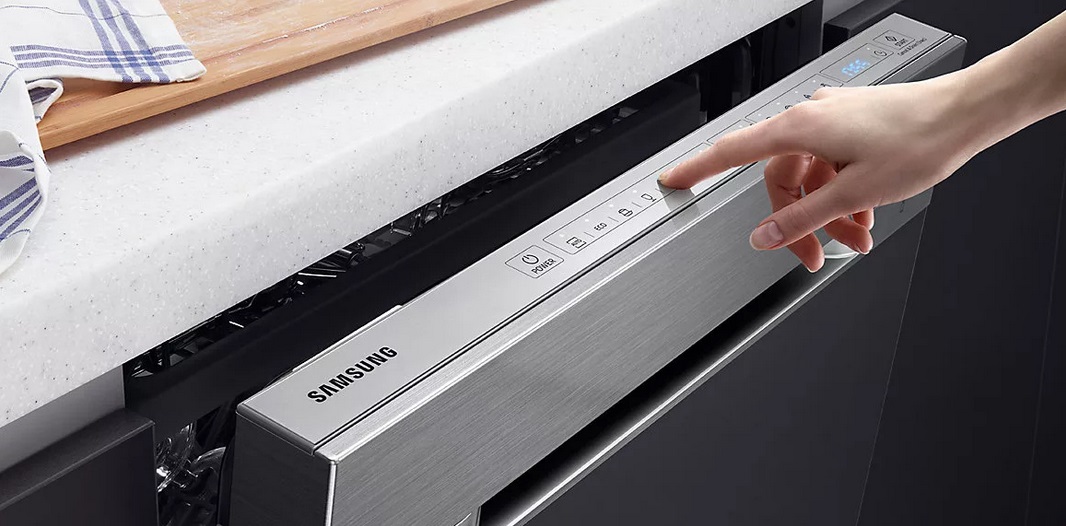
Once the test is successful, you can load the cutlery and other dishes into the basket. Afterward, be sure to check if the softening salt is in the special compartment (if not, add it). Then it's a simple matter: add all the necessary detergents, select a program, and start the wash. Don't forget to close the dishwasher door tightly!
How to load dishes so they get washed?
Yes, dishwashers are certainly marketed as machines capable of cleaning dishes far better than humans can. However, many users complain about poor cleaning quality, claiming they could have done just as well, so why bother with such a "low-quality" dishwasher? The problem could be that the dishes were loaded incorrectly. Follow these recommendations, and you'll be happy.
Important! Most Samsung dishwashers have two large drawers for dishes and a small container for forks, spoons, knives, etc.
The top rack is designed for plates, cups, saucers, and other small utensils, primarily intended for eating. This rack is typically set to its optimal position by default, but if it's adjustable, ensure that the water evenly distributes throughout the entire chamber.
The lower basket is naturally designed for larger utensils. Typically, it holds items used for cooking: pots, cauldrons, frying pans, baking sheets, as well as large plates and dishes. Most models are equipped with special holders that increase the usable space inside the basket, and folding racks. Folding the racks down creates a virtually level surface for larger items. However, remember that raising the racks helps distribute the dishes evenly throughout the chamber.
A cutlery tray is a small wire basket for forks, spoons, and knives. However, some luxury dishwashers feature special aluminum containers for silverware.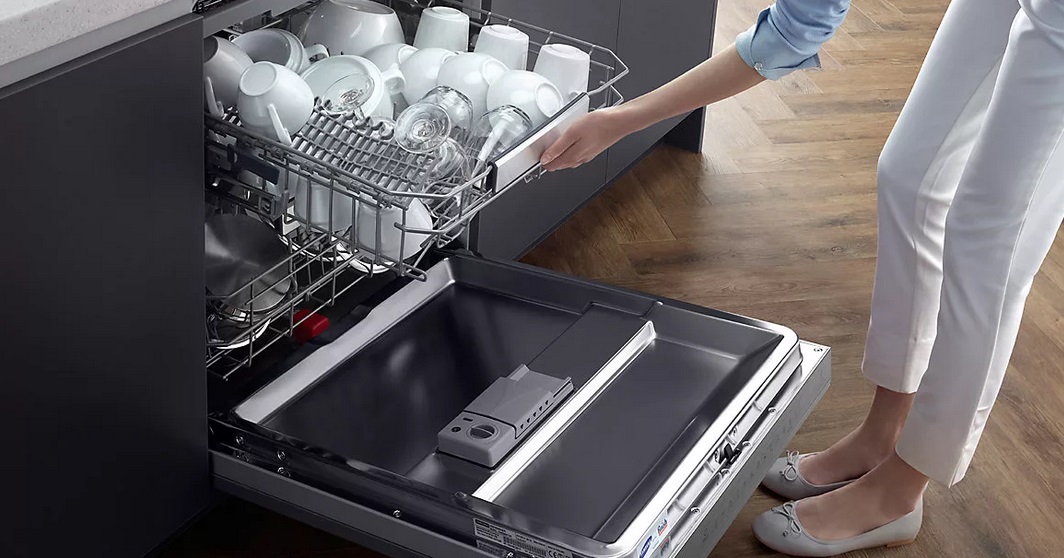
Here are some more recommendations on how to properly load dishes into the dishwasher basket.
- To avoid clogging the filter, remove any food or other debris from the dishes before loading them into the basket. While the dishwasher will remove grease and dirt, it will have a harder time removing a piece of cloth.
- If you own a dishwasher without a pre-soak feature, we recommend one way to improve cleaning performance and reduce water and energy consumption. If your dishes are very dirty, rinse them under running hot water before turning on the dishwasher. A powerful, high-temperature jet will remove excess grease, dirt, and food, significantly reducing the load on your dishwasher.
- For your convenience, it is recommended to load the lower basket first, and then the upper one.
- Follow this rule: the larger the dishware, the further from the center it should be placed. Conversely, place smaller items closer to the center.
- Place deep plates with the outer side towards the periphery.
- If you place dishes in holders, make sure there are gaps between them. Plates placed close together are extremely difficult to clean properly.
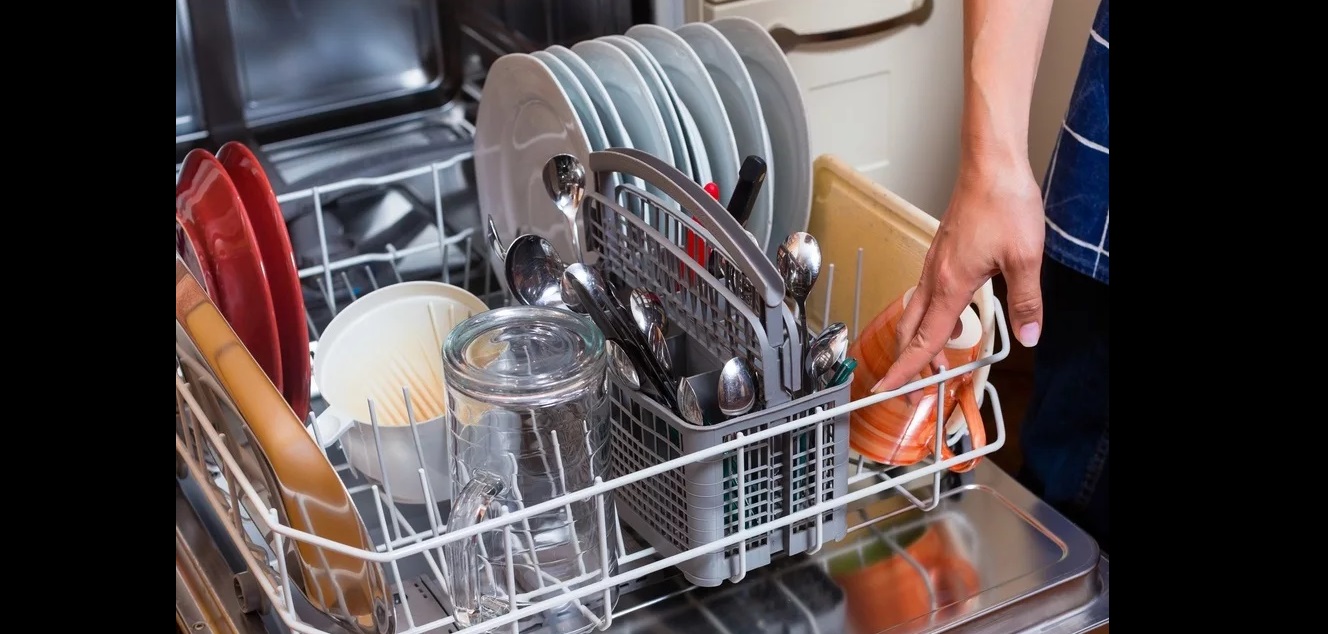
- Mugs, glasses and cups are placed in the basket upside down, otherwise water will pour in and then remain in them.
- Fragile items, such as glasses and wine glasses, should be kept separate from other utensils. If they come into contact with other utensils during washing, they may break.
- Place cutlery in the tray with the handle facing up and the working side facing down to allow water to drain better.
- If you're tempted to wash heavily soiled pots, pans, and baking sheets alongside relatively clean mugs and glasses, it's best to avoid it. Wash dirty dishes separately, and mostly clean ones separately.
- Place pans, pots, and other deep items with the inside facing down.
- Place the baking trays on their sides so that they do not prevent water from flowing into the upper levels of the chamber.
Attention! And the most important rule for loading the dishwasher is to maintain balance. Don't cram more items into the chamber than it can hold and clean, and don't pile dishes into the basket.
Remember that the water must be able to freely wash all surfaces of every plate, glass, and spoon. Otherwise, the wash will be useless: you'll end up with dirty, slightly damp dishes, and even with traces of undissolved detergent. Also, make sure that the dishes don't interfere with the rotation of the spray arms.
How to take care of your dishwasher properly
First, after each cycle (especially if the dishes were very dirty), remove the filter located at the bottom of the dishwasher above the drain hole and rinse it under running water. Food residue and other debris may also settle under the rubber seal and should be removed from there as well.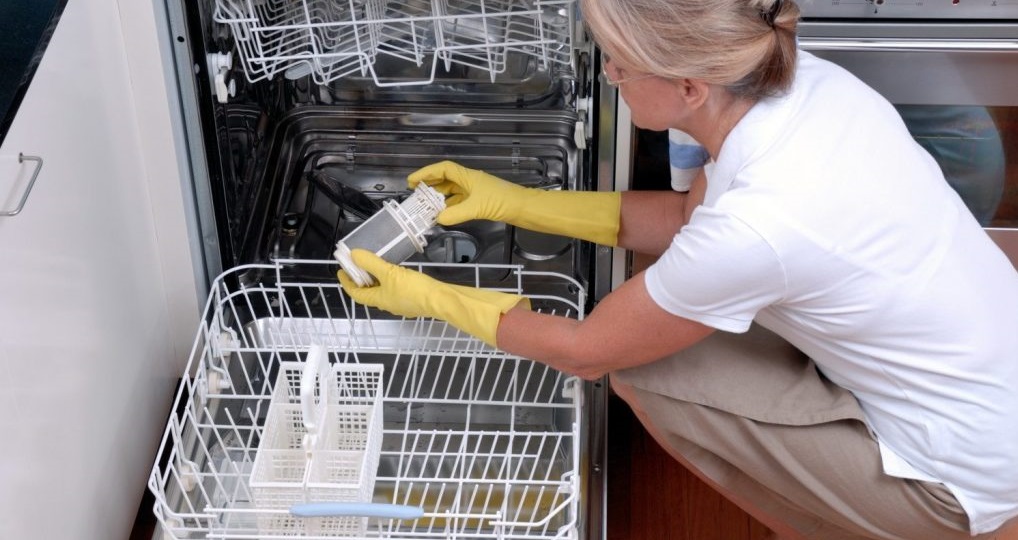
Secondly, ensure uninterrupted drainage of moisture from the dishwasher chamber. After washing, wipe the interior walls with a napkin and always leave the door open for a while. This will ensure that the chamber is completely dry and there are no odor problems.
Over time, scale will inevitably build up in your dishwasher, at least in the most remote areas that come into contact with water (hoses, for example). To solve this problem, simply perform a thorough cleaning once a quarter using a simple and inexpensive descaler.
Interesting:




Readers' comments
Headings
Washing machine repair




For buyers




For users


Dishwasher




Add a comment