
How to use a Hansa dishwasher
 New dishwashers are easy to use, even a child can handle them. However, modern models have many additional options and complex functions that are best known in advance. To properly use your Hansa dishwasher, we recommend first reading the official manual or simply reading this article, where we detail all the nuances of washing dishes in a dishwasher.
Starting to use your dishwasher
The first thing you should do after purchasing your new "home helper" is run an empty cycle without any dishes. This will allow you to:
- completely clean the internal components of the machine from dirt, dust and technical fluids that may have remained during the assembly of household appliances at the factory;
- Make sure the device is connected correctly, all functions are normal, and there are no water leaks.
Before running the washer, add about a liter of water to the salt reservoir located at the bottom of the wash chamber, filling it completely. Then, add about a kilogram of special salt. If any salt solution spills onto the bottom of the machine, wipe it up with a cloth or run a cycle to remove it. Do not leave it in the chamber, as it may damage the machine.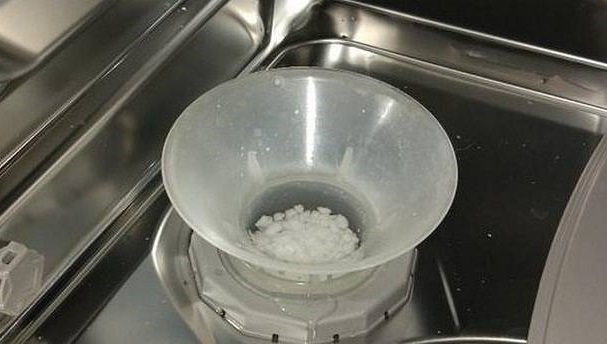
It's best to use salt specifically formulated for dishwashers, as it's significantly better purified than regular table salt. Its granules are larger, so it dissolves longer and better restores the machine's ion exchanger. After adding salt, you should add detergent to the dispenser, which can be in the form of tablets, powder, or gel, and also pour rinse aid into a special compartment to prevent streaks from leaving on the dishes.
It's more effective and less expensive to use household chemicals individually instead of buying 3-in-1 tablets, which are easier to use, but that's where their benefits end.
Only after the dry test has successfully completed can you begin using your Hansa dishwasher. If everything is working properly, we can proceed to loading the wash chamber.
Placing items in dishwasher baskets
This may seem strange to some, but the quality of a wash depends not only on the quality of the detergents and the selected washing mode, but also on whether the dishes are properly arranged in the baskets. Every kitchen item should be in its place, and in the correct position, so for perfect washing results, carefully read the following instructions.
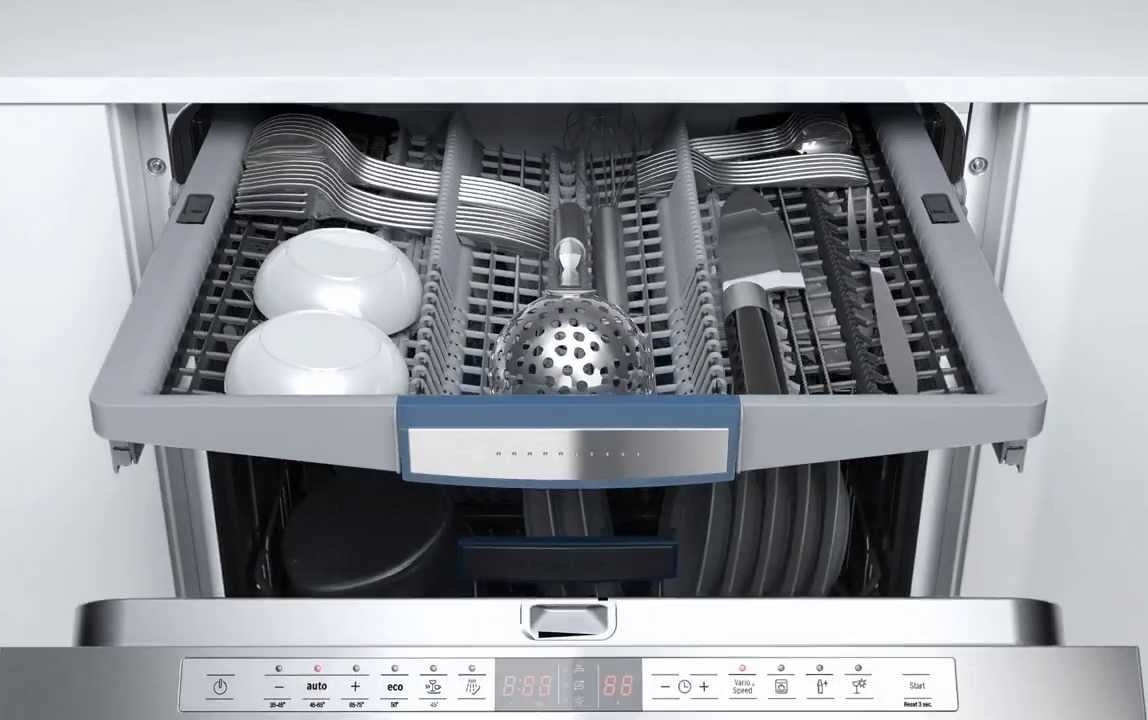
- Most often, Hansa dishwashers are equipped with two baskets: an upper one for small items, and a lower one, into which the heaviest and largest items should be loaded.
- When loading mugs, plates and other small cutlery into the upper basket, make sure that the dishes do not interfere with the movement of the spray arm.
If your washing machine has an additional function for adjusting the height of the trays, it is best to set them in advance so that they never block the spray arm when loaded with dishes.
- If all the pans, saucepans, pots, baking sheets, and other large cookware do not fit in the lower basket, then, if possible, you should fold the special holders to free up additional space for cutlery in the lower basket.
- Most Hansa brand machines are equipped with a special removable compartment for forks, legs, knives and small spatulas.
- Premium models are additionally equipped with an aluminum container in which to wash silverware.
- Avoid placing very greasy dishes with food debris, pits, tea bags, tea leaves, and napkins in the dishwasher. First, clean the surface of any debris and then rinse the dishes to remove any grease. This will not only prevent clogging but also save energy due to the pre-soaking process.
- Always load the wash chamber one at a time, starting with the bottom rack, then moving to the top rack, and then to the cutlery tray.
- Place plates, soup bowls and various dishes with the inner surface facing the center of the chamber.
- Place large plates around the edges of the basket and small ones in the center.
- Make sure there is at least a minimal gap between items to allow water to circulate freely between the dishes.
- All vessels, such as cups, glasses, goblets and pots, must be placed upside down to prevent water from accumulating in them.
- Fragile glass and crystal dishes must be positioned so that they do not touch any other objects, otherwise they may crack or break during washing.
- Place the baking trays on their sides so that they do not interfere with the circulation of water in the dishwasher.
- Do not wash heavily soiled dishes together with lightly soiled cutlery.
Ultimately, the most important thing is not to overload the dishes. The dishes in the washing chamber should not be piled high, otherwise the machine will simply not be able to wash each item properly. It's best to split large loads of dishes into several washes to avoid overloading the machine and reducing cleaning performance. After loading, be sure to double-check that the spray arms aren't blocked by dishes.
PMM maintenance
Proper use of a dishwasher depends not only on the correct use of all its functions but also on timely professional maintenance of this expensive appliance. Failure to take the necessary time to maintain it will significantly degrade cleaning performance, and the dishwasher itself may even fail. To prevent this, follow our Hansa dishwasher care instructions.
- After each cycle, clean the waste filter located at the bottom of the appliance. Simply rinse it under a strong stream of hot water to remove any food particles and other debris.
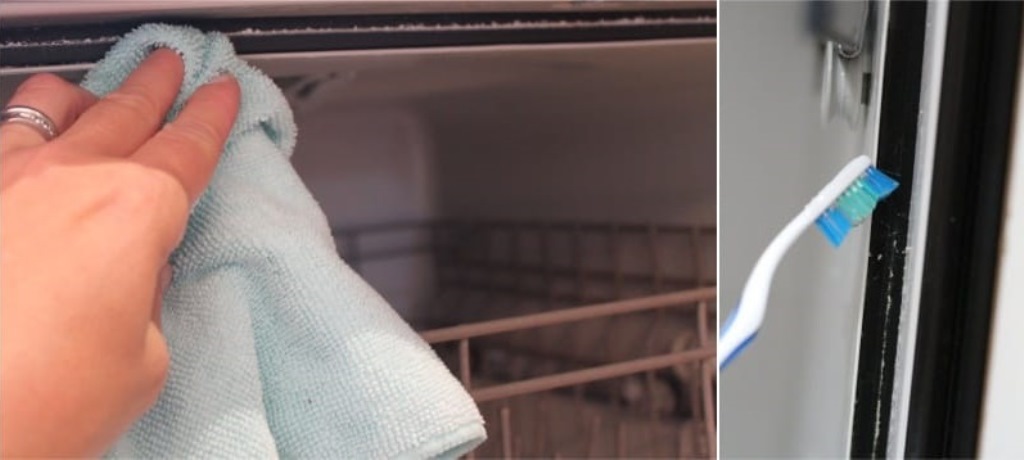
- You should also check the rubber door seals after using the appliance, as food particles often get stuck behind them.
- Wipe the washing chamber dry with a dry cloth and then leave it open for a few hours to air out the machine. This will help prevent mold and odors.
- Once a quarter, it's worth using a special dishwasher cleaner to clean the inside of your dishwasher of grease, dirt, scale, and other debris that accumulates in hoses and hard-to-reach areas.
If your water supply is very hard, you can not only increase the water hardness setting to soften it more effectively, but also purchase special multifunctional detergents for high-quality dishwashing and gentle machine care.
Using specialized household chemicals, coupled with careful and regular maintenance, is the key to a long-lasting dishwasher. Follow all of these recommendations, and your dishes will always be squeaky clean.
Interesting:



Readers' comments
Headings
Washing machine repair




For buyers




For users


Dishwasher




Add a comment