
How to use a Midea dishwasher
 A dishwasher is very similar to a washing machine in operation, but along with these similarities, there are many important differences to consider. It's easiest to read the official user manual for your appliance to learn important details, but if that's not possible, you'll usually have to search for information online. To save you time, we've prepared a single guide to help you learn how to properly use your Midea dishwasher.
Figure out how to arrange the dishes
Don't rush to load dishes and start the cycle. First, figure out how to properly arrange cutlery in the dish baskets. It may seem that the loading order is unimportant, since the dishwasher can clean everything, but if you grossly violate the rules, the dishes may not be cleaned even during an intensive wash.
So, let's first take a detailed look at the order in which dishes are placed in the washing chamber. Most dishwashers have an interior divided into three zones:
- The bottom basket is used for the largest, most difficult-to-clean dishes. This includes pots, pans, deep plates, and so on. Baking sheets and lids are also washed here, and they should be positioned so they don't interfere with the spray arms.
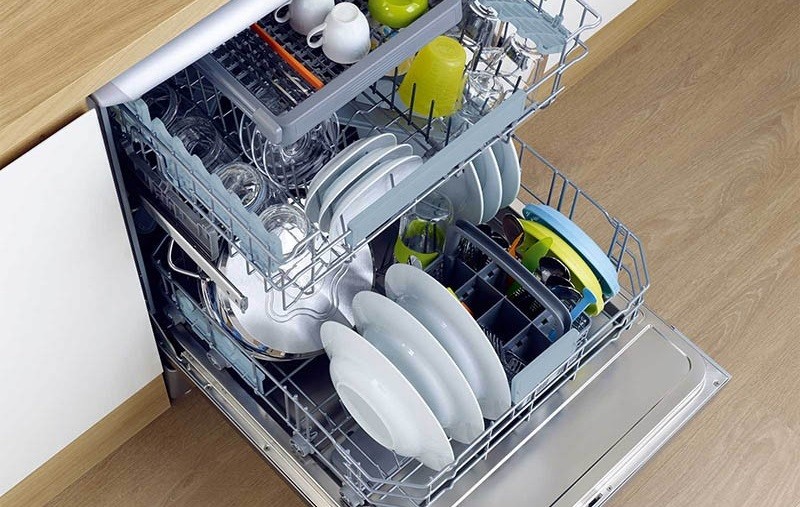
- the upper basket is designed for plates, small bowls, glasses, goblets and small, not very dirty pans;
- A basket or small tray is designed for cutlery such as spoons, forks, knives, spatulas, and other utensils. They are usually placed in compartments so they don't pile up and interfere with the sink.
In addition to tips for arranging dishes before washing, there are also tips for handling dishes after washing. Experts recommend always removing items from the bottom rack first and then moving to the top to prevent drips from the dishes above from falling onto the dishes below. They also recommend letting glasses and other thin-walled dishes cool, as they become very fragile when heated to high temperatures.
Rules for placing dishes
When loading, make sure not only that all cutlery is in its proper place, but also that it's positioned correctly. Check that everything is as indicated.
- All deep dishes must be turned upside down, otherwise water will accumulate in them and it will not be possible to dry the items.
- Each item must be securely placed in the basket so that the water pressure cannot move it or knock it over.
- Knives and other sharp objects should be stored horizontally to avoid injury. If the utensil tray is vertical, it's best to place all blades in the top basket.
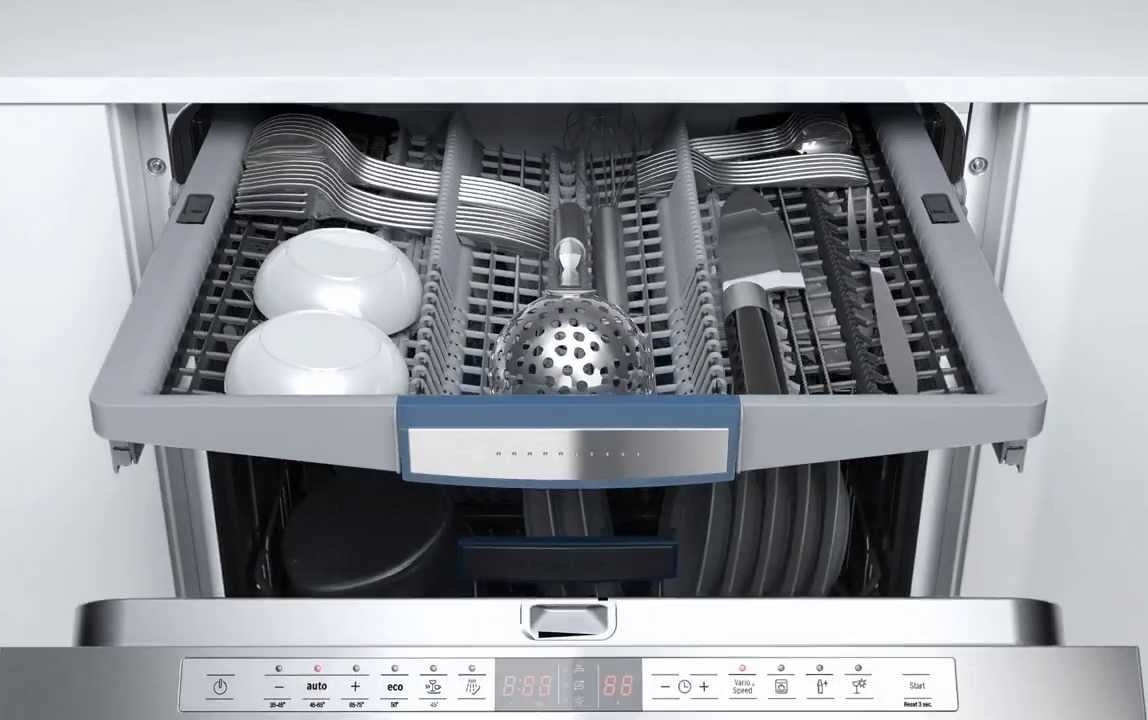
- Delicate glasses and other thin glassware should not touch each other or other glassware.
- Small items such as shot glasses are best washed by hand as they may fall out of the basket and break during washing.
- Make sure that cutlery does not interfere with the moving parts of the dishwasher in the washing chamber.
And as the most important general advice, experts point out the prohibition on overloading the dishwasher. Using a machine with more dishes than the instructions allow can reduce the quality of dishwashing and increase energy costs.
What is the InnoWash system?
A fairly common problem with dishwashers is the inability to properly treat the entire load with detergent. However, Midea appliance manufacturers have found a solution to this problem.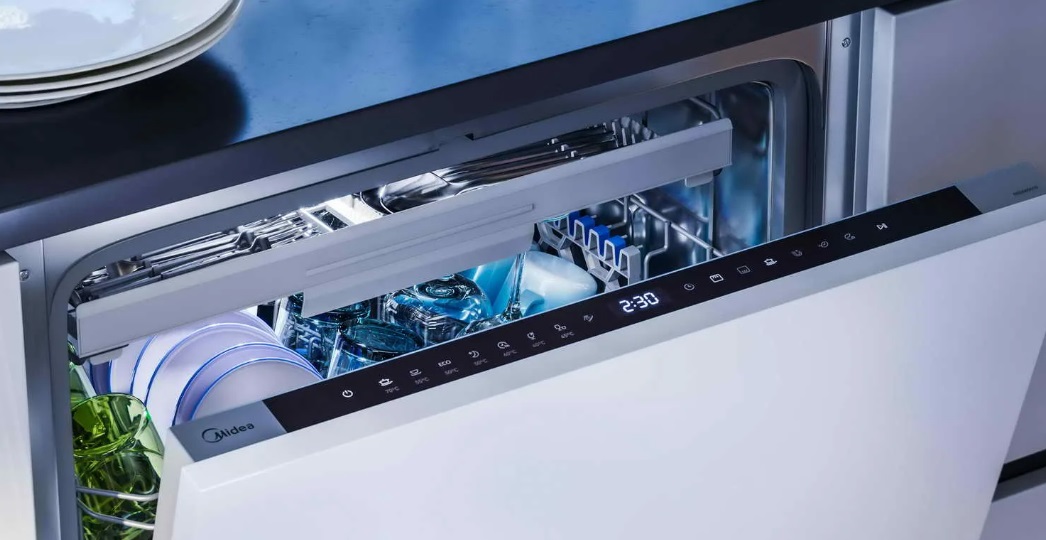
The InnoWash system allows a single arm to rotate around a common axis or use its own axis, driven by a special gear located in the center of the system. By constantly adjusting the spray angle, water and detergent are distributed throughout the entire wash chamber.
What dishes are best not to load?
Almost all dishes are dishwasher-safe, but there are a few rules to follow to protect your dishes and appliances. It's a good idea to remember or keep the following points in mind.
- It is prohibited to wash dishes made of plastic, synthetic fibers and other non-heat-resistant materials.
Some people wash plastic food containers in the dishwasher, but unless the container is labeled dishwasher-safe, it's best to avoid using the dishwasher, as it can melt under the powerful pressure of hot water.
- Avoid loading wooden items such as cutting boards, wooden spoons, etc.
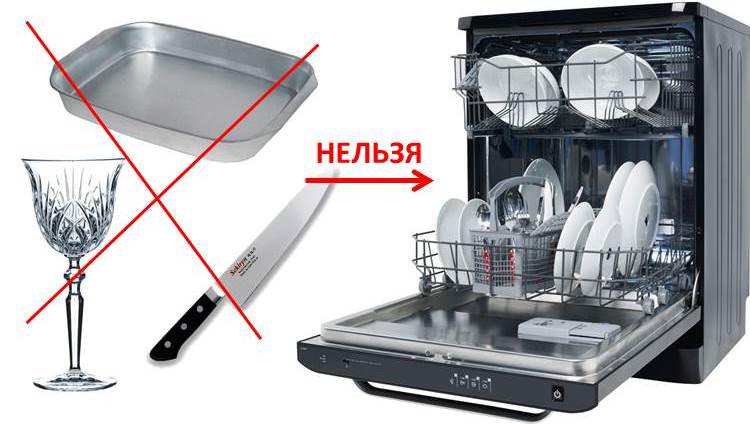
- Tableware made of tin, copper, and steel, which is susceptible to corrosion, should not be cleaned in a dishwasher.
- Aluminum and silverware are dishwasher safe, but they can become tarnished if washed too often.
- It is not recommended to wash crystal, as it is too fragile.
- Take care of items with glazed designs, as they will begin to fade and wear off.
- Avoid washing dishes that have been glued because hot water and steam can melt the glue.
Avoid loading extremely dirty dishes with dried food residue and grease into your dishwasher. If you do wash them in the dishwasher, do so only after first removing any food or grease.
Frying pans also raise many questions about whether they can be washed in the dishwasher. This is acceptable, but depends on the material the pan is made of. Cast iron pans should not be washed, as this will destroy the protective coating and lead to corrosion. Teflon pans will be even more susceptible to damage in the dishwasher. However, you can wash dishes with titanium or ceramic coatings without restrictions.
You can check the bottom of the pan or the manufacturer's official instructions to find a pictogram or information indicating that the pan is dishwasher safe. This symbol typically looks like two plates or a plate with a glass under running water. When the symbol is crossed out, the pan is dishwasher safe.
Let's look at the means for dishwashers
It's time to explore specialized detergents. A good place to start is with a special salt that restores the ion exchanger, which softens hard tap water. This special salt must be added to the salt reservoir located at the bottom of the wash chamber before the first cycle, after first filling the salt compartment to the brim with water. Failure to do so will result in harmful impurities from the water supply damaging important dishwasher components over time. Therefore, the harder your tap water, the greater the salt consumption, which can be adjusted on the dishwasher's control panel.
The hardness level of tap water can be determined using test strips, by examining the presence of scale on faucets and kettles, and also on the website of the city water utility.
Next, add detergent to the door compartment to ensure the machine can clean dirty dishes. Do not add regular soap, laundry detergent, or simple hand dishwashing gels to the detergent compartment. Only special household appliance detergents, which may come in gel, powder, or tablet form, are allowed.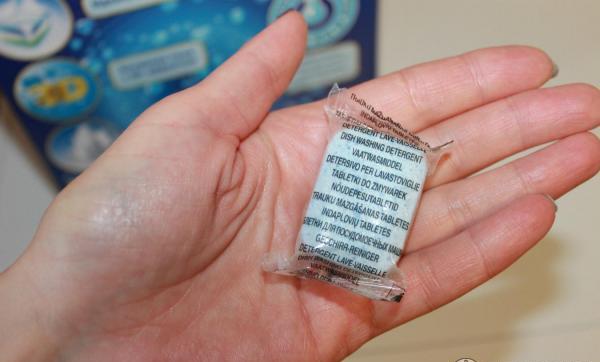
It is also important to pour rinse aid into a separate compartment on the door of the washing chamber. It helps remove stains and water droplets from dishes, and also speeds up drying, as water will drain off the dishes much faster.
Does the machine require maintenance?
Maintaining your dishwasher is much easier than you think. Simply leave the door open to ventilate the wash chamber after each cycle and prevent unpleasant odors. You should also wipe away any moisture inside the machine with a dry cloth, rinse the filter mesh, clean the rubber seals around the chamber, and wipe down the exterior surfaces to prevent water and grease buildup.
If you have a built-in dishwasher, you should care for the surface in accordance with the material the front panels are made of.
Follow all recommendations from Midea and experts to ensure your dishwasher serves you well and never disappoints with its cleaning performance.
Interesting:



Readers' comments
Headings
Washing machine repair




For buyers




For users


Dishwasher




Add a comment