
How to use a Weissgauff dishwasher
 Using a dishwasher is no more difficult than using any other household appliance. However, before you begin using it, there are a few things you should know to make it more efficient. Let's look at how to properly start the dishwasher, load dishes, and which household cleaning products to use.
Detergents and other products
After purchasing your new "home helper," don't rush to turn it on right away. It's important to understand how to use your Weissgauff dishwasher properly. There are some subtleties to using the appliance that you need to be aware of.
The dishwasher comes with instructions. Read the user manual – it contains all the information, from installation instructions to recommendations for loading dishes and selecting washing programs. If you bought used equipment and lost the instruction booklet, all the information for a specific model can be found online.
It's recommended to call a professional for installation. The specialist will connect the dishwasher to the water supply and sewer system and, if necessary, integrate it into the cabinetry. Some manufacturers void the warranty if the dishwasher is connected independently.
Before using a dishwasher, you should understand what cleaning products it requires and purchase them. For the machine to work properly, you'll need:
- dishwashing liquid;
- salt;
- rinse aid.
Salt is used to soften tap water. Before starting the dishwasher, it's necessary to set the water hardness level to ensure optimal use of the salt crystals. The Weissgauff dishwasher manual explains how to adjust the setting.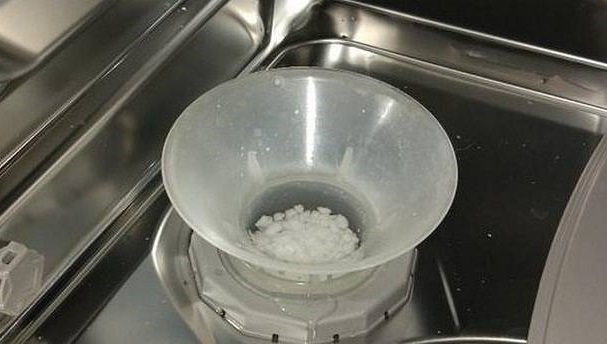
Tap water hardness varies across regions. This can be measured using special test strips. Salt intake is adjusted based on this information.
Once the softener is set up, load the salt into the special container located at the bottom of the wash chamber. First, fill the reservoir with water, then add the granules. Excess liquid will be released under pressure.
Immediately after filling the salt container, run a test cycle. Otherwise, the filters, pumps, and other dishwasher components may be damaged by salt water. Such damage will not be covered by the warranty.
Rinse aid is optional, but many housewives use it to give dishes a sparkling shine and speed up drying. The dispenser is located inside the door, next to the detergent drawer. Open the lid and pour in the rinse aid until the indicator turns completely black. The rinse aid drawer on Weissgauff machines holds approximately 110 ml.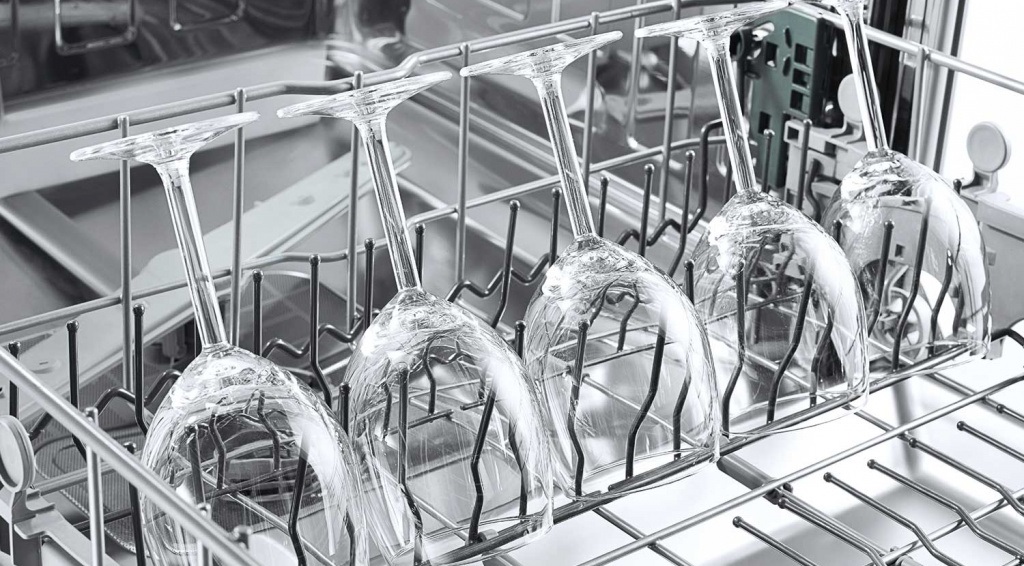
Detergents are essential for cleaning dishes and removing grease and dirt. You can purchase 3-in-1 dishwasher capsules, gel, or special powder. Each type has its own advantages and disadvantages.
Only household chemicals designed specifically for dishwashers are allowed to be used; ordinary dishwashing detergents can damage the equipment.
The detergent dispenser is located inside the door. One tablet is enough per cycle. Check the packaging for the dosage of powder or gel.
How to load the dishwasher correctly?
The Weissgauff dishwasher manual describes how to properly load dishes into the dishwasher chamber. Dishwashers are equipped with an upper and lower basket, as well as a cutlery tray. To ensure the highest quality washing, it is necessary to load items into the dishwasher correctly.
Before loading dirty dishes into the machine, it is recommended:
- scrape off any food residue from the surface of the plates;
- soften burnt layers in pans or pots;
- remove all debris – fruit pits, tea bags, toothpicks, etc.
It is recommended to arrange dishes in Weissgauff machines as follows:
- glasses, soup bowls, mugs, pots, and saucepans are placed upside down;
- deep dishes should be placed at an angle so that water drains and does not accumulate inside;
- It is important to load the dishes so that they do not wobble or tip over during the washing process;
- cutlery should not interfere with the rotation of the nozzles;
- Be sure to leave space between the dishes so that the items are washed from all sides;
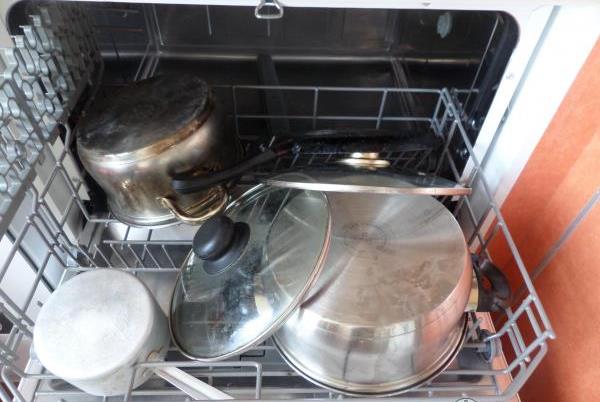
- Large, heavily soiled items can only be loaded into the bottom tray;
- the top tray is designed to accommodate lighter, thinner dishes: glasses, mugs, saucers;
- plates are placed in the lower basket with the inner side towards the middle of the tray; the larger the diameter, the closer to the edge the items should be placed;
- sharp knives are laid out horizontally in the upper basket;
- Do not overload the machine, as this may result in poor washing results.
Weissgauff dishwashers feature adjustable basket heights. This is convenient if, for example, you need to place a tall pot underneath. The dishwasher manual provides detailed instructions on how to adjust the basket heights.
A separate pull-out section is provided for cutlery. It is located above the upper basket. The design allows for easy access and loading. Spoons, knives, and forks are stored horizontally; care must be taken not to nest them inside one another.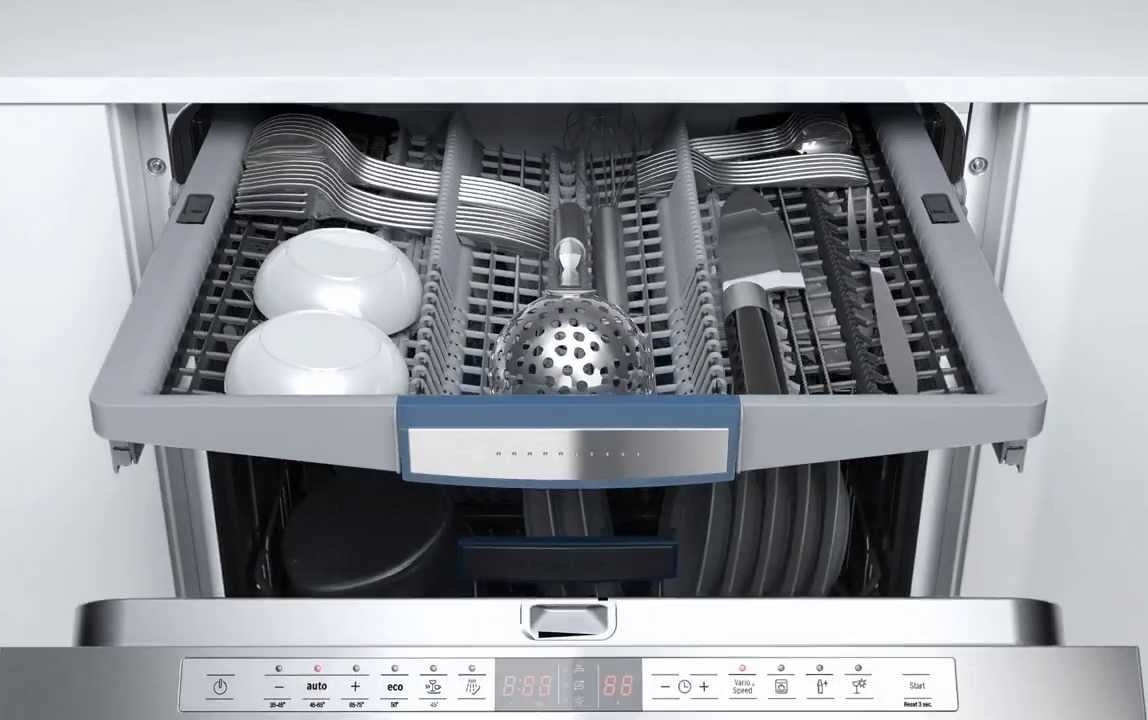
Some Weissgauff models feature a cutlery basket instead of a tray. It holds spoons and forks vertically. They should be arranged randomly to prevent items from overlapping.
Weissgauff dishwashers also feature glass holders. These are used to secure glasses so they don't tip over under the force of the water. It's important to securely hold these fragile items before starting the cycle.
The equipment instructions also specify which dishes should absolutely not be loaded into the machine. These include wooden utensils, items made of non-heat-resistant plastic, old plates with glued parts, copper and pewter items, and lead crystal.
Starting the PMM, changing and ending the program
The first time you run your dishwasher, it should be empty—without any dishes in the chamber. A test cycle is necessary to clean the inside of the appliance, removing any factory-made dirt. It also allows you to observe the dishwasher's operation and identify any problems that may arise.
The first test run is carried out without dishes, but with detergent.
The machine should also already be loaded with salt. The idle cycle runs on a high-temperature setting, heating the water to 60 degrees Celsius. Select the appropriate setting.
If the first run went well, you can continue using the dishwasher. Pull out the upper and lower racks and arrange the dishes according to the instructions provided. Add detergent to the dispenser.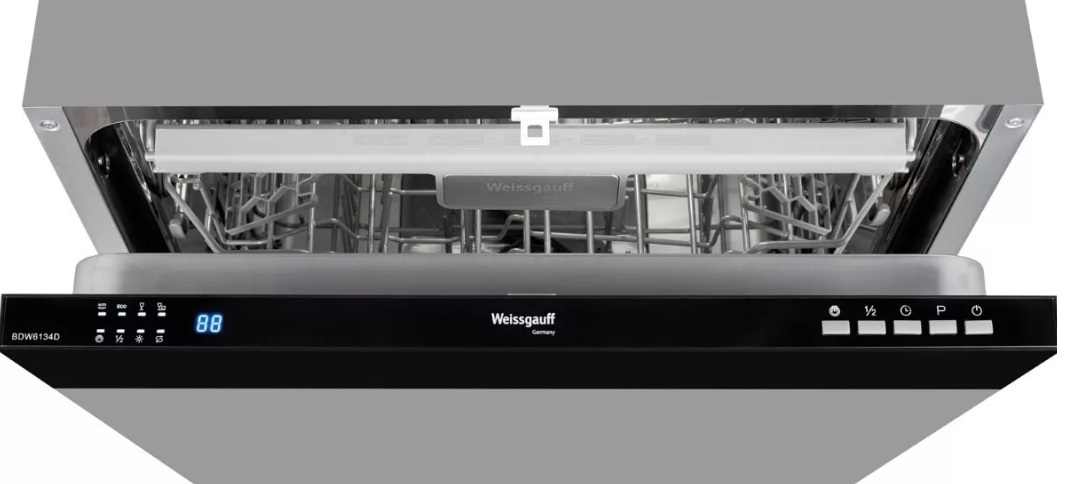
Next, plug in the machine. Press the "On/Off" button. Then select the washing program sequence. The program sequence on Weissgauff dishwashers is as follows: "Economy," "Glass," "1 Hour," "Quick," "Auto," "Intensive," and "Normal" (for models with seven modes). Then, close the door until it clicks, and the dishwasher will begin.
You can change the running program if a short period of time has passed since the start of the cycle. To do this, slightly open the dishwasher door and press and hold the program selection button. After 3-5 seconds, the dishwasher will enter standby mode. Then, change the program to the desired one and start the wash again.
You can add dishes to the machine as long as the detergent dispenser lid is not fully open. To do this:
- open the dishwasher door slightly;
- wait until the machine's sprinklers stop working;
- open the door fully;
- add dishes and close the dishwasher door;
- Wait until the machine resumes operation (this should happen within 10 seconds).
Your Weissgauff dishwasher will sound a beep when the cycle is complete. Turn off the dishwasher by pressing the On/Off button. Open the door slightly and wait for the dishes to cool and dry.
Next, empty the baskets, first the lower one, then the upper one. Afterwards, clean the machine's filter of debris and wipe the walls of the wash chamber dry. Leave the dishwasher door slightly open for ventilation.
Interesting:





Readers' comments
Headings
Washing machine repair




For buyers




For users


Dishwasher




Add a comment