
Replacing the seal on a Miele washing machine
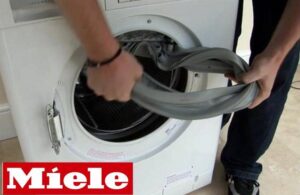 Is it possible to replace the seal on a Miele washing machine at home? Definitely yes. This repair is not considered complicated. Some technicians recommend replacing the seal without removing the front panel, while others recommend removing the front panel, dashboard, and top cover. Let's walk through the process step by step.
Preparing the car for repair
Any repair requires preparation. First, review the Miele washing machine manual. It describes the machine's design—it won't be a problem for a novice repairman.
The next step is purchasing new components. To ensure the cuff fits, check the model name of your washing machine. Miele. Then the store clerk will be able to select a similar seal. You can order the rubber seal online, but there's a risk of getting the wrong size.
You can start by removing the old seal and taking it to the store. This will make it easier for the salesperson to find a replacement. The seal is marked, so it's impossible to get the size wrong.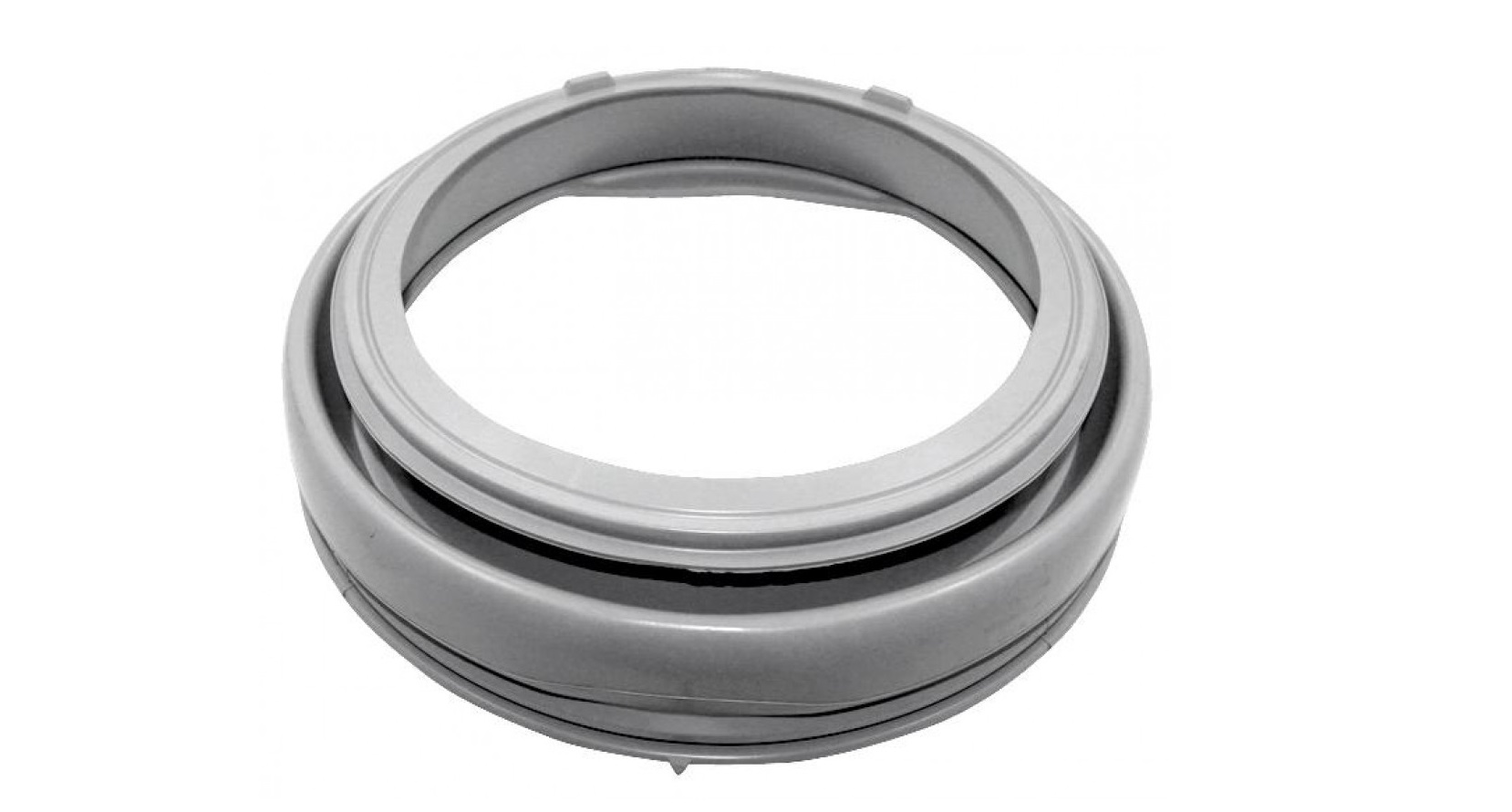
It's best to prepare the tools you might need for the job right away. The list is short. To replace the cuff, you only need to have the following on hand:
- Phillips and slotted screwdrivers;
- flashlight;
- a screwdriver with a set of bits (if you are too lazy to unscrew the screws with a screwdriver).
Now it's time to tackle the machine itself. First, disconnect the power cord from the outlet. Next, turn off the shut-off valve on the water supply and disconnect the drain and inlet hoses from the machine. Then, move the washing machine to the location where the repair will take place.
During repairs, it is essential to observe basic safety precautions.
This concludes the preparation. Now we can begin the repair. The best way to replace the door seal is to remove the front panel, control panel, and top cover. Therefore, let's begin with partial disassembly of the washing machine.
We release the rubber band for normal dismantling
To easily remove the rubber seal, you'll need to partially disassemble the washing machine. First, remove the top panel. To do this:
- go around the back of the car;
- unscrew the screws securing the top panel;
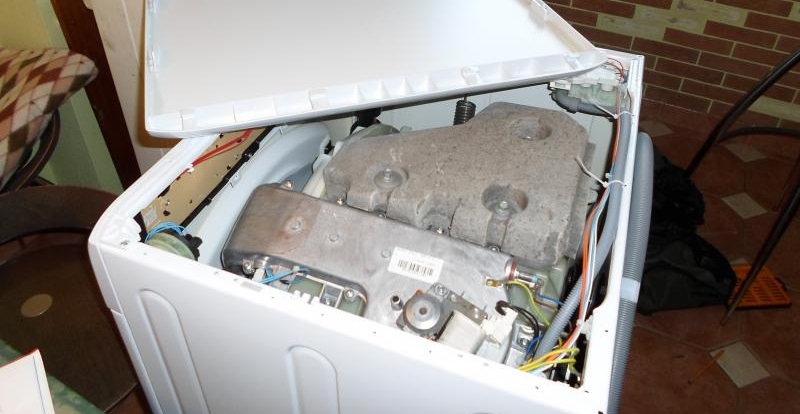
- pull the “lid” towards you and lift it up;
- put the removed panel aside.
Next, remove the detergent drawer from the machine. Pull the drawer all the way out and press the plastic tab in the center of the drawer. Once the detergent dispenser is removed, you can begin removing the dashboard.
The control panel is held in place by several screws. Some of the screws were hidden by the top cover, and two were hidden by the powder receptacle. Now all the screws can be removed with a standard Phillips-head screwdriver.
Next, you need to remove the automatic washing machine's dashboard. It's now held in place by only a few latches. You can use a screwdriver to release the fasteners. Alternately press the retaining elements and carefully unhook the dashboard from the body.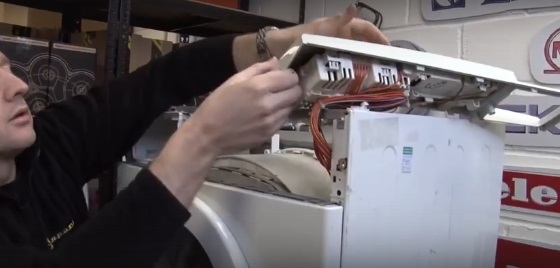
Behind the control panel, there will be a bundle of wires connecting it to the electronic module. There's no need to disconnect them. Simply carefully place the dashboard on top, on the corner of the washing machine.
Next, you need to work on the lower part of the washing machine. Take a flat-head screwdriver and pry open the access door covering the debris filter. The element is located on the decorative panel.
After opening the hatch door, carefully move the emergency drain pipe aside—the hose may interfere with further disassembly. Use a Phillips-head screwdriver to remove the screw securing the false panel. The screw is located either to the right or left of the drain filter—its location depends on the Miele washing machine model.
Next, all that's left to do is unfasten the decorative panel. It's held in place by several clips. Carefully grasp the panel and pull it free from the clips, first on the right, then on the left.
Next, you need to remove the front sealing cuff clamp. It's important to remove it now, as it will interfere with dismantling the front housing panel. Here's how to proceed:
- open the drum door wide;
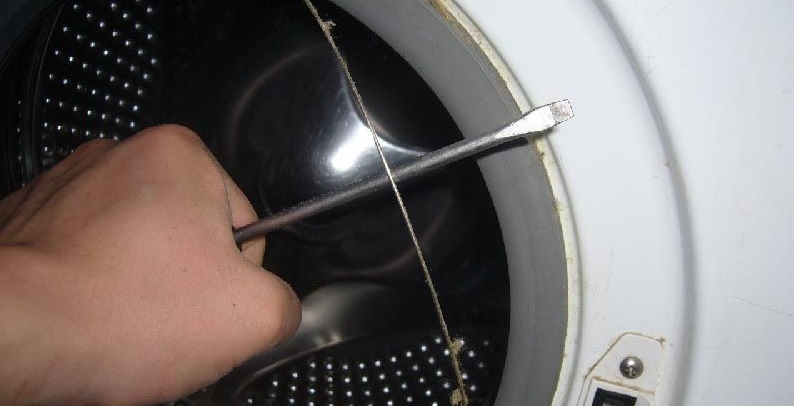
- find the spring on the cuff clamp;
- pry up the spring with a slotted screwdriver;
- carefully pulling the spring towards you, pull off the clamp.
It is even easier to remove the front clamp of the cuff using a blunt table knife.
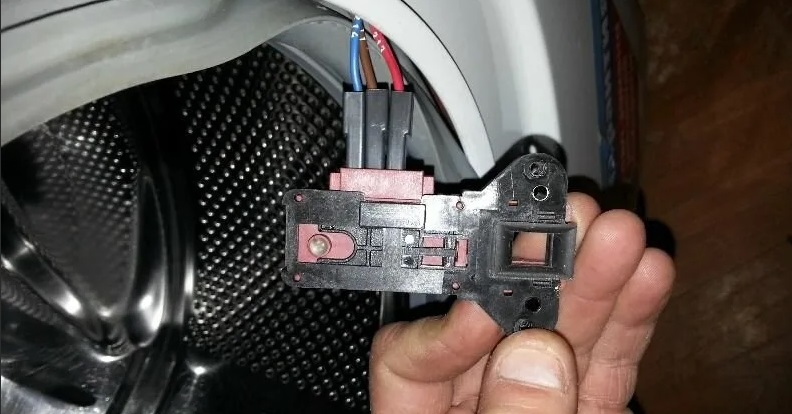
After removing the clamp, tuck the rubber seal into the drum to prevent it from catching on the front wall of the housing. Otherwise, it will interfere with removing the front panel of the washing machine. Next, access the locking mechanism by unscrewing the two screws holding the locking device in place. The bolts are located to the right of the door and can be removed with a standard Phillips-head screwdriver.
Now, just a few screws are preventing you from removing the front panel of your Miele automatic washing machine. Remove the screws and carefully push the door lock out of the panel until the lock falls inward. Then you can remove the front panel of the washing machine.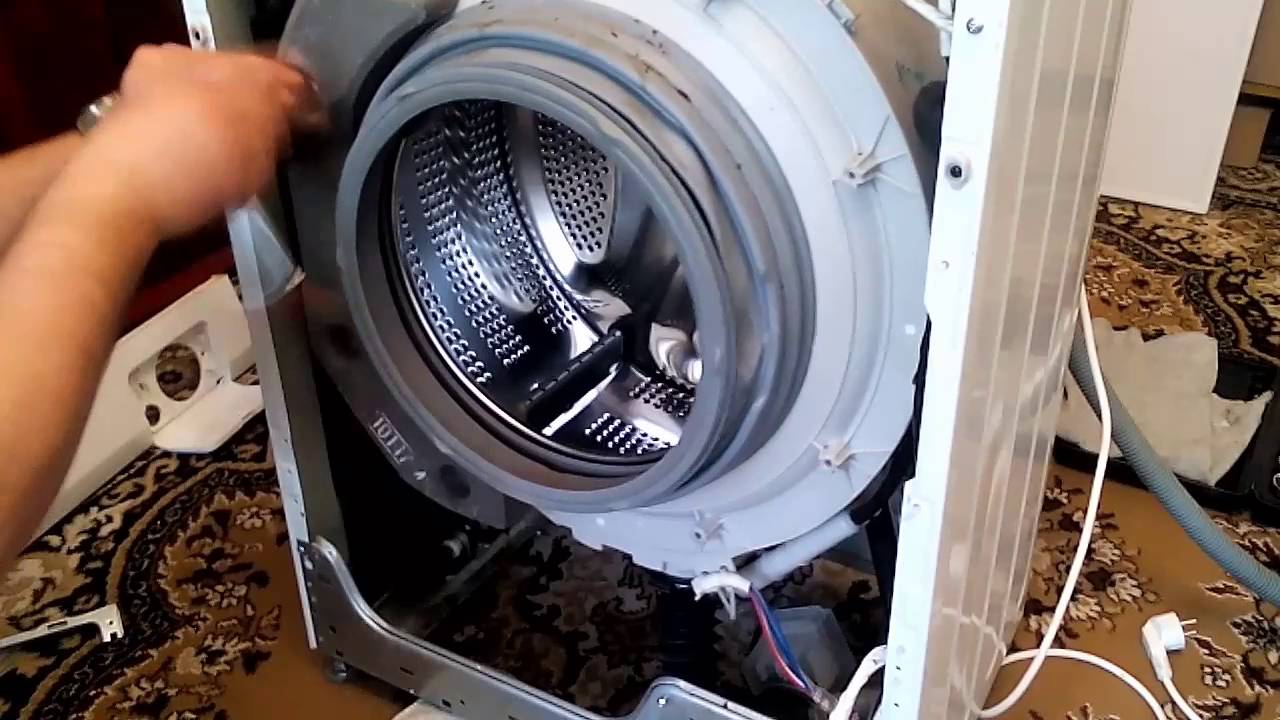
There's no need to remove the hatch door—it's better to leave it assembled with the front wall. After that, all that's left to do is disconnect the hose connected to the cuff fitting. This completes the bulk of the disassembly.
We remove the old cuff and install a new one.
Now is the time to remove the old rubber seal and install a new one. The drum cuff is fixed with an external and internal clamp. The front ring has already been removed – all that remains is to dismantle the previously hidden element.
Removing the inner clamp is quite simple. Removing the front wall gives access to the ring. You also need to use a screwdriver to pry up the spring and pull out the rim.
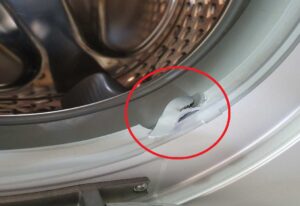
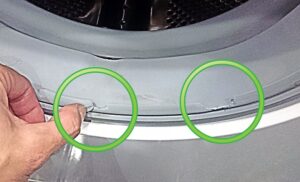
The next step is to remove the seal itself. Grasp the seal with both hands and firmly pull it out of its seat. Don't worry about damaging the rubber; it's going to be discarded anyway.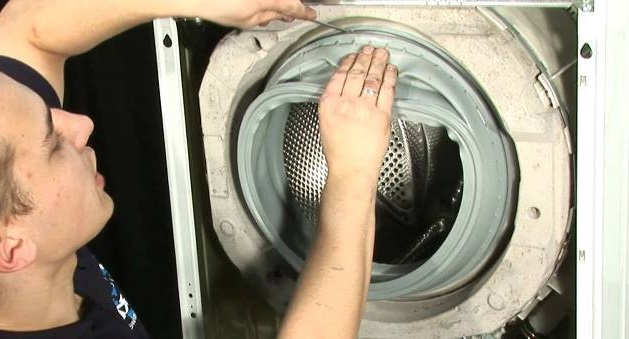
Be prepared to find a large amount of dirt under the seal. Clean the sealing area of any accumulated debris. Next, remove the bushing from the old seal and install it on the new part.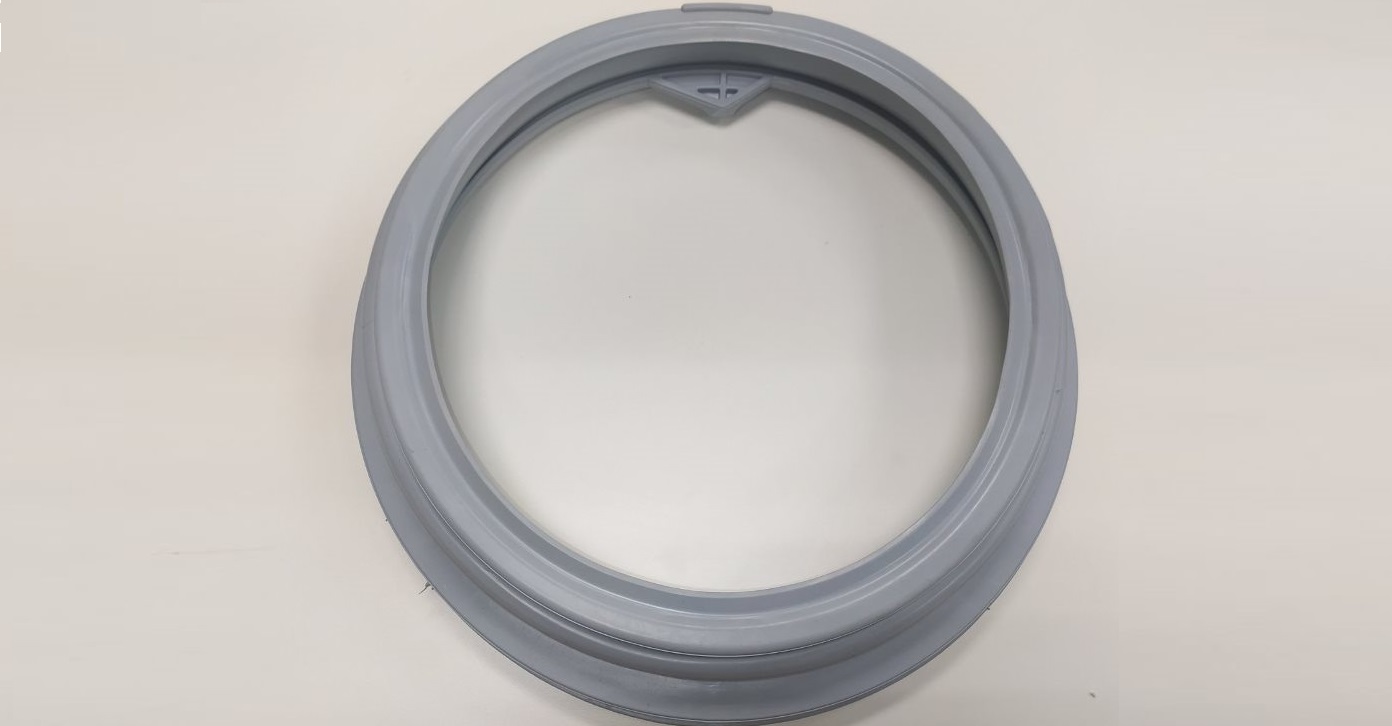
Then the new seal is turned over with the nipple facing up. It's important to install the seal correctly. The arrow on the seal should align with the mark on the washing machine body, and the notches should be at the bottom.
It is very important to position the cuff correctly - the drain holes should be at the bottom.
Once you've determined the location of the seal, pull it into place. Next, secure the seal with the outer clamp. You can buy a new rim or reinstall the old one.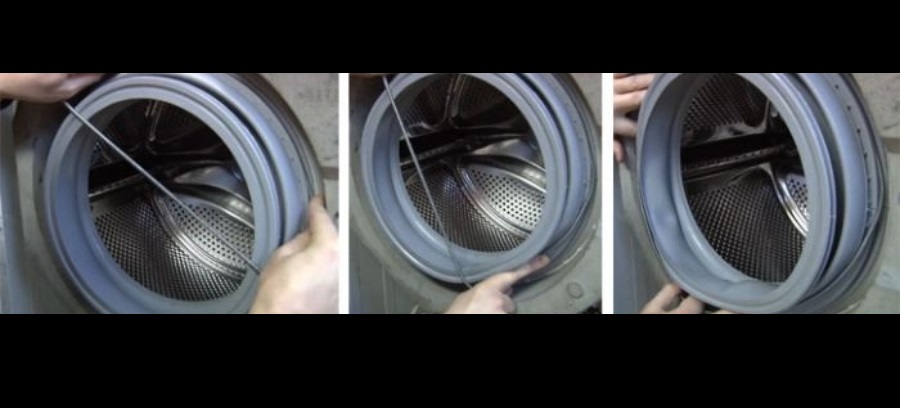
Securing the cuff with clamps is the most difficult part of the repair. This may require a "spare hand," so it's best to call a helper. Stretch the spring slightly and replace the rim. To make installation easier, use two slotted screwdrivers.
Be careful with the new seal. Sometimes, when tightening the clamps, screwdrivers can puncture the seal. In this case, you'll have to run to the store for a new gasket, so be careful.
Once the inner clamp is installed, you're ready to hit the "finish line." The rest of the process is performed in reverse order:
- connect the hose to the cuff fitting;
- put the front wall back in place;
- straighten the edges of the cuff, “grasping” the front panel of the washing machine body with them;
- secure the UBL;
- put the outer cuff clamp back in place;
- assemble the body of the machine (put in the decorative panel, dashboard, top cover);
- Connect the washing machine to the utilities.
Replacing a cuff isn't as difficult as it might seem. Even a novice can handle this job, and no special tools are required. The key is to follow the instructions and observe safety precautions.
Interesting:

Readers' comments
Headings
Washing machine repair




For buyers




For users


Dishwasher




Add a comment