
How to replace the drain hose in a Bosch washing machine?
 Without proper drainage, a Bosch washing machine will not operate. The pipes, pump, and drain hose pump wastewater from the drum into the sewer, allowing the machine to recycle and clean the laundry. If one component of the drainage system fails, the drum remains full, increasing the risk of a drain pipe breaking and flooding the room.
To avoid flooding, replace your washing machine drain hose as soon as possible. Let's find out which instructions are best to follow.
Repair progress
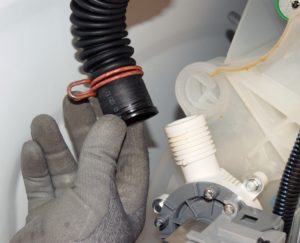
Replacing the drain hose on a Bosch washing machine at home is easy: the hose connection diagram is quite simple and straightforward. One end of the corrugated hose is attached to the sewer pipe via a special tee or by connecting to the trap under the sink. The other end goes into the washing machine, or more precisely, to the pump, where it connects to the snail pipe.
Simply removing a damaged hose and installing a new one won't work. Typically, when there's a drain problem, the machine is full, and tampering with the system will lead to unpleasant consequences. It's best to follow the instructions strictly:
- disconnect the machine from the power supply and water supply;
- pry up the technical hatch with a flat-head screwdriver and unfasten the latches holding it (the hatch is located on the lower right side of the case);
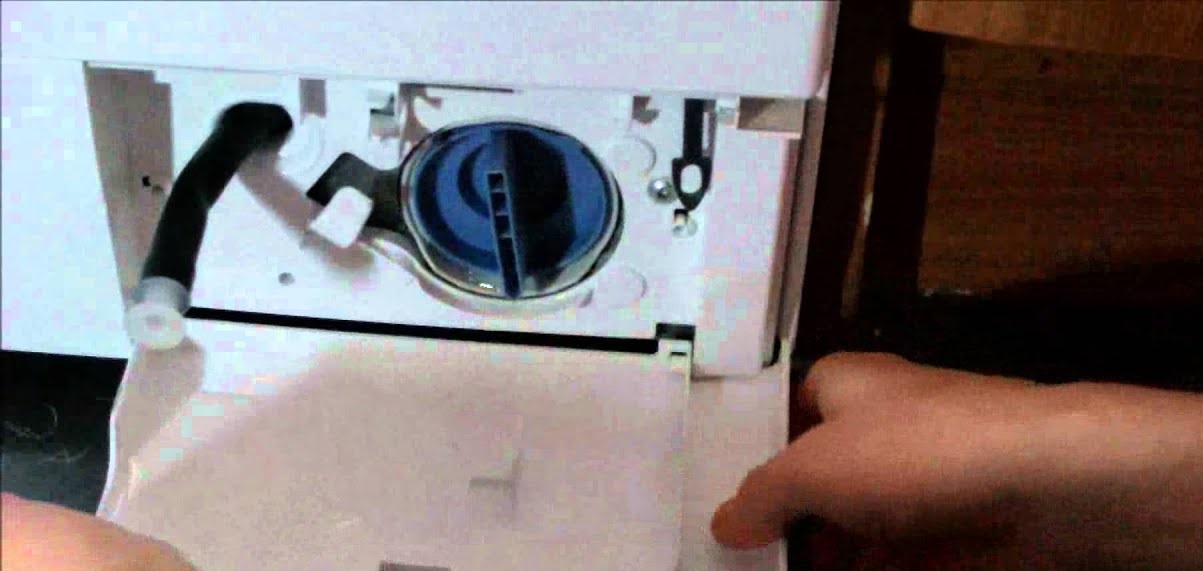
- find the black round cap – the trash filter;
- tilt the Bosch body back, raising the front legs by 5-10 cm;
- place a container under the filter to collect water;
- place rags and oilcloth around the washing machine;
- Unscrew the waste filter and drain the water.
Do not drain the water immediately after the high-temperature cycle ends – you may get scalded by boiling water!
Once the machine is empty, you can proceed with the next steps. First, you need to disconnect the hose from the drain.There shouldn't be any difficulties: access to the siphon or tee is free, and to disconnect it, simply loosen the clamp on the hose.
The drain corrugated pipe is removed from the snail through the bottom. Here's how:
- we lay Bosch on its side;
- if there is a bottom, then it is necessary to unscrew the bolts holding it and set the panel aside;
- if there is an “Aquastop” system, unhook the float;
- we find the drain pump;
- loosen the clamp that secures the rubber;
- remove the drainage sleeve.
Once the old hose is removed, we move on to replacing it. First, we check the spigot and the pump itself for blockages and debris. If any are present, we clean the unit. Next, we take the new hose, attach one end to the trap or drain, and the other to the pump.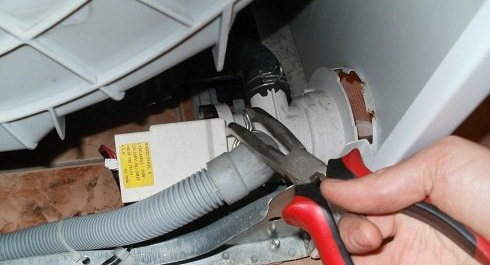
Be sure to check the corrugated tube's bend to prevent pinching or kinking. Then, plug in the Bosch washing machine, run the "Rinse" program, and evaluate the results.
Or maybe leave the hose as is?
We reiterate that the washing machine will not operate without proper drainage. Firstly, an error code will appear on the display indicating a problem with the wastewater drainage system. Secondly, the washing machine will not begin filling with water for the wash and rinse cycles until the drum is full. In either case, the drum will need to be emptied and the drain hose replaced.
It's not difficult to figure out when a hose needs replacing. Generally, the following steps should be taken.
- Damaged hose. If inspection reveals that the corrugated surface is damaged or crushed, it should no longer be used. Attempting to seal cracks with tape or electrical tape is strongly discouraged – these are temporary and unreliable.
- Clogged hose. A clogged hose needs to be replaced, as foreign deposits on its walls impede drainage, spread an unpleasant odor, and encourage mold growth. For lightly clogged hoses, you can rinse and clean the hose.
- Incorrect length. If the factory drain hose included with your Bosch is too short, it needs to be replaced. You shouldn't try to extend the hose yourself, as multiple joints increase the risk of the tube bursting.
It is strongly recommended that you do not patch a cracked or pinched drain hose yourself – you must immediately replace the hose with a new one.
A new hose should be selected carefully, based on the Bosch serial number. Even better, remove the old hose and bring it to the store as a sample. Pay particular attention to the length and diameter of the corrugated tube. The type of tube is also important: coiled tubes consist of several modules, while telescopic tubes look like standard corrugated tubes.
Interesting:

Readers' comments
Headings
Washing machine repair




For buyers




For users


Dishwasher




Add a comment