
How to wash dishes in a dishwasher without tablets
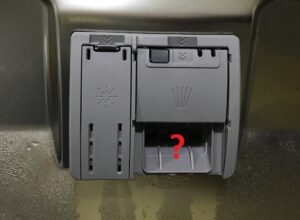 It sometimes seems like new dishwasher tablets and capsules are appearing on the market every day, making it increasingly difficult to choose the right one. Meanwhile, the prices for these products almost never go down, but rather rise sharply from time to time, increasing the average dishwasher bill. To save money on household chemicals, many housewives try washing dishes in a dishwasher without tablets at all, avoiding the hefty price tag. Is this safe, and if so, what precautions should they take?
Why are experts against it?
Of course, all experts and appliance manufacturers will insist that you should never wash dishes in a dishwasher without special cleaning agents. This is precisely what the instructions for any dishwasher will state. They also say you shouldn't use the appliance without special salt, which helps the appliance combat hard tap water. But what will happen to the dishes if you try to wash them without salt tablets?
- The first of four possible scenarios is that the dishes are perfectly clean.
- The second option is that the dishes will be clean after washing, but either with streaks or with drops of dried water.
- The third scenario is satisfactory dishwashing quality.
- Finally, the last possible situation is the disgusting quality of dishwashing, which will make it seem as if the utensils were not washed at all.
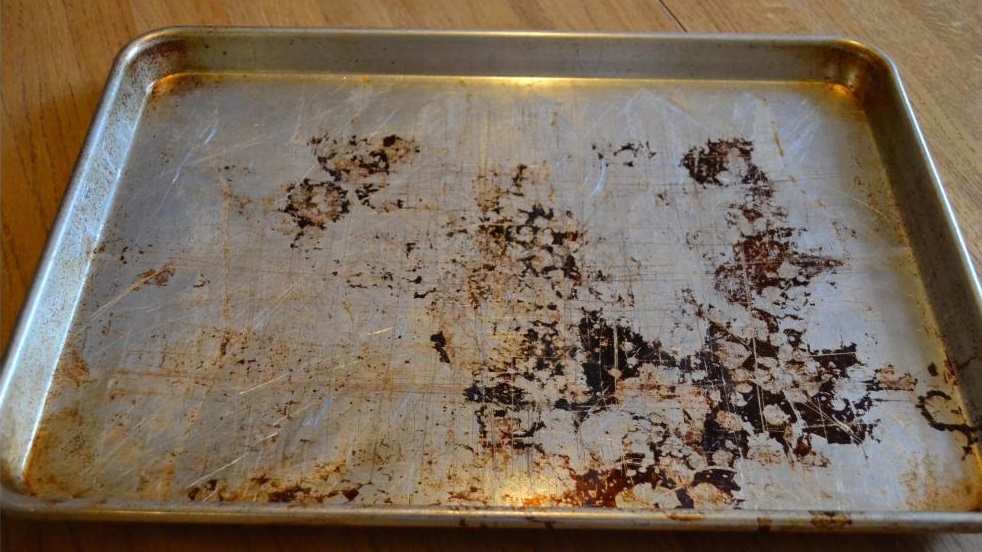
Thus, a cleaning cycle without household chemicals can be called a real lottery, because until the very last moment it will be unclear how well the cutlery will be washed, or whether it will be washed at all. Unfortunately, this type of washing will most often result in dishes that are far from as clean as you are used to seeing them after using a dishwasher. Ultimately, you'll just be wasting time, water, and electricity that could have been beneficial. Worse yet, using a dishwasher without salt can damage the ion exchanger, requiring expensive repairs and replacement of a key component.
As a visual example, you can simply turn on the hot water tap in the kitchen, place a plate under the stream, and wait a while – after this procedure, the plate will indeed become cleaner, with dirt and food residue removed, but ingrained grease and other contaminants will remain.
If you use special dishwasher salt but don't add tablets, capsules, or any other detergents, the machine won't be damaged, but the dishwashing results will remain unsatisfactory. While it's possible to wash dishes without tablets and other household chemicals, there's practically no point in saving money. Using the machine without salt is absolutely not recommended, as it will directly impact the safety of the appliance.
You shouldn't use substitutes for these products.
The only remaining situation is when your dishwasher detergent suddenly runs out, and you need to wash the dishes right now. Is it possible to use regular household cleaning products, such as laundry detergent, which some housewives recommend only in emergencies? We strongly advise against washing dishes this way, and here's why:
- Hand washing powder foams extremely strongly, which means that it can penetrate into the internal components of the dishwasher and damage the electronics;
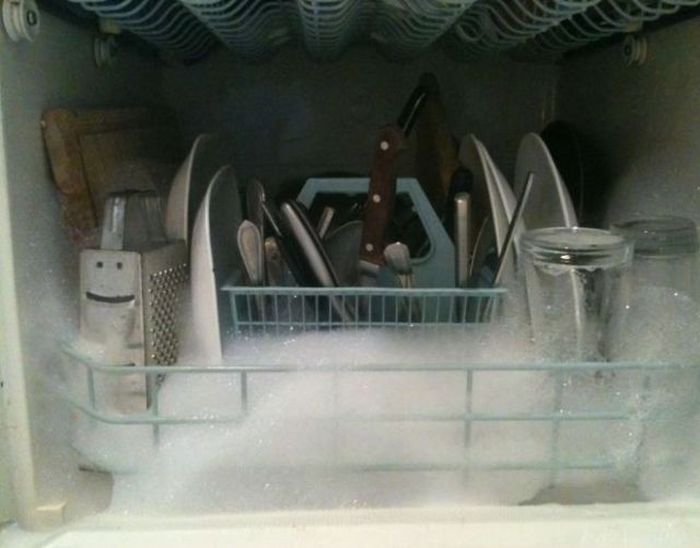
- All laundry detergents contain strong chemicals that can be toxic to the human body. All these components will remain on the dishes after washing and are guaranteed to enter the digestive system of everyone, even the smallest members of the family;
- The powder will leave white stains on the dishes, which will still need to be washed off by hand.
Some DIYers suggest using mustard powder instead of tablets. Forget this method, as it swells when wet and clogs the spray arms and other components of the dishwasher. This will result in you spending more time cleaning the dishwasher's internal components than you save on dishwashing.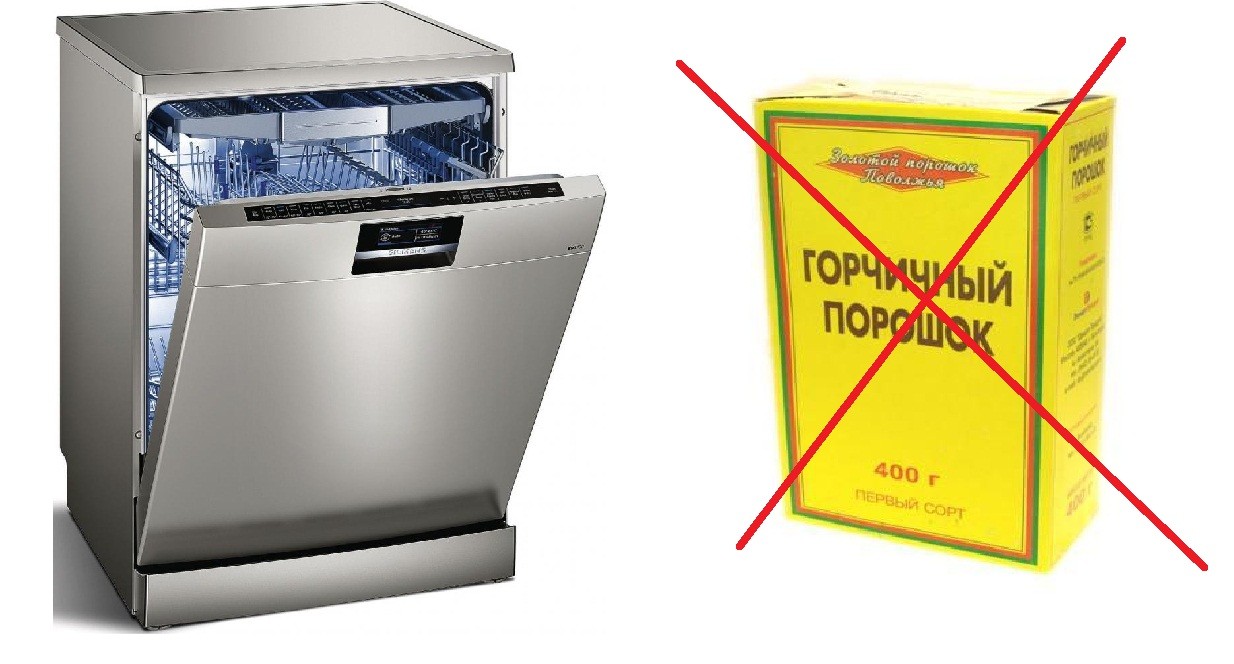
Finally, some housewives recommend adding baking soda instead of specialized dishwasher detergent. This makes sense, as baking soda effectively dissolves dirt and generally works like regular detergent. Therefore, baking soda is the only substitute for specialized dishwasher detergents that does its job well and does not harm complex household appliances.
It is best to use products designed exclusively for use in dishwashers - they have the best effect and are 100% harmless to your "home helper".
Ultimately, it is true that you can use detergent substitutes, but not all of them, and only if the machine has special salt for regenerating the ion exchanger.
Interesting:


Readers' comments
Headings
Washing machine repair




For buyers




For users


Dishwasher




Add a comment