
Dishwasher powder - store-bought and homemade
 Any fancy dishwasher can theoretically clean dishes without chemicals, but the results are unlikely to be impressive. Grease, tea stains, and other dirt will remain where they were; warm water will only remove the lightest stains. To get sparkling clean dishes in the dishwasher, you need dishwasher detergent. It's also important to know which detergent to use, how much to apply, and where to pour it. Many people also wonder what to use instead of commercial detergent. We'll discuss this and much more in this article.
How to use dishwasher powder?
Using dishwasher detergent is quite simple. Just read the instructions on the package carefully. It's important to know how much detergent to use, as different manufacturers have different concentrations of active ingredients. Trendy brands often include a special measuring spoon, making it easier to determine the right amount.
The dosage of powder may also depend on the characteristics of the dishwasher. If your machine has a half-load function, you will need to add half as much detergent when using it, as half as much water and half as much salt will be used for washing. If your dishwasher has such functions or programs, read the instructions very carefully and understand how to use them correctly.
Please note! Modern dishwashers offer a variety of interesting programs that help you save not only detergent and salt, but also water, energy, and your time, so get to know your dishwasher carefully!
We've outlined the algorithm for determining how much detergent to add, now let's figure out where to put it. This is also fairly straightforward: simply open the door and inspect the top or back. There should be a plastic compartment there for detergent and rinse aid.
- Open the lid of the powder compartment.
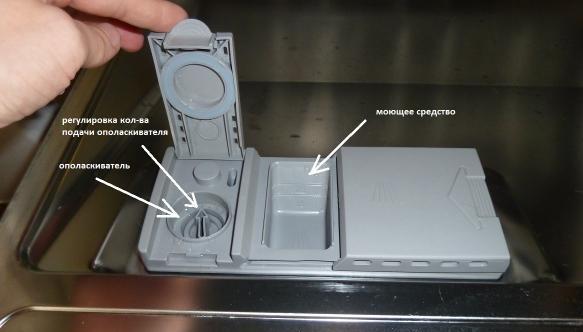
- We pour the required dose there.
- Close the lid and you can start the washing program.
Please note that these sections are not always labeled. To understand exactly which compartment of the drawer is used for what, refer to the instructions for your dishwasher. If you pour powder into the rinse aid compartment, for example, the dishwasher will remove it at the very end of the program, and at the end you will have dishes with stuck grains of undissolved powder.
What is the difference between expensive and cheap powder?
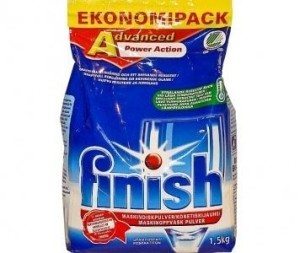 Consumers, trying to save money, tend to replace expensive detergents with cheaper ones. Is this really the right approach? When choosing dishwasher detergent, experts advise paying attention not to the front of the packaging or the brand, but to the ingredients. Many brand-name and inexpensive detergents have almost identical ingredients. The conclusion is clear: Expensive detergent can be painlessly replaced with a cheap one, because when we buy a well-known detergent, we overpay considerably for a well-known brand.
There's one caveat, though. Expensive brand-name products are often counterfeited, and even after paying a hefty price for the coveted pack, you might not get the results you're looking for. Cheap products aren't counterfeit, so you can rest assured, but what's the quality of a cheap product? You'll have to resort to trial and error, exploring several options, choosing the best one, and using it. In our opinion, there's no point in paying attention to highly advertised powders; regular powders produce the same results and cost much less.
Is it worth looking for a replacement for factory-made powder?
At first glance, it seems like if you're already using cheap detergent, why risk saving even more by making your own? In fact, there's a grain of truth to this. When you make your own detergent, you use high-quality ingredients, use them in specific proportions (without skimping), and get the results you expect every time.
Important! For a homemade dishwashing detergent to clean dishes effectively, you need to not only make it correctly using high-quality ingredients, but also know exactly how much to add for each washing cycle.
It's not like that with commercial detergents. Sometimes you buy a pack and everything gets cleaned well, but the next pack doesn't produce the same effect, even though you use the same program on the dishwasher. It's quite frustrating, because you pay a pretty penny for these products, and the result is dirty dishes. All you can do is wash them yourself, silently cursing the manufacturers of detergent and dishwashers, even though the latter have absolutely nothing to do with it. To ensure perfect cleaning, you need to:
- choose the right washing program;
- choose a high-quality and inexpensive powder;
- pour the required amount of powder into the required place;
If you omit one of the three elements from this list, you shouldn't expect a high-quality result. Some, to be sure of the results and save money, prefer to make their own detergent, although this requires considerable experimentation and studying various dishwasher detergent recipes. If your homemade product is identical or close in composition to the commercial detergent, you'll consider yourself successful, but first you need to find a suitable recipe, and that's not an easy task.
How to make your own dishwasher powder?
In this section, we'll look at some good recipes for homemade dishwasher detergent. We'll be quick to point out that we won't provide any specific dosage or application information for these products, as it will depend on the individual characteristics of your dishwasher—some require a certain amount of detergent, while others require a different amount. So, for the first recipe, "Mustard," you'll need:
- 0.5 cups dry mustard powder;
- 0.5 cups of borax;
- 1 glass of soda ash.
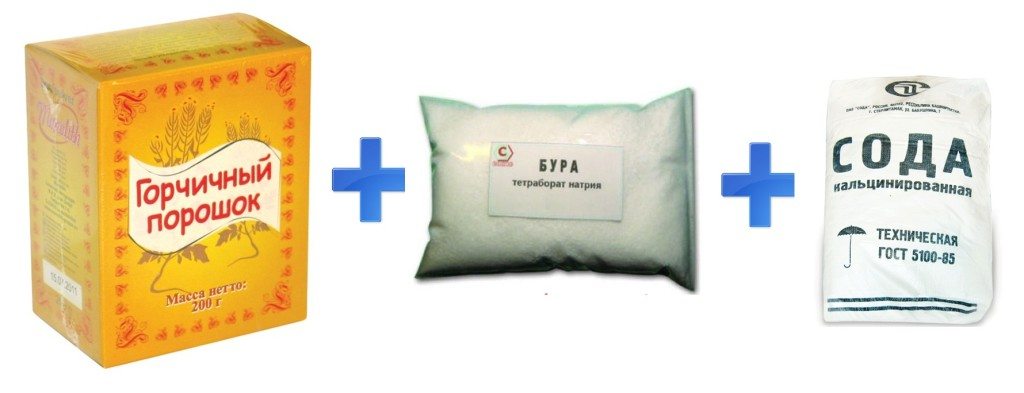 All ingredients must be mixed, packed in an opaque bag and stored in a dark, dry place. To increase the effectiveness of washing dishes with this product, you can add a little apple cider vinegar to the rinse aid compartment before washing, diluting it to 9%. The essence cannot be used.
Note! For the above recipe, use powdered washing soda rather than granulated soda. Baking soda can also work, but the result will be less effective.
The second recipe involves making a powder that's not suitable for washing crystal glassware. This recipe also has a drawback: sometimes you need to use a second rinse to remove the white residue, but this isn't always the case, so this recipe is quite acceptable. You'll need:
- 1 part mustard powder;
- 1 part baking soda;
- 0.1 part citric acid.
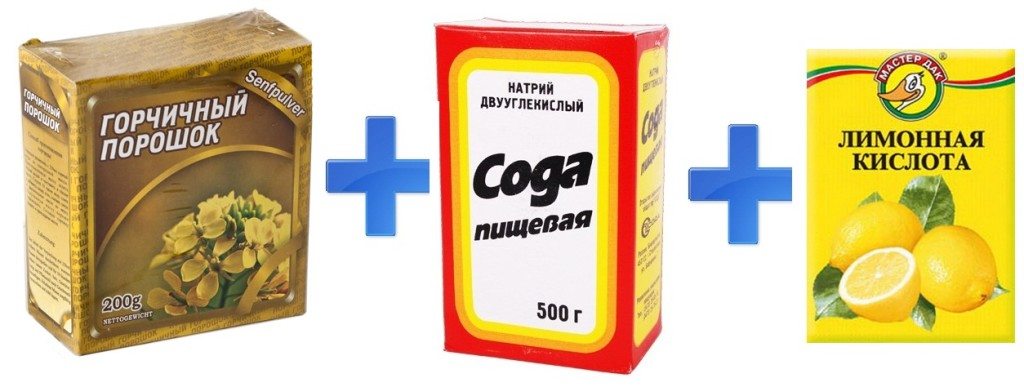
We mix everything together, and then all we have to do is pour this product little by little into the powder compartment and enjoy well-washed dishes. The above-described products clean well, do not harm the car and, by the way, they are completely environmentally friendly.
How do you know how much detergent to add to your laundry detergent dispenser? There's only one way: experiment at home. Try adding a little at first and washing the dishes. If the results aren't satisfactory, add more. After a few tries, you'll figure out how much to use with your homemade detergent. If you don't want to experiment and prefer an inexpensive commercial detergent, you can choose the best dishwasher detergent, after reading the article of the same name posted on our website.
To summarize, dishwasher powder removes any stubborn stains from the surface of dishes; it should be sprinkled on before each wash. However, it's costly. You can try reducing costs by replacing the powder with a homemade product. Making these products yourself is very simple, minimal in cost, and the results are stunning.
Interesting:



Readers' comments
Headings
Washing machine repair




For buyers




For users


Dishwasher




Add a comment