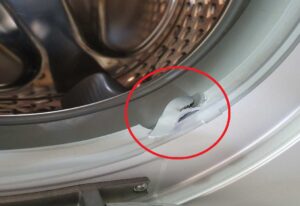
The seal between the drum and the door of the washing machine has broken.
If the rubber seal between the drum and the door of your washing machine breaks, it's important to fix it as soon as possible. Otherwise, every wash will be accompanied by a leak, with water pouring out from under the door. You can fix this problem yourself, without calling a service center.
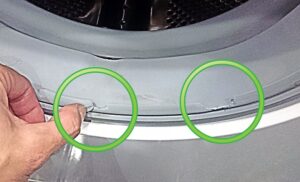
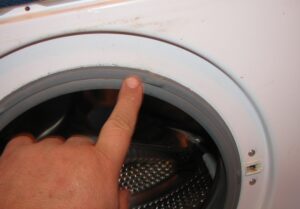
What should you do if you discover a hole in the cuff? The ideal option, of course, is to replace the elastic immediately. If that's not possible, at least flip the seal over so the hole is facing up. Let's look at the nuances.
Just flip the rubber band over
When you temporarily don't have the money for a full repair with replacement of components (buying a new cuff will cost $10–$30, depending on the washing machine model), you can simply turn the rubber band over. If you position the seal so that the defect is on top, then water will stop pouring out from under the hatch door. Let's figure out how to do this.
To turn over the sealing rubber, you need to:
de-energize the washing machine;
open the drum door;
feel for the outer clamp that holds the rubber band;
Having dealt with the spring, pull the clamp out of the housing;
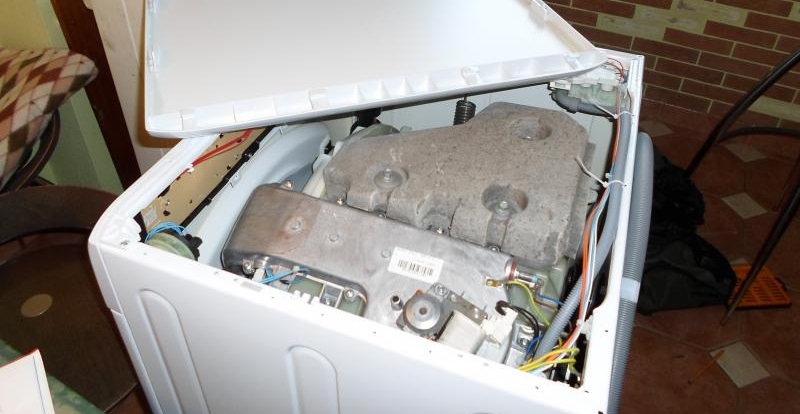
remove the top cover of the washing machine (by unscrewing the two screws located at the back);
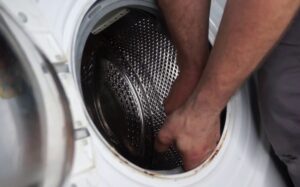
find the internal clamp that secures the rubber gasket (you can feel it by putting your hand between the front wall of the machine and the tank);
Having dealt with the latch, pull out the second clamp;
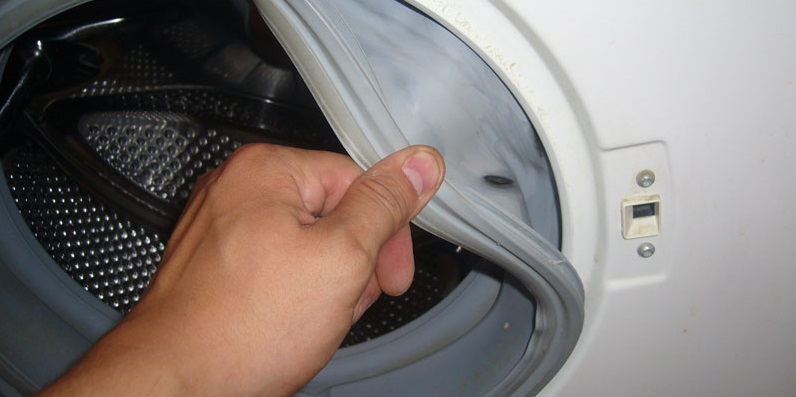
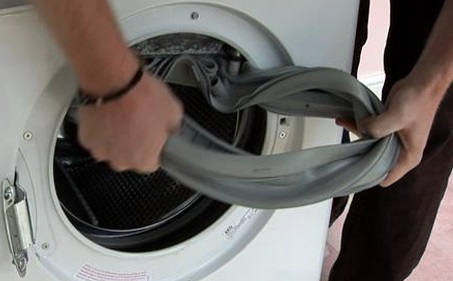
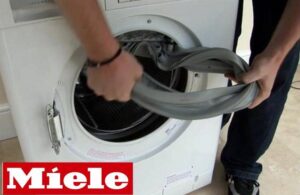
remove the drum cuff;
put the seal back, turning it upside down.
After this inversion, the drain holes will be on top, trapping water in the rubber seal. Therefore, it's necessary to make similar holes in the bottom of the seal to allow liquid to drain into the tank and then into the sewer.
Turn the sealing rubber over and secure it with clamps.
First, replace the inner metal ring, then the outer one. Once the repair is complete, run a test wash and observe the washing machine. Water should stop leaking from under the door, as the defective seal will now be above the water level in the drum.
Reversing the seal isn't possible on all washing machines. For example, this "trick" won't work on most Bosch models. And of course, this method should only be used as a temporary measure.
Replacing a damaged part
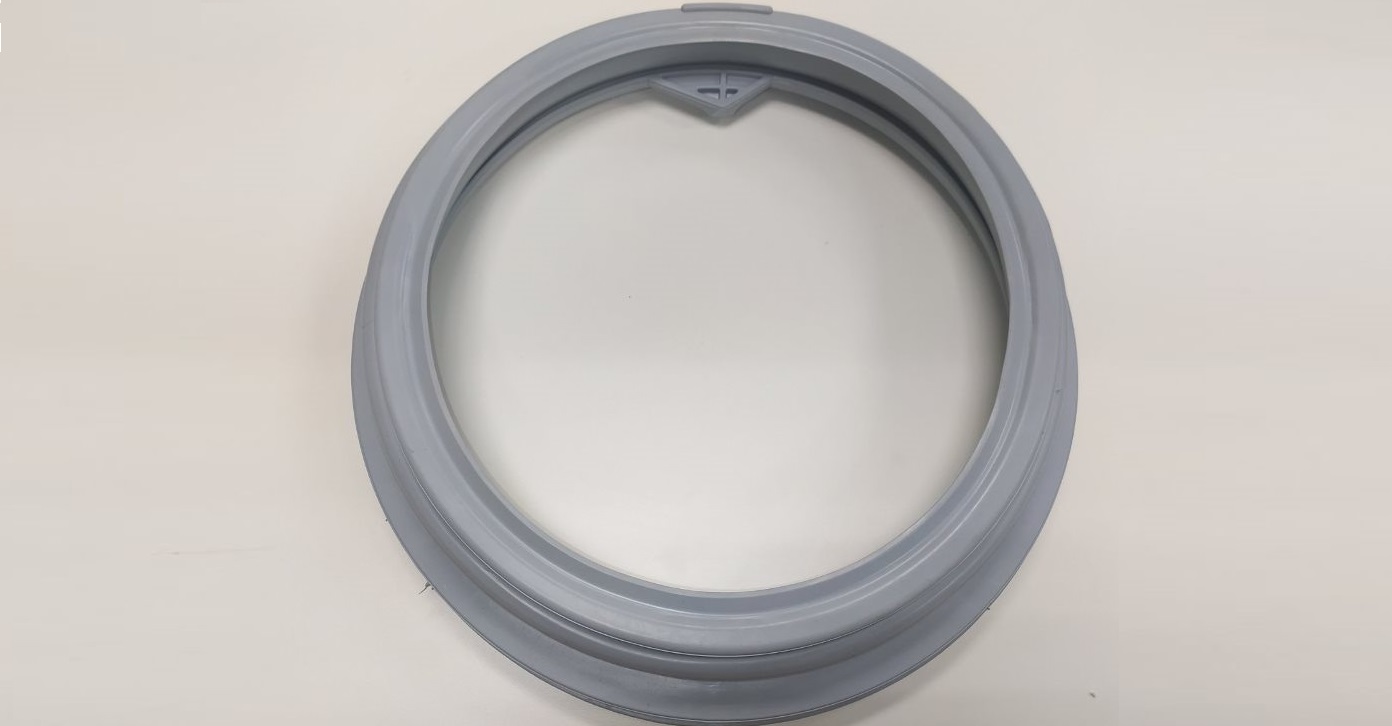
Of course, the ideal option is to replace the damaged seal immediately. Buying the right parts won't be a problem—seals for all modern washing machines are available. If you have a rare model, you can find the right part on AliExpress.
When replacing the sealing rubber, you need to have the following on hand:
slotted screwdriver;
pliers;
damp cloth;
soap.
Some technicians replace the drum seal by removing the front and top panels of the washing machine. However, there's a simpler way to repair the washing machine—without disassembling the body at all.
We'll explain the procedure in this case. First, you need to de-energize the washing machine. Next:
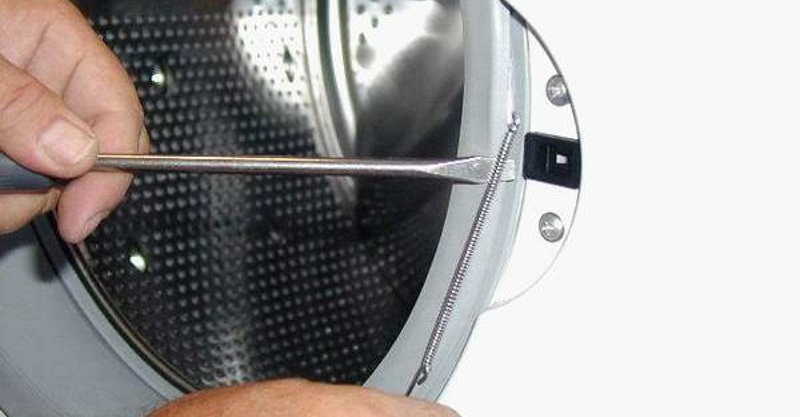
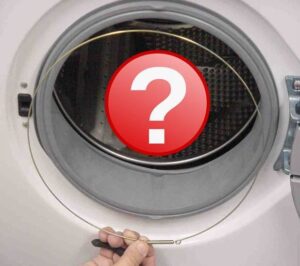
Use a screwdriver to pry up the spring of the outer clamp and remove the metal rim;
unhook the sealing rubber from the front wall of the housing and tuck it inside the drum;
carefully pull out the damaged seal together with the inner clamp (the metal ring easily changes shape, so it will not be difficult to remove it through the hatch);
Clean the recess where the cuff was located with a damp cloth (you need to remove all the dirt that has accumulated in the grooves).
Some washing machine models (such as Bosch) have a drain pipe attached to the seal to drain water. This must be disconnected from the rubber seal. Otherwise, the pipe will interfere with removing the seal.
Treat the protruding part of the new cuff with liquid soap - this will make the installation of the seal easier.
Next, you can put the seal back in place. The rubber band is inserted so that the drain holes provided on it are at the bottomAlso, the place where the pipe is connected must match its location.
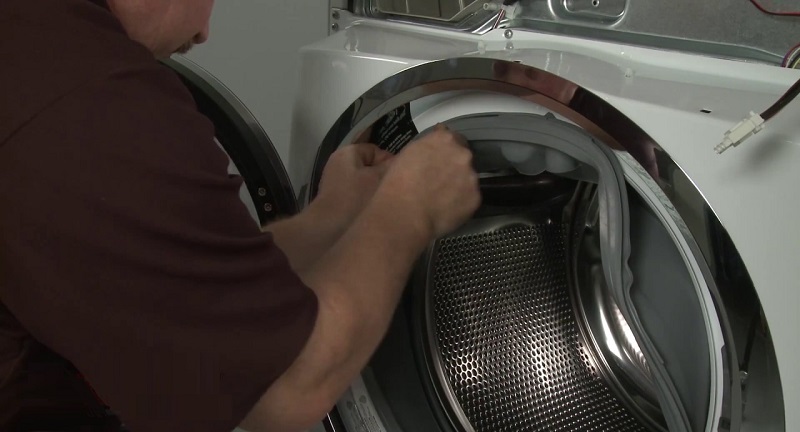
Once the cuff is installed inside, replace the "far" clamp. Then, you can pull the elastic onto the front of the housing. Finally, install the outer retaining ring.
Reinstalling the inner clamp without disassembling the frame would be very difficult. Therefore, you'll need to enlist the help of a family member. One should hold the seal, and the other should snap the rim into place.
If you have difficulty fitting the rubber seal onto the body, wipe it with a soapy sponge. This will make the seal easier to install. Once you've completed the repair, run a test wash and observe how the machine operates.
To prevent a new seal from failing quickly, follow the basic operating instructions for your washing machine. Defects in the seal usually occur for the following reasons:
incorrect loading/unloading of laundry;
foreign objects forgotten in clothing pockets;
damage to the elastic band by metal fittings of items;
the laundry is caught between the seal and the hatch door;
use of aggressive detergents;
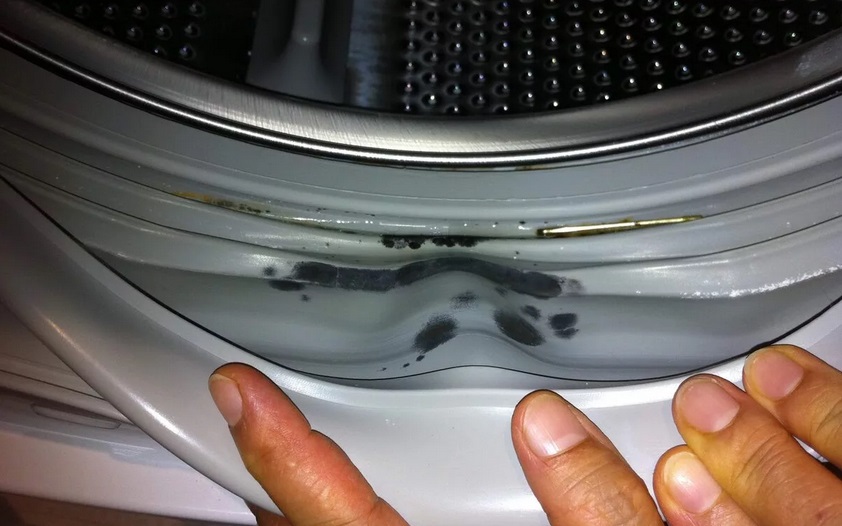
mold that forms on the rubber due to excessive moisture;
pets that may chew through the seal.
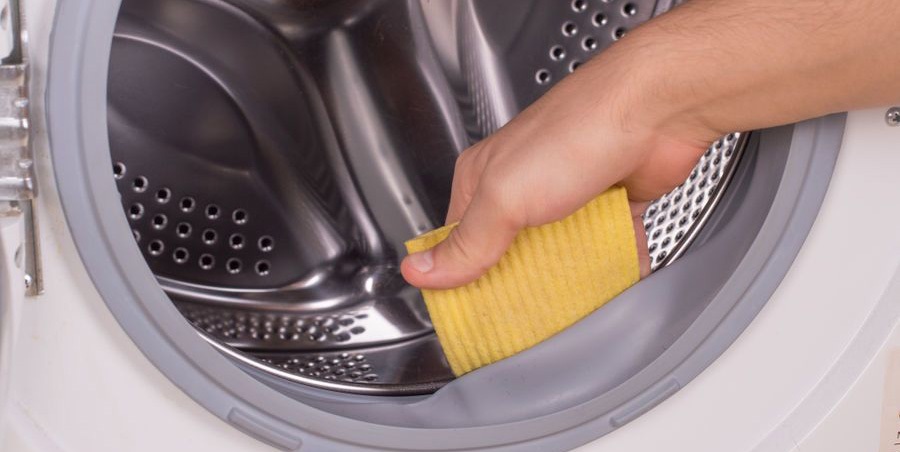
Therefore, to ensure your new seal lasts as long as possible, unload items carefully, ensure no foreign objects remain in pockets, and use only high-quality detergents. It's also important to wipe the seal dry after each use and leave the door slightly open for ventilation.

 If the rubber seal between the drum and the door of your washing machine breaks, it's important to fix it as soon as possible. Otherwise, every wash will be accompanied by a leak, with water pouring out from under the door. You can fix this problem yourself, without calling a service center.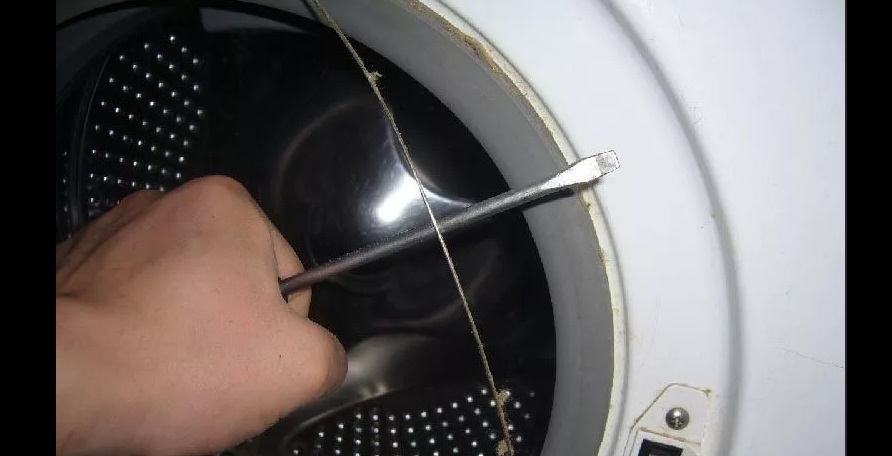














Add a comment