The washing machine won't turn on after a power surge.
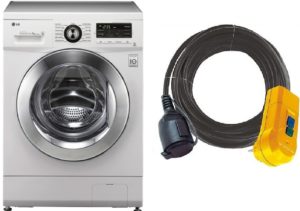
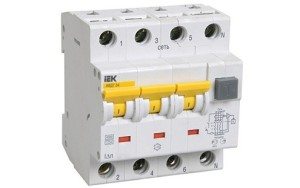
Power surges are a common occurrence in Russian apartment buildings. Residents try their best to protect their appliances by installing residual-current devices (RCDs) or special circuit breakers. However, despite their advantages, such devices cannot completely protect electrical appliances.
What should you do if your washing machine won't turn on after a power surge? Where should you begin troubleshooting your "home helper"? How can you prevent a similar problem in the future? Let's explore the nuances.
What is the danger of a "jump"?
A sudden power surge can be caused by a variety of factors. These include power line failures, poor wiring in the home, overloaded substations, the simultaneous activation or deactivation of several powerful devices, lightning strikes, and more.
More than 90% of power surges are minor, unnoticeable by either people or equipment. However, they are not necessarily safe. Even minor voltage surges (with a deviation of 5-10% from standard values), repeated regularly, provoke a malfunction in the equipment, lead to a reset of settings and the appearance of interference.
Any surge in which the voltage in the network reaches a level above 250 volts reduces the service life of electrical appliances and destabilizes the operation of the equipment.
Power surges of more than 10-25% can reduce the lifespan of washing machines and other appliances by almost half. If the voltage spikes to 300 V, the control module, the machine's dashboard, the interference filter, and other components can fail.
Modern washing machines with electronic controls often suffer from such power surges. The following internal parts of automatic machines are most often damaged:
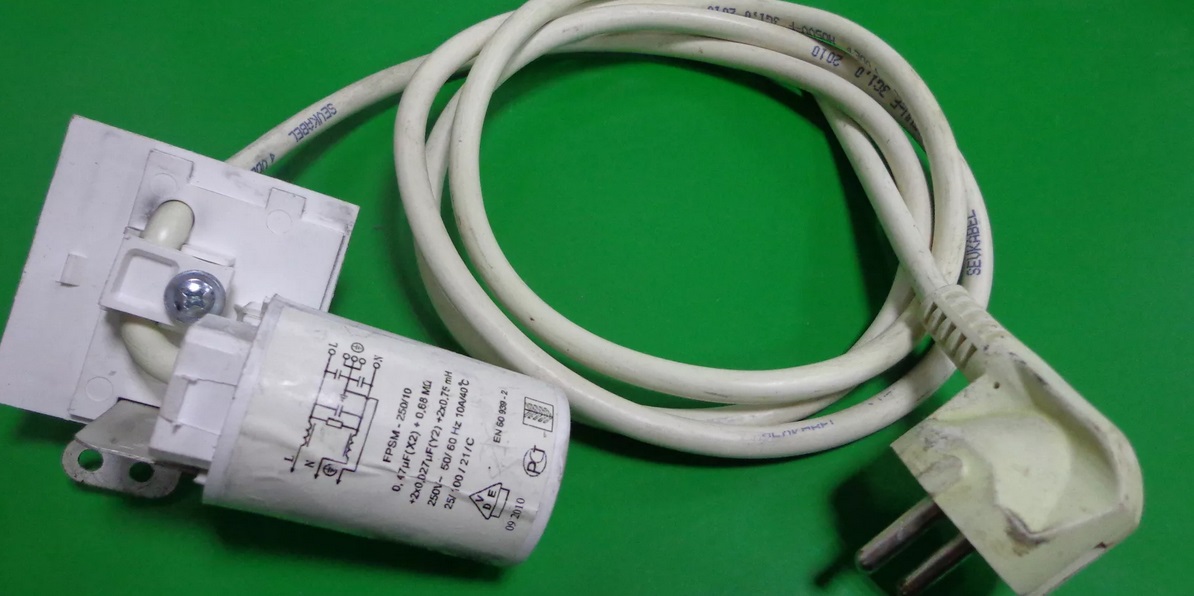
noise suppression filter;
main control module;
electric motor.
If your washing machine stops turning on after a power surge, the first thing to check is the surge protector. We'll show you how to test the component and, if necessary, replace it yourself.
Testing FPS
In most cases, a washing machine stops turning on due to a burnt-out capacitor. To determine if this is the cause, you need to diagnose the surge protector. To remove the surge protector from the washing machine, follow these steps:
de-energize the equipment;
turn the shut-off valve to shut off the water supply to the washing machine;
unscrew a pair of bolts holding the top panel of the case;
put the machine cover aside;
find the noise suppression filter (it is a small round piece).
The interference filter of the SMA is located under the top cover where the power cord is connected.
Removing the FPS is very simple. Simply unscrew the screws holding it in place and remove the element from the housing. To diagnose a network filter, you will need a multimeter. Let's figure out how to check the device.
To start, simply inspect the interference filter. In most cases, it's easy to spot a fire. The insulation on the component may melt, and dark spots may appear. If the FPS smells burnt and the contacts are charred, it's clear even without a multimeter that the component needs to be replaced.
If the area around the noise suppression filter is clear, you need to check it with a multimeter. To do this:
turn on the tester and set it to buzzer mode;
connect the multimeter probes to the filter contacts;
Check if there is resistance (if there is no voltage at the output, then the filter has become faulty).
Replacing the filter is very simple – the new part is secured in place with two bolts. Difficulties may arise when searching for components. You should purchase a filter element that is identical in all specifications to the one you removed. It's best to take the damaged element to the store and ask the salesperson to find a similar one.
After installing the new interference filter, reassemble the body of your "home helper." Next, connect the machine to the power outlet. Press the power button – if the control panel lights up, then the fault was indeed in the interference filter. If the diagnostics don't confirm the interference filter's fault, then the machine isn't turning on due to a problem with the control module or motor. Checking these critical components of the washing machine requires specific knowledge and specialized tools. Therefore, it's best to entrust the diagnostics to a service center.
Don't skimp on the stabilizer
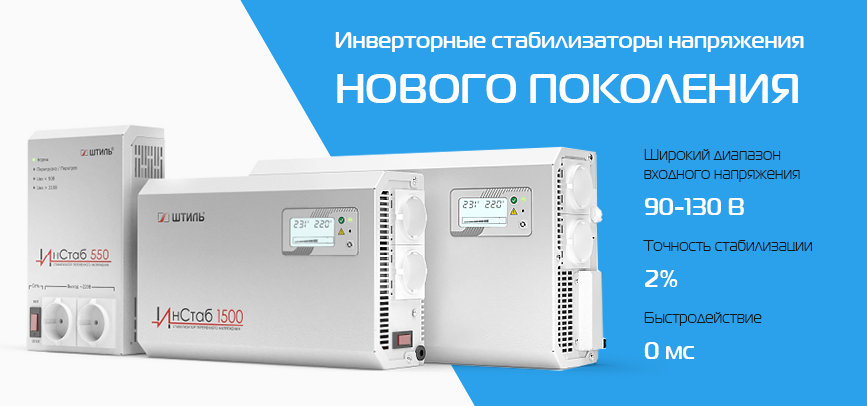
It's possible to prevent washing machine failure due to unstable power supply. For this purpose, stabilizers are used – they normalize the voltage in the network, bringing it to the specified level. Furthermore, these elements act as a powerful surge protector, preventing short circuits, filtering out interference, and preventing high-voltage surges from damaging the equipment.
Stabilizers can be installed for each electrical appliance; low-power devices are suitable for this purpose. Since modern washing machines are quite sensitive to voltage fluctuations, it is recommended to install a separate protective device for them. This will protect the machine from power surges.
You can also install a very powerful one stabilizer For the entire home network. These models are often used in country cottages and apartments. Constantly stabilizing voltage readings extends the lifespan of all electrical appliances.
There's no point in skimping on a protective device; it will definitely pay for itself. Single-phase stabilizers are used for 220-volt systems, while one three-phase or three single-phase stabilizers are needed for 380-volt systems. A good model specifically for a washing machine will cost between $50 and $80, while a home model will cost several times more.

 Power surges are a common occurrence in Russian apartment buildings. Residents try their best to protect their appliances by installing residual-current devices (RCDs) or special circuit breakers. However, despite their advantages, such devices cannot completely protect electrical appliances.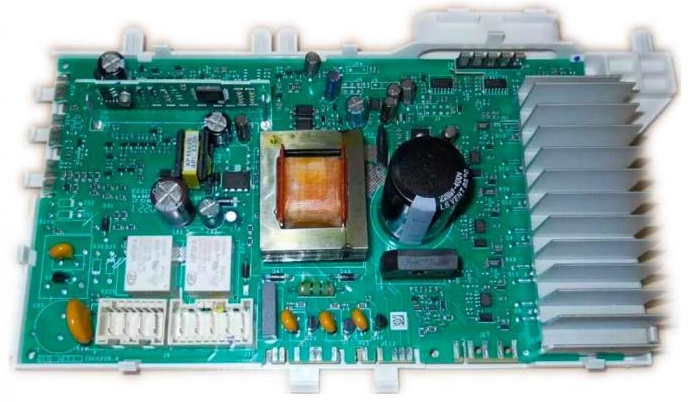















Add a comment