
The washing machine keeps filling with water.
 If you notice your washing machine constantly filling with water without starting the wash cycle, this indicates a serious problem. Never let this happen; the cause must be investigated immediately. Delaying troubleshooting can lead to heating element failure and costly repairs. Learn how to quickly resolve the issue in this article.
Typical causes of malfunction
If your washing machine is constantly filling the tank with water, this is an alarming symptom that should prompt you to take action. First, we need to understand what could potentially cause such a problem. First, we need to identify a broad range of issues, and then gradually narrow that range through systematic action. So, here are the typical causes of the malfunction:
- the new washing machine is not connected correctly;
- the washing machine tank has leaked;
- the water level sensor (pressure switch) is out of order;
- the inlet valve is broken;
- Problem with the electronic control unit.
Please note! If your washing machine is new and exhibits this problem, it doesn't necessarily mean it was connected incorrectly. It's possible there's a manufacturing defect, and a faulty component or electrical system is present.
Description of the causes of malfunctions and ways to eliminate them
If a brand new, freshly plugged-in washing machine is constantly filling with water, the most likely cause is an improperly connected drain hose. This begs the question: why the drain hose? What does it have to do with this? In fact, it's directly related to the problem.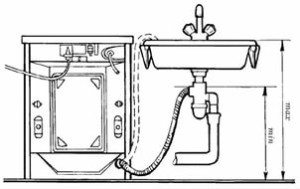
If the drainage system of the washing machine is not properly organized, a “siphon effect” may occur. This can lead to all the dirty water from the drain backing up into the drum, or to water constantly flowing out of the drum into the drain by gravity. In the latter case, no matter how much water the machine pumps into the drum, it will all immediately flow out through the drain hose. The result: high water consumption, the heating element constantly running, and poor washing results (if the machine even starts washing). What should you do in this case?
There are two ways to eliminate the siphon effect. First, you can properly connect the washing machine to the sewer system, raising the drain pipe at least half a meter from the floor. Second, you can install it on a drain hose or pipe. anti-siphon valve.
Please note! It's best to ensure the hose is properly connected to the sewer pipe, as connecting through a check valve not only requires additional costs but also time for periodic inspection and cleaning.
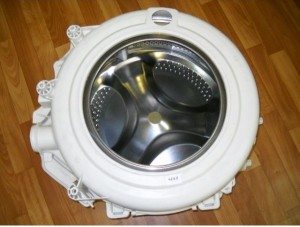 A leaky tank can cause a washing machine to constantly fill with water. This can be difficult to miss unless your machine is equipped with the Aqua-Stop safety system. Water from a leaky tank will leak onto the floor and underneath the machine, and if you overlook this, it can lead to flooding, as the system repeatedly commands the tank to fill to the required level.
Washing machines protected from leaks are not at risk of this, as the protection system will be activated, blocking the flow of water and simultaneously shutting off its supply. We see the solution to this problem as either replacing the tank or repairing it. However, soldering a leaky tank isn't always possible. Everything will depend on the material it's made of.
If your washing machine is constantly filling with water, it could be due to a broken water level sensor. This sensor performs a crucial function: it detects the water level in the tank and alerts the machine's electronics. If the sensor is broken, the system will constantly think the tank is low and needs to be refilled. It's best to replace a broken sensor entirely, but you can also try repairing it. Typically, the pressure switch fails:
- membrane - the rubber band loses its tightness and needs to be replaced with a new one;
- sensor contacts – need to be thoroughly cleaned, or better yet, replace the contacts;
- Sensor tube - if the water level sensor tube is cracked, you will have to replace the entire device; filling the cracks with sealant does not make much sense.
To replace the pressure switch, you need to access it. Read more about this in the article about checking the washing machine pressure switch.
Important! A new pressure switch, even for expensive washing machine models, is quite inexpensive, so why bother with repairs? Buy and install a new one; you'll have a better chance of successfully solving the problem.
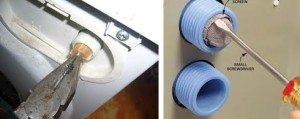 Another reason why your washing machine is constantly filling with water could be the inlet valve. If this is the problem, water will flow into the washing machine's drum 24/7, regardless of whether the machine is on or off. This will significantly increase water consumption, wasting even more water than if the pressure switch, drum, or siphon system were the cause. The intake valve cannot be repaired; you need to buy and install a new one.
What should you do if the washing machine's constant water overflow is caused by the control unit? Experts offer clear advice: consult a professional. Self-inspection, repair, and testing of the control unit could lead to its failure. In this case, costly repairs are inevitable, so unless you're a skilled electronics technician, don't attempt this yourself.
How to find the cause of a malfunction?
How can you troubleshoot why water is constantly leaking into your washing machine's tub? There's a step-by-step procedure developed by experts that allows you to discover the cause of the problem. Let's take a look:
- If the machine has just been connected to the sewer system, check how it was connected. If the sewer pipe is located right next to the floor, it may be the cause.
- While you're doing the above, check for a puddle of water under or near the machine. The washing machine's tub may be leaking, or the inlet hose may be leaking.
- If the siphon effect or a leaky tank isn't the cause, then the inlet valve and pressure switch need to be checked. To access them, you'll have to disassemble the washing machine. For instructions on how to do this correctly, read the article about disassembling a washing machine.
- If checking and replacing the inlet valve, pressure switch, and their sensors doesn't solve the problem and the machine fills with water again, the problem lies with the electronics. A specialist should be called in to test the control unit.
Important! If you proceed carefully, you can use a multimeter to test the outputs to the pressure switch and the fill valve. If there is no voltage at one of the outputs or it's very low, consider the problem solved.
To summarize, a washing machine that constantly fills with water is essentially a completely faulty appliance, making it dangerous to continue using. The problem could worsen, and then the machine could be destined for the landfill. Start investigating the cause of the breakdown immediately, and all will be well with your "home helper"!
Interesting:





16 reader comments
Add a comment
Headings
Washing machine repair




For buyers




For users


Dishwasher




The tank was overflowing and leaking. After a thorough inspection, I discovered a small hole in the rubber seal between the tank and the hatch, about halfway up. I sealed the hole, and the problem went away.
Could you please tell me how and with what you glued the cuff? The edge itself broke. Now, when it fills with water, it leaks right away.
Thank you! I read your article. It was useful and informative.
Hello, I'm collecting water from the drain system. Will replacing the drain valve fix the leak?
Should help
Thanks for the article, it was very helpful!
The machine fills with water even when it's turned off. Help, the warranty has expired!
Replace the water inlet valve
Help! My washing machine is constantly filling with water, but there's no water in the tank and the drum is spinning, draining everything down the drain. What should I do?
Thanks, I found the problem
My washing machine keeps filling with water, what's the reason?
Thank you! The problem is solved, the drain hose is now raised to the correct level! Hooray!
Hello, I just installed my washing machine and it's constantly filling with water, no matter if I turn it on or off. What could be the cause?
Good evening. The washing machine is constantly filling with water, the drum fills to the very top and starts leaking.
Hello, why does my LG washing machine add a little water three minutes before the end of the spin cycle, or is this how it should be?
Hello, could you please tell me? My washing machine constantly fills with water during the wash cycle, but there's no water in the drum. During the rinse cycle, it fills once and rinses well. The machine is two months old, and it was washing well until today.