
The water in the dishwasher does not heat up.
 Most dishwashers are connected to a cold water supply only, so it's crucial that the heating element works properly, otherwise the dishes simply won't be cleaned. If the dishwasher isn't heating the water, this will be noticeable immediately after the wash cycle, meaning the problem needs to be addressed immediately. This doesn't necessarily indicate a faulty heating element or temperature sensor; there are other possible causes, which we'll discuss in this article.
Why does the water in the dishwasher remain cold?
Why isn't my dishwasher heating water? To answer this question, we need to take a systemic approach to solving the problem. Specifically, we need to examine the interconnections between all the dishwasher's components and sensors and determine what could (at least indirectly) negatively impact the heating element's performance. There are three main reasons why water in a dishwasher remains cold:
- the heating element itself is faulty;
- The thermostat is faulty;
- The control unit element is faulty.
In addition to the main reasons why the water in the dishwasher isn't heating, there are also secondary ones. At first glance, it might seem that these malfunctions wouldn't have any effect on the heating elements, but this is actually not the case. Let's look at the secondary reasons why the water in the dishwasher tank isn't heating.
- The dishwasher was connected in violation of the instructions.
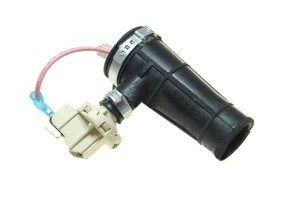
- There is a strong blockage in the waste filter.
- User error when selecting a washing mode.
- The pressure sensor is faulty.
The pressure sensor helps control the water circulation in the dishwasher. If the pressure sensor is faulty, water may constantly circulate in the dishwasher, which in turn can lead to it draining. Under these conditions, even if the heating element is working, it simply doesn't have time to heat the water, and the dishwasher is forced to use cold water to complete the wash cycle. Replacing the pressure sensor solves the problem; repairs are futile in this case.
Please note: Before replacing the pressure sensor, you may want to try cleaning its contacts and inspecting the wiring that supplies power to the sensor.
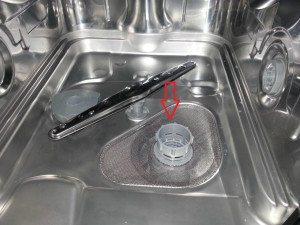 If your dishwasher has stopped heating water, the problem may be due to a clogged waste filter. Some people might ask, "What does a dust filter have to do with this?" What does it have to do with the heating element? The answer is quite straightforward.
The point is that during a wash cycle, water must circulate normally between the tank and the special reservoirs. The heating element maintains the water temperature, ensuring proper dishwashing results. If the filter is clogged, circulation is disrupted. This leads to water accumulation in the tank, forcing the system to refill the water (which is not returning from the tank containing the dishes to the reservoir) from the mains. This water, therefore, is cold—the heating element simply won't have time to heat it.
To identify this problem, look inside the tank during cleaning. Under normal conditions, water shouldn't linger there. If water accumulates in the tank, the debris filter needs to be cleaned immediately. After this, water circulation will resume, and the heating problem should be resolved, unless the thermistor or heating element has failed simultaneously, which is also quite possible.
If the water isn't heating up in a new dishwasher, the problem may be that it wasn't connected to the sewer system properly. What's the problem? When properly connecting the dishwasher drain hose to the sewer pipe, the technician makes two elbows (smooth bends in the hose): one at the very base of the dishwasher, and the other at the point where the hose connects to the siphon.
Important! These two elbows are needed to prevent a "siphon effect," which prevents water from flowing from the sewer pipe back into the dishwasher.
Consequently, if normal drainage is impossible, water won't circulate in the dishwasher either. This will result in the water temperature deviating from the program's set temperature, and that's at best. At worst, the water will remain cold, and the user will blame the heating element, even though it's completely unrelated. The solution is simple: connect the dishwasher to the sewer line according to the instructions, and the machine will resume normal operation.
Sometimes a Bosch dishwasher (or another brand) won't heat the water for a rather mundane reason: the user has selected the wrong wash program. This is rare, as modern dishwashers don't have many programs to get confused, but it does happen. The solution: read the instructions and learn how to select the right wash program for the specific size and category of dishes you're loading.
Checking and repairing the temperature sensor and control module
Now let's look at the main reasons why a dishwasher isn't heating water. Let's start with the temperature sensor. For some reason, this component has become a weak point in most dishwashers, including Bosch. So, first, let's figure out how to tell if the temperature sensor is broken and not something else, and if it needs replacing. Here's how.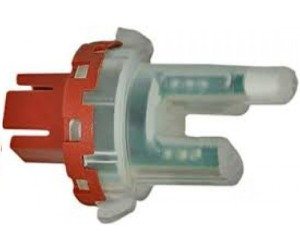
- We take screwdrivers, pliers and a multimeter.
- Disconnect the dishwasher from the water supply, sewerage system, and electrical network (while doing this, don’t forget to turn off the water at the outlet pipe).
- We take out the dish baskets from the tank of the Bosch dishwasher.
- We take out the lower sprinkler, remove the debris filter, remove the mesh and unscrew the two fasteners located underneath it.
- Turn the dishwasher upside down and unscrew the plastic (or metal) side fasteners.
- We disconnect the drain pipe from the plastic block with the heating element and lift the bottom of the dishwasher upward.
- The sensor is located in the heating unit housing to ensure the water temperature is accurately monitored by the control module. Disconnect the wires from the temperature sensor contacts.
- We clean the contacts and measure the resistance of the temperature sensor.
- We take out the burnt-out temperature sensor, replace it with a new similar one, and then assemble the dishwasher.
Important! In this case, the problem isn't always with the temperature sensor. Sometimes the wiring is faulty, and in rare cases, even a component in the control module.
In about 1% of cases, the heating element is working properly, the temperature sensor is working, and the wiring is intact. Furthermore, the machine has already been checked for blockages, its installation has been verified, and the pressure sensor has been checked—everything is working properly, but the water temperature in the cold water supply pipe and the temperature in the dishwasher remain the same. It's possible that the control module in your dishwasher is faulty, or more specifically, not the entire module, but one of its triacs.
We strongly advise against tampering with the control module yourself unless you have experience working with electronics. There's a high risk of causing further damage, and purchasing a replacement part will be very expensive. Consult a specialist for assistance.
How to check and replace the heating element?
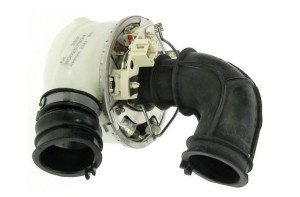 If a burnt-out heating element is the cause of your dishwasher's water not heating, you should be prepared for costly repairs, but first, you need to make sure that the heating element is indeed the cause of the breakdown. The problem is that the heating element of the dishwasher In some cases, Bosch is a flow-through type, and in this case, it must be replaced with a module, which makes repairs more expensive. Check and Replacing the heating element in a dishwasher must be carried out in a strictly defined order. For details on how to do this, read the article of the same name on our website.
In conclusion, if the water in your dishwasher isn't heating up, there's no reason to panic. First, you need to narrow down the possible faults that could be causing this, and then begin a systematic search for the problem. Good luck with your repair!
Interesting:



4 reader comments
Add a comment
Headings
Washing machine repair




For buyers




For users


Dishwasher




PMM Veko 3801. Didn't heat water or dry.
I cleaned the contacts on the temperature sensor and everything worked.
Thanks for the article!
I also cleaned and tightened the contacts on the temperature sensor and everything worked. AEG Favorit F43070IM.
Thank you so much for the article! It turned out to be simple—the beans were clogging the drain.
Can you please tell me where the temperature sensor is located?