
Dishwasher without running water
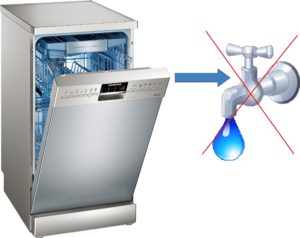 As we all know, good things become habits very quickly, and if you have a dishwasher at home, why not get one at your dacha, too? The only thing holding you back is the lack of amenities like running water, and without a central water supply, a regular dishwasher won't work.
In this regard, our readers have two questions. The first is: is it possible to buy a dishwasher that will operate independently? The second is: how do you connect a regular dishwasher so that it operates independently? We will try to find answers to both questions in this publication.
Autonomous car: does it exist?
What's a dishwasher for a country house without running water? The market is probably overwhelmed by the sheer number of models available, and we're now in need of a review. One that would help you choose the best standalone machine. But in reality, it turns out to be much simpler and more practical.
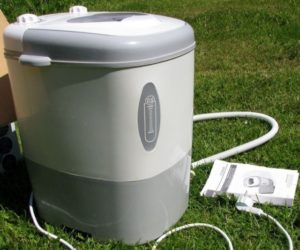
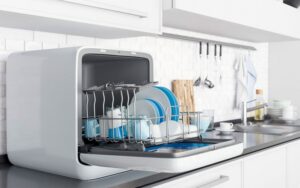
After a very long search, our specialists were able to find only a couple of dishwasher models that can operate independently, and even then, they can hardly be called dishwashers. They are more like dishwashing appliances. Meet the Circo and NoStrom EcoWash Dinner Set. Both of these dishwashers operate without a central water supply or even without electricity.
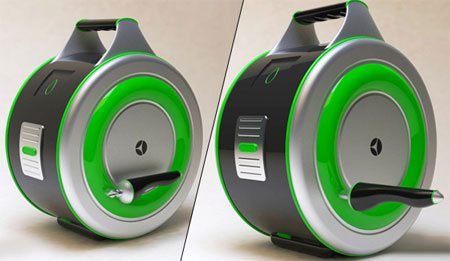
To start washing dishes, you need to pour warm water with detergent into a special tank and turn the handle.
The main advantages of these devices are unprecedented water and energy savings, as well as the ability to wash dishes without having to wash them by hand, as your hands don't come into contact with detergent or water. This is where the advantages of the above-mentioned devices end and the disadvantages begin: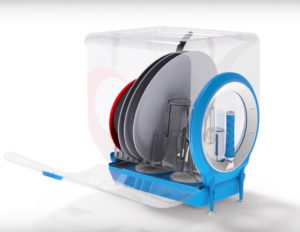
- sales of these devices are currently limited and they are quite expensive;
- the capacity of their washing bins is very small;
- you have to constantly add warm water and drain the used water, all this is done manually;
- The quality of dishwashing leaves much to be desired.
The general idea is clear. We believe there's no point in describing these newfangled eco-inventions, since their practical use is either pointless or currently impossible for objective reasons. And frankly, these devices won't replace a full-fledged dishwasher. So, let's put all that aside and consider how to connect a regular dishwasher without running water. But first, let's select the model that's best suited for these operating conditions.
How to choose a dishwasher for a summer house?
To operate any dishwasher, it's enough to supply water under pressure from 0.03 to 1 MPa. So, it doesn't really matter what kind of dishwasher you have, as long as the water is pressurized and of satisfactory quality. After all, at a dacha, most of the water is underground, which means its quality may not be high enough. This publication will help you choose a good "helper." Freestanding Dishwashers Review.
So, we can buy any dishwasher, filter the water, pour it into a suitable reservoir, and connect that reservoir to the dishwasher. It sounds simple, but how do we implement it, and most importantly, how do we ensure the water supply is pressurized? We'll cover all of this in the next section.
Connecting a dishwasher without a central water supply
There's a unique, yet very simple, way to ensure your dishwasher works just as well without running water as it does under normal conditions. It requires minimal supplies. First, let's prepare the materials you'll need: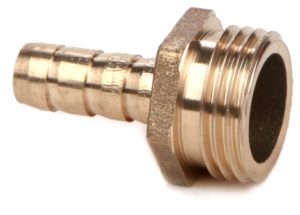
- a plastic canister of suitable capacity (at least about 10 liters) with a tightly screwed lid;
- a nipple with a ¾ thread, a nut and a sealing rubber;
- valve from a tubeless tire;
- a piece of garden hose about 1.5 meters long;
- two clamps, winding, automotive sealant;
- two steel corners, a board 30 mm thick and 80 cm long;
- car compressor;
- 18A car battery charger and starting device.
In addition, you will need pliers, a drill with drill bits, a knife, and a small adjustable wrench.
Once we've gathered everything we need, we begin installing the dishwasher. First, move the dishwasher to a suitable location. It's best to place it against the wall, close to an electrical outlet. Somewhere to the left and above the dishwasher, screw steel brackets directly to the wall, and place a crossbar on them to create a horizontal shelf. Next, drill a hole in the canister lid, insert a tubeless tire valve, and seal the joint.
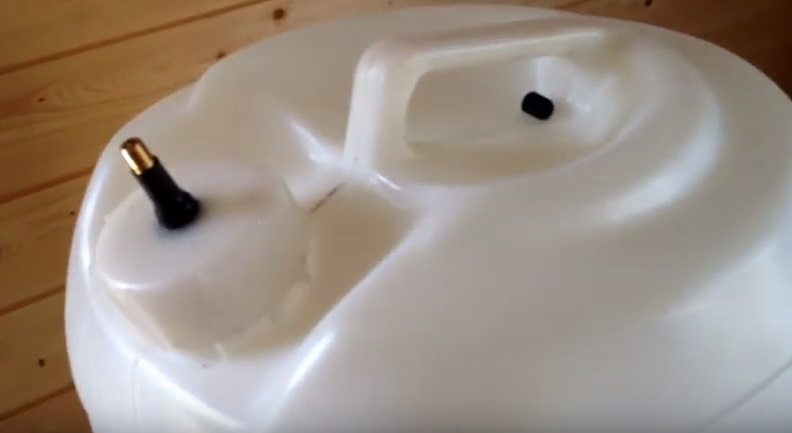
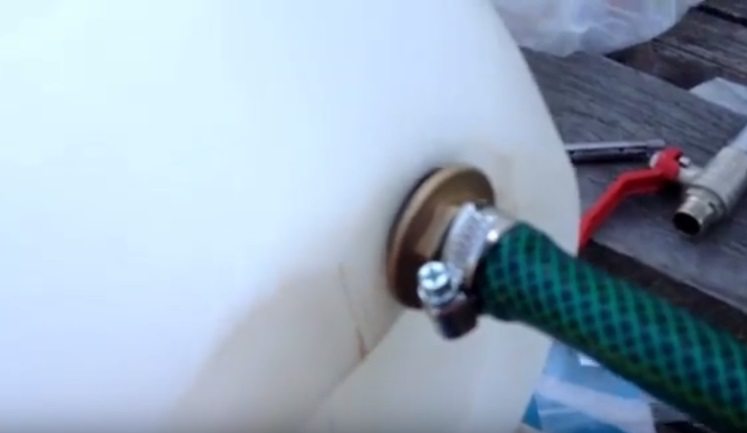
Next, drill a hole in the bottom of the canister and insert a nipple, threaded inward. Place a rubber gasket inside, and tighten the nipple from the inside with a nut. Attach a garden hose to the protruding nipple and secure it with a hose clamp. Connect the hose to either the dishwasher's inlet valve or the inlet hose. In this case, the main thing is that the connections are tight and reliable. Carefully pour clean water into the canister, screw on the lid and place the canister with water on the shelf.
Now comes the crucial part: connect the car compressor to the starting device, screw the compressor hose to the valve, and apply a slight pressure—literally, "0.3 points" no more, otherwise the canister will burst. Remove the compressor hose from the valve and turn on the dishwasher. If the machine starts filling with water, everything is fine; there's no need to touch anything. If water doesn't fill, increase the pressure slightly using the compressor.
To prevent the canister from bursting due to excess pressure, some suggest installing an additional valve or using a more durable container.
So, we've established that factory-made, stand-alone dishwashers are virtually nonexistent, and those that do exist aren't machines, but rather devices. However, almost all dishwashers, without exception, can be connected to a water supply without running water, with a little ingenuity. Don't be lazy, and you'll succeed. Good luck!
Interesting:


3 reader comments
Add a comment
Headings
Washing machine repair




For buyers




For users


Dishwasher




Interestingly, since everything is so simple and it's only a matter of pressure, you can take a soft container for water and simply press on it with varying amounts of force 🙂
At what height should the canister be placed?
There are washing machines with 100-liter tanks, mounted on the side or back. Why not have a dishwasher like that? It's very convenient for those living in wooden houses.