
Conveyor type dishwasher
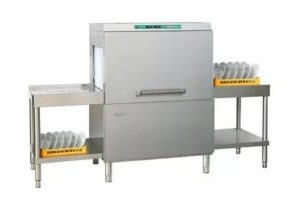 Professional dishwashers are simply indispensable in large food service establishments. There are several types of this class of machine, one of which is the conveyor dishwasher. Its features, advantages, and disadvantages are discussed below.
Features of this type of machines
A conveyor-type dishwasher differs from other types of machines in that it continuously washes dishes. This allows for a larger number of items to be washed in a shorter period of time. The dishwasher works by placing dishes on a conveyor belt, which moves them through several sections: washing, rinsing, and sometimes drying.
During the wash cycle, the main goal is to remove as much dirt as possible using water heated to 50-60 degrees Celsius. Water is delivered with a strong jet from special nozzles located on different sides. In modern dishwashers, the nozzles are positioned in the direction of the dish trays, increasing the amount of time the dishes are exposed to the water. During the rinsing stage, dishes are sprayed with water heated to a temperature of 80-90 degrees under pressure, which kills up to 90% of germs and bacteria.
Important! Plates and cutlery washed in such hot water fully meet sanitary requirements, unlike those washed by hand.
Rinsing uses special products to help kitchenware dry faster and prevent streaks and smudges. This stage of dishwashing can consist of one, two, or three cycles. The simplest option involves rinsing once with very hot water. Another option is a double rinse, which first rinses away the detergent with plain water, then with water containing rinse aid. A triple rinse involves rinsing with hot, then cold, and then hot water again.
Conveyor-type dishwashers are sometimes equipped with an auxiliary section for pre-rinsing. Advanced models of these machines are equipped with steam condensers, which can capture the water vapor generated during the wash cycle.
What are they, their pros and cons
Based on their design, conveyor dishwashers can be divided into the following groups:
- tape;
- cassette.
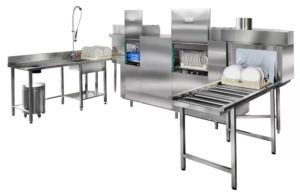 In belt dishwashers, plates are placed directly on a moving conveyor belt with "fingers." This requires two people: one places the plates at the entrance, and the other collects them at the exit. In cassette dishwashers, items to be washed are first placed in special trays (cassettes), and then these trays are placed into the dishwasher. All dishwashers have special trays for forks, spoons, knives, and other items.
Conveyor belt dishwashers can be installed in student and school cafeterias, children's camps, and sanatoriums, which require a large number of dishes of similar sizes and shapes. These machines are straight and take up a lot of space.
Cassette dishwashers are more compact and can be corner-mounted. This allows for single-person operation, making them convenient to use. The drawback of cassette dishwashers is obvious: the cassettes themselves prevent the detergent and water mixture from penetrating, reducing the cleaning intensity. The second drawback is that the cartridges are consumables. They wear out fairly quickly and need to be replaced.
Please note! Conveyor dishwashers with racks are used in restaurants and specialized dining rooms where there is a greater variety of dishes, both in size and shape.
Conveyor dishwashers, despite their high washing capacity, consume significant energy and water. They are designed for a minimum 380V power supply and can therefore only be connected to specially equipped areas.
Review
Let's look at several machines of this type, comparing them by characteristics and price.
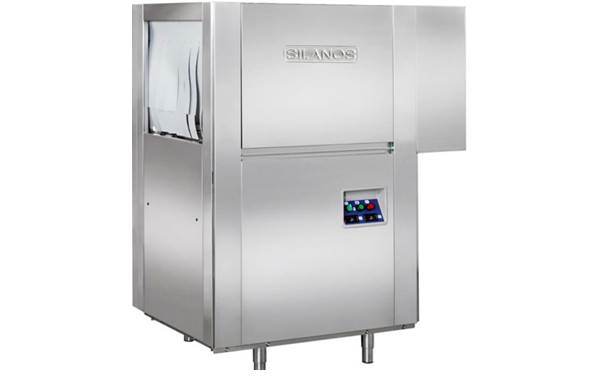
- The Silanos T1500 DE is a cassette-type dishwasher that washes 83 cassettes per hour, or approximately 1,494 plates. It includes an 18-plate cassette, a glass cassette, and a cutlery cassette. The cassette size is 50 x 50 cm. The machine is made entirely of steel and features electromechanical controls. Power consumption is approximately 15.25 kW. The price of this machine is approximately $6,456.
- The Elettrobar NIAGARA 2150 DAWY is an Italian cassette-type dishwasher with left-to-right loading. It features two wash cycles at 55°C (131°F), a rinse cycle at 80°C (176°F), and a drying cycle. It consumes 28.8 kW of power at 400 W. It uses approximately 200 liters of water per hour. The average price is $10,860.
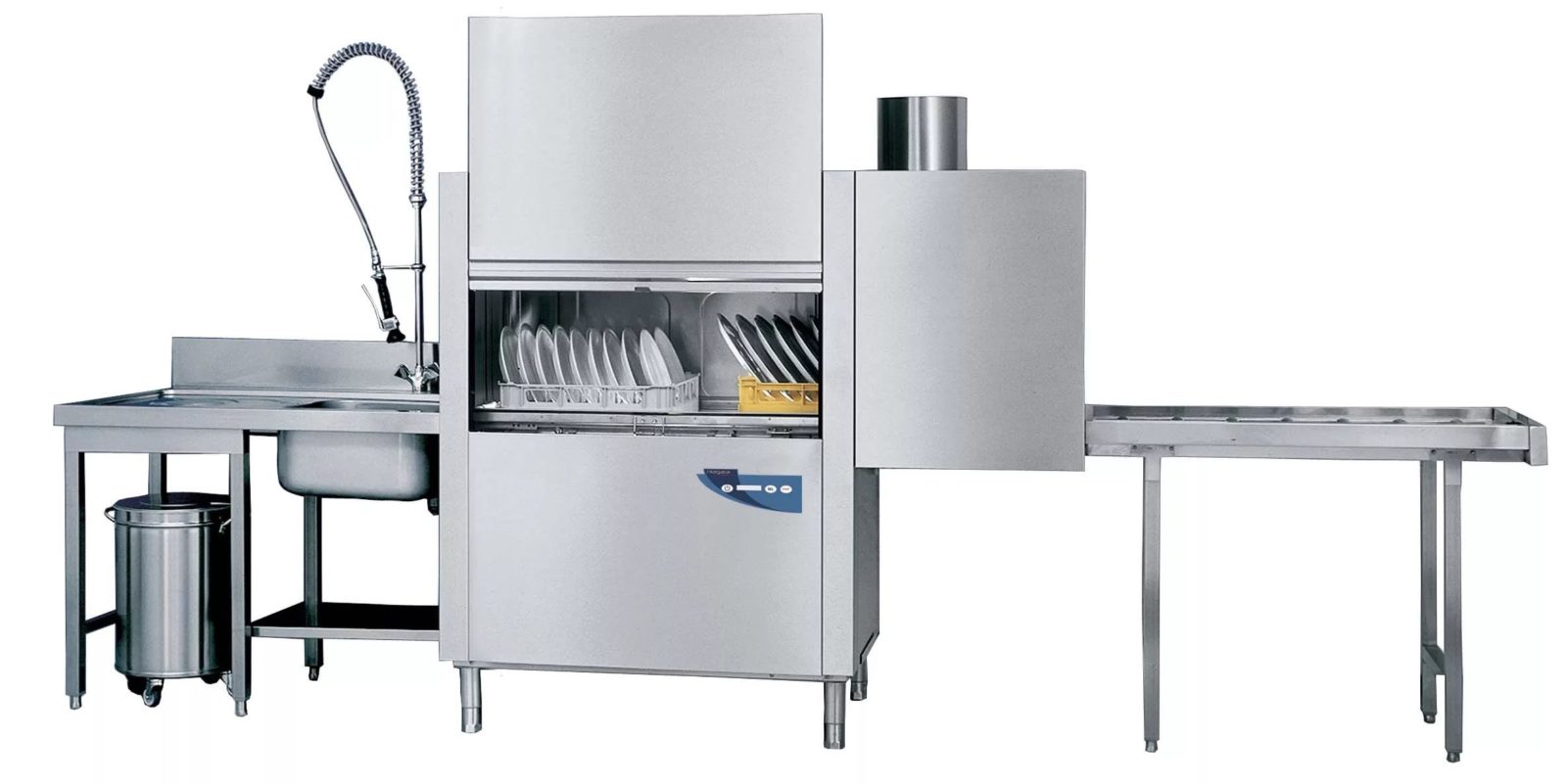
- The Grodnotorgmash MMU 1000M is a belt-type dishwasher that supports both cold and hot water. It can wash plates, bowls, trays, and glasses, making it suitable for use in public dining rooms. The machine is divided into three sections: the first section removes coarse dirt, the second section washes with detergent, and the third section performs a double rinse. The final rinse temperature is at least 85 degrees Celsius. It's worth noting that this machine is easy to disassemble and access parts for repairs, can be wall-mounted, and features a radio interference filter. The average price is $7,700.
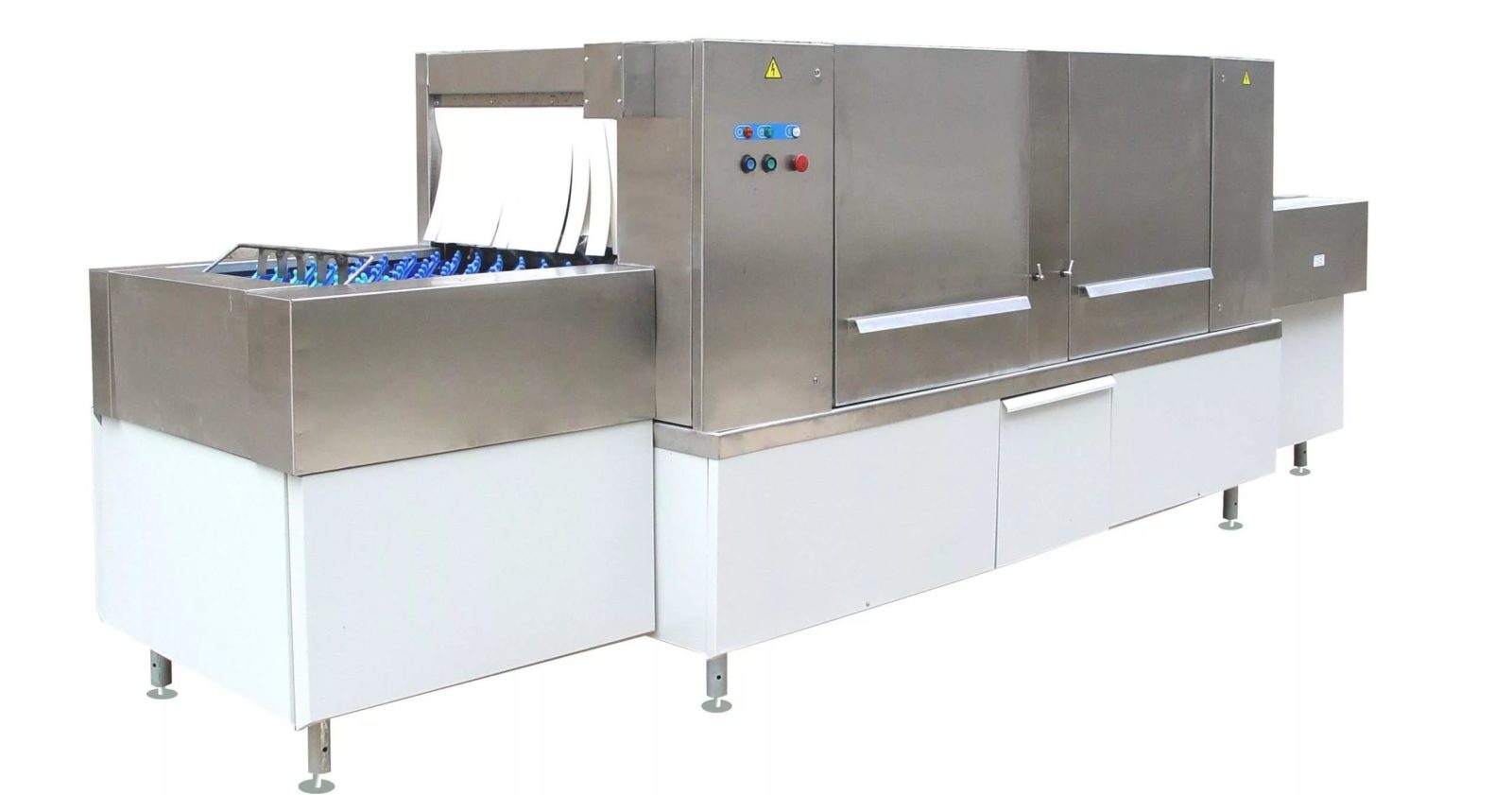
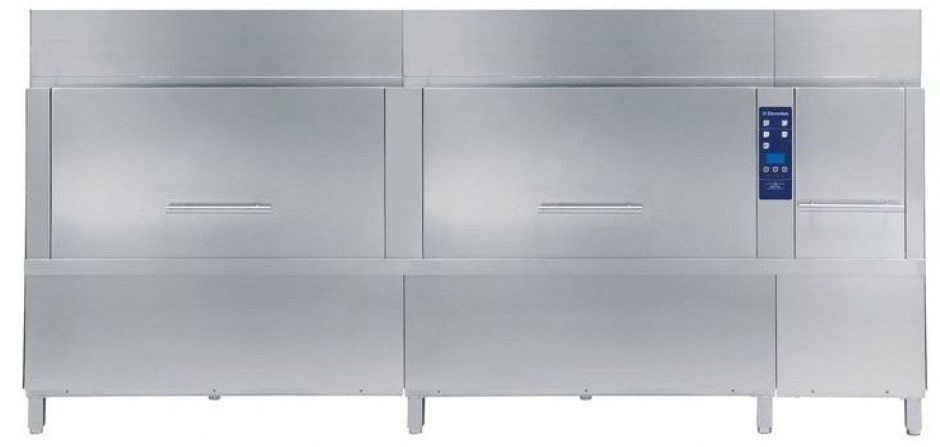
- The ELECTROLUX WTM250ELA 534113 is a cassette dishwasher from Sweden. This dishwasher has two dishwashing cycles with water temperatures ranging from 55 to 70°C.0C. During the rinse cycle, the temperature reaches 84 degrees Celsius. This technology allows you to wash from 280 to 4,500 dishes per hour. The machine is connected to a 380 V power supply. Power consumption is 44.2 kW, and water consumption is 300 liters. It can be said that the car is not very economical, and it costs about $34,175.
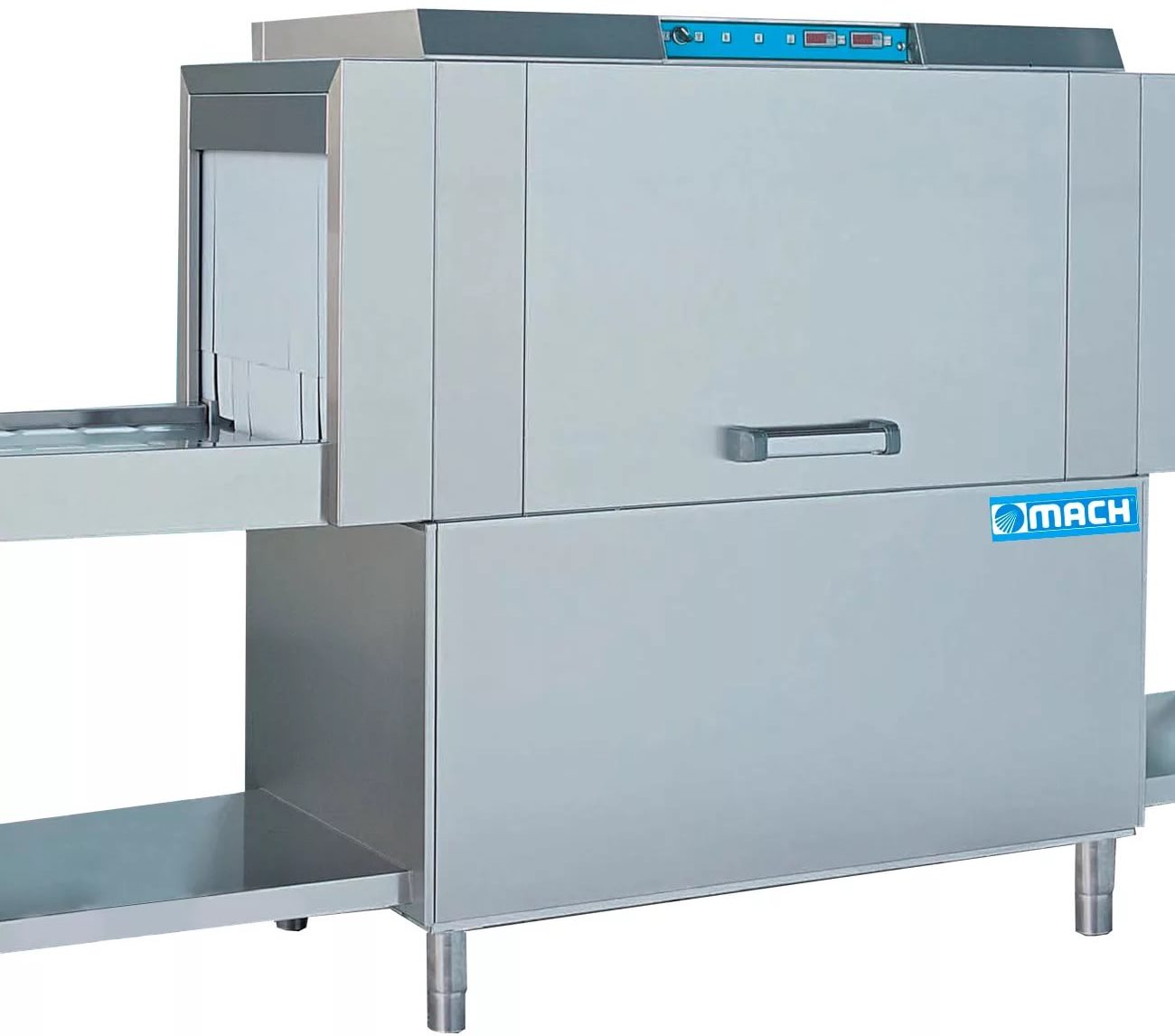
- The MACH MST/021 is an Italian conveyor dishwasher made of stainless steel. Dishes are fed in racks, and it can wash up to 95 racks per hour. Power consumption is 29 kW. The machine shuts off automatically and is equipped with a pump and a guillotine door with a switch. The average price is $15,439.
It's quite possible that a conveyor-type dishwasher isn't right for your business. And you can't decide what to buy. It's hard to say which appliance will meet your expectations, but you can read about... What types of dishwashers are there?, perhaps this information will give you the right ideas.
Interesting:

Readers' comments
Headings
Washing machine repair




For buyers




For users


Dishwasher




Add a comment