
The dishwasher isn't washing the dishes—we'll fix it ourselves.
 Many dishwasher users encounter a strange problem: the machine appears to be working and the wash cycle is running, but it either doesn't clean the dishes at all or does so unsatisfactorily. It would be easier if the machine were reporting some kind of system error, but as it is, the dishwasher "isn't aware" of the malfunction and continues to operate. In this case, the user's task is to understand the cause of this behavior and find a solution—that's what we'll do, and we'll describe the results in this article.
Let's look at the symptoms and causes of the breakdown.
It is quite difficult to draw a line between symptoms when The dishwasher started washing dishes poorly. or stopped cleaning it altogether. We'll consider them together, since the nature of these errors is often the same. What's going on with the dishwasher in this situation?
- The washing program starts, runs, and ends, and at the end the dishes are not just dirty, they are almost not wet.
- After the program has completed, the dishes are wet and completely dirty.
- The dishwasher operates in a specific mode, but the dishes are not washed satisfactorily.
Important! If the above symptoms occur repeatedly, be sure to observe the dishwasher's cycle and note any unusual behavior.
In this case, the main negative factor is that the dishes remain dirty. But you have to understand that you've wasted time, electricity, water, and ultimately, your nerves. Ultimately, this breakdown is even worse than if the dishwasher simply didn't turn on—the harmful consequences are greater. So, what causes the above symptoms?
- These or other user errors, we will talk about them a little later.
- Various problems related to water supply.
- Inability to properly circulate water inside the dishwasher.
- Difficulty collecting dishwashing liquid.
- Heating element failure, if the machine does not have a temperature sensor.
- Breakdown of the spray rocker arm (impeller).
The reason lies in user errors.
According to technicians at leading service centers worldwide, the main reasons a dishwasher won't clean dishes are various user errors they make while using the dishwasher. The most common mistakes are as follows.
- The dishwasher is not cleaned on time, or the user does not clean it at all.
- The user is placing dishes in the baskets incorrectly.
- The user pours detergent into the wrong compartment of the drawer or uses unapproved detergents.
Much has been said on our website about the need to periodically clean your dishwasher, yet users stubbornly fail to do so. Cleaning should be done at least 2-3 times a year, and if the machine is used intensively, once every 3 months.
Please note! A dishwasher can be cleaned not only with chemicals but also by hand; cleaning it by hand alone will be of little use.
To know, How to clean a dishwasherYou can find more information in your dishwasher's operating instructions or in the article of the same name on our website. In addition to cleaning, it's important to properly load dishes into the racks. Experts note the following mistakes people make when loading dishes in the dishwasher:
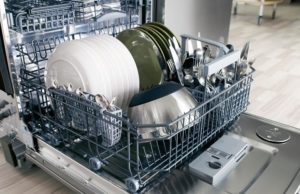
- the dishes are not placed correctly in the basket;
- put large items in the top basket and small ones in the bottom basket;
- Place individual items on the bottom of the dishwasher tank, next to the rocker arm;
- Place the dishes so that they touch the detergent drawer.
Each of these mistakes leads, at a minimum, to poor dishwashing results and, at a maximum, to damage to the moving element or the detergent drawer valve. Using the wrong detergents is also a serious mistake. Some people, in an effort to save money, add all sorts of junk to the machine, thinking it will help clean their dishes. In our opinion, the use of homemade powders and rinses is acceptable, but they must be prepared according to proven recipes and use safe chemicals.
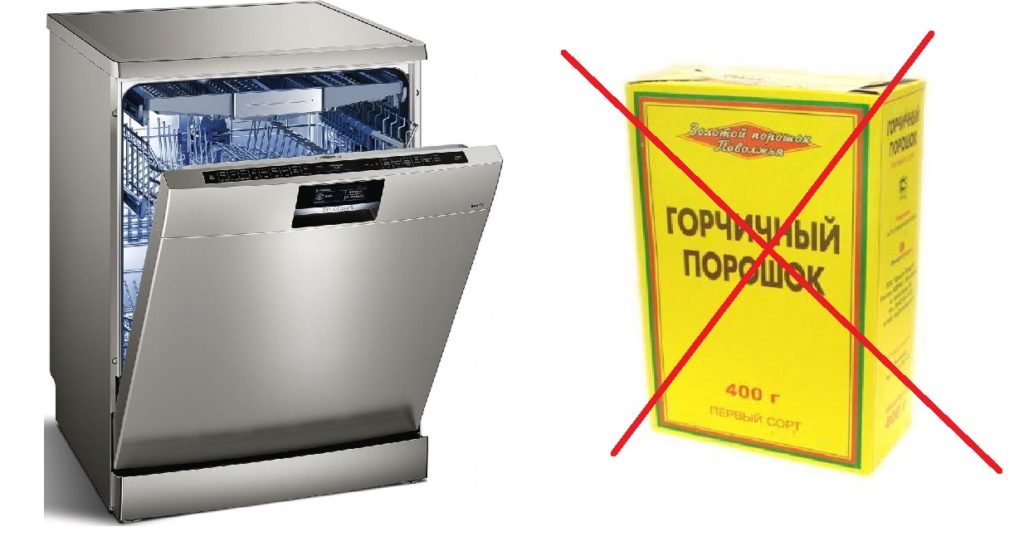
In particular, it's unacceptable to use mustard powder instead of detergent. After just one wash, the nozzles of the rotating arm will become clogged with mustard and dry out. After this, if they aren't cleaned, the next dishwashing session will be a complete disaster.
Problems with water filling
Another reason a dishwasher won't wash dishes is a problem with the inlet valve. It's simple: washing is impossible without water. But why does the machine continue to run the program if it hasn't filled with water, and why doesn't an error occur and the wash stop? The problem is that on some dishwasher models, the water level sensors are malfunctioning, or the connection between the control unit and the sensor is disrupted. As a result, the machine washes dishes without water.
Important! Running the machine without water can damage the heating element, as it could simply burn out.
If you suspect something similar is happening to you, listen to the machine while it is running. Usually it is difficult not to hear the filling and draining of water, because a characteristic gurgling sound is heard. If you notice that water isn't getting into your dishwasher, take action immediately:
- interrupt the washing program;
- check if there is water in the water supply;
- check that the water supply tap to the dishwasher is not turned off;
- Check the functionality of the electrical and mechanical parts of the inlet valve.
To check and repair the valve, you first need to locate it. Typically, the inlet valve is located in the front left corner of the dishwasher, but it can also be located on the right or even in the back.
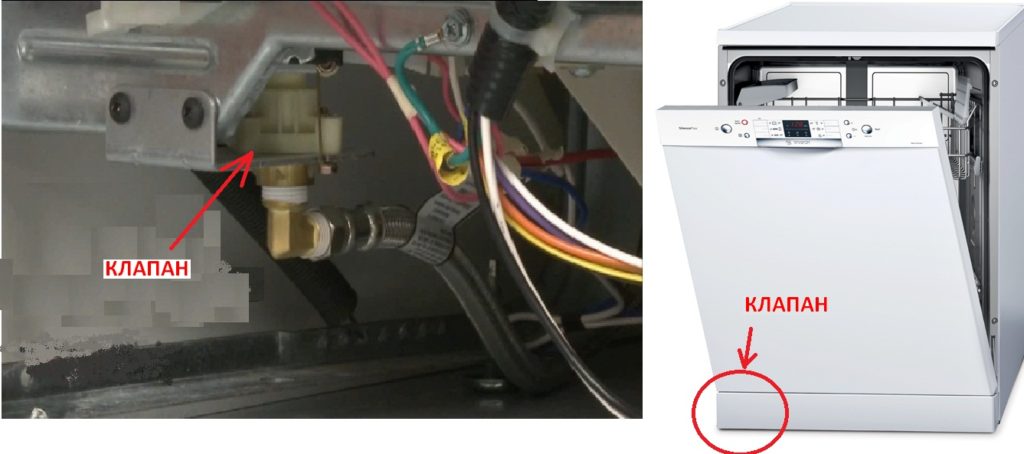
Unscrew the front decorative panel of the dishwasher and locate the inlet hose, which is screwed to the valve. Here's what to do.
- We turn off the water and unscrew the hose, and then the valve itself.
- We take a multimeter and set the switch to the minimum Ohm value.
- We connect the multimeter probes to the contacts of the filler valve.
- If the multimeter shows a value from 500 to 1500, the valve is working properly; if it is 300 or less, the valve needs to be replaced.
- If the valve's electrical system is in good order but it still doesn't work, check to see if the float switch is clogged with dirt - this happens often.
- Having repaired or replaced the valve, we screw it back into place together with the hose and turn on the water.
Note: You can clean the valve of dirt by soaking it in alcohol.
Problems with water circulation and water intake
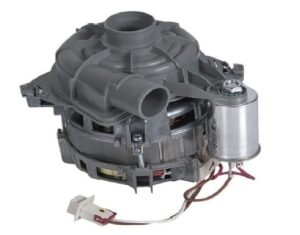
A dishwasher may fill with water, but that doesn't mean it will come into contact with the dishes. For powerful jets of water to reach plates, glasses, forks, and other utensils, the circulation pump must be working properly. It forces pressurized water into the spray arm and, through its small holes, onto the dishes, dislodging dirt. If the circulation pump stops working, a major problem arises: the machine won't wash the dishes.
What can we do? First of all, we need to get to the circulation pump.
- We disconnect the dishwasher from the electricity, unscrew the hoses and remove it from the niche in which it was built.
- We spread several rags on the floor to absorb the water from the machine.
- We put the car on rags with the back wall down, we need to get to the pallet.
- We disconnect the front decorative panel, and then all the wires connecting the tray and the main body.
- Pull the tray towards you and remove it; the circulation pump will be located in the very center.
- We check its contacts with a multimeter in the same way as described above, but if the winding has broken, then it will be difficult to do anything - you will have to replace it.
Important! The dishwasher's circulation pump is a fairly expensive component, so to avoid risk, have it diagnosed by a professional.
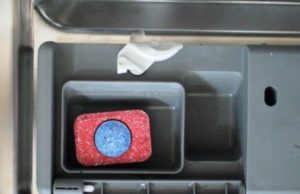
Quite often, dishwashing performance deteriorates sharply because the machine is unable to remove detergent from the detergent drawer. This problem may not be the user's fault, but rather the manufacturer's. Quite often, on Chinese-assembled machines, the tablet compartment valves are not adjusted properly. Hot water causes the plastic to expand, causing the valve to jam. As a result, the tablet doesn't dissolve, and dishes don't wash well. To solve this, you can either replace the detergent drawer or trim the edges of the valve with fine sandpaper.
The impeller or heating element is broken
All modern dishwashers are equipped with temperature sensors, but older models lacked this feature. If your dishwasher is equipped with one, keep in mind that if the heating element fails, it won't display an error message and will continue washing dishes with cold water. This problem can be solved by replacing the heating element.
Also, the dishwasher will stop washing dishes if its arm breaks. If the rotating arm hits any object (placed incorrectly in the dishwasher tank), it can fly off or even break, because it is made of flimsy plastic. The rocker arm cannot be repaired, especially if the mount is broken, it needs to be replaced.
In conclusion, if your dishwasher refuses to perform its primary function—washing dishes—it's time to immediately begin investigating the cause of this "outrage." There are several main causes, and we've tried to cover them all at least briefly. Happy repairing!
Interesting:




2 reader comments
Add a comment
Headings
Washing machine repair




For buyers




For users


Dishwasher




Let's train.
I called the repairmen, and they took the dishwasher in for service. They said the pump was working and filling with water. It seemed to clean the dishwasher at home, but not as well as it did right after I bought it. It's 10 years old now, Beko. First, it stopped dissolving the 3-in-1 Finish tablets, then the powder I poured in was still lying unwashed at the bottom, even though I ran it three times on different settings.