
No water comes into the dishwasher
 Few people remain indifferent to a working dishwasher, as it frees us from the tedious task of standing at the sink with a rag and irritating detergent. But everything changes when the machine breaks down—our mood plummets. When the dishwasher doesn't fill with water, we know there's a problem, but what kind of problem? How can we detect such a problem and fix it, preferably ourselves? We'll answer these and other questions in this article.
The faults that caused this problem
Why isn't my dishwasher filling with water? To answer this question, you need to carefully inspect the machine, systematically checking every possible problematic element. During this inspection, you'll likely discover a problem that will need to be fixed. So, what are the common problems that cause the dishwasher to try to fill with water, but still no water?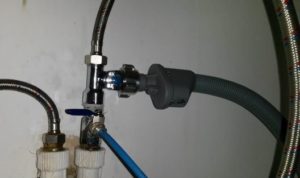
- Water does not flow due to a clogged flow filter or filters.
- No water is supplied due to a broken inlet valve.
- Water does not flow due to a broken door mechanism.
- The pressure switch is broken, which is why water does not get into the depths of the dishwasher.
- Water is not supplied because the Aquastop system has been activated.
- The control unit element has failed.
Please note! The above list of malfunctions is not exhaustive, but these faults are present in approximately 96% of cases with these symptoms.
User errors cannot be discounted either. Quite often, people call a repairman complaining that their dishwasher isn't pumping water, but the cause of the lack of water supply is actually a shut-off faucet, a kinked hose, or a simple water supply outage. It's clear that people are different, and situations are also different, but we hope that you, our readers, are much more savvy and will not do something similar and make the experts laugh.
The flow filter is clogged, Aquastop is activated
The first reason why there's no water in the dishwasher will be described based on the dishwasher's design. Let's be clear. Most modern Bosch dishwashers have the Aquastop leak protection system. If the Aquastop inlet hose is activated, meaning a leak occurs, the valve inside the hose will be securely sealed, preventing water from entering the machine.
How to solve this problem is described in detail in our publication. Aquastop Dishwasher Hose – Checking and ReplacingBut in short, in this situation, you simply need to replace the Aquastop hose. This component cannot be repaired or replaced.
The new Aquastop hose has an ideal valve capacity, meaning water will flow freely into the machine until the protection system is triggered again, protecting your home from flooding. If your dishwasher does not have Aquastop protection and the inlet hose is completely dry and there are no signs of leaks, then the flow filter is likely clogged with limescale and dirt.
Important! Very often, after replacing the risers, rusty water containing debris begins to flow from the faucet. This water quickly clogs filters, so try not to wash dishes in it in the dishwasher.
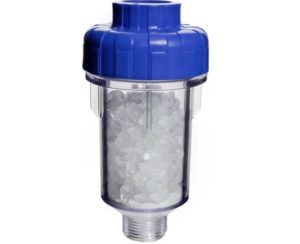 When installing a dishwasher, an experienced technician typically installs an additional flow-through filter on the inlet hose to ensure that no contaminants enter the machine with the tap water. However, in this case, the filters need to be monitored and cleaned periodically. If this isn't done, one day, either the additional filter or the main filter located before the dishwasher's inlet valve will become clogged, and water will stop flowing into the machine. How can this be remedied?
- First, we turn off the water.
- Next, unscrew the hose together with the filter.
- We remove the filter and unscrew it, then clean out the dirt, rinse it with boiling water and screw it onto the hose.
- We put everything back in place and check how the dishwasher works.
If after this the dishwasher hums, trying to pump water, but there's still no water, you need to keep looking. But don't forget to clean the filters anyway—at least every six months, even if your tap water is soft.
The fill valve is broken
Water not reaching the dishwasher may be blocked by the inlet valve. This valve is a sensitive component of the dishwasher and can be damaged even by a pressure drop. In particular, Bosch dishwasher manufacturers provide installation recommendations in their instructions for dishwashers with water pressure above 1 MPa. In addition to in-line cleaning filters, they recommend installing pressure-reducing valves.
If there's no pressure relief valve and the water pressure is high, the dishwasher's inlet valve will quickly fail and either fail to open when needed or remain open, causing water to constantly flow into the machine. In this case, repairing the valve is virtually impossible, as the mechanism will fail and need to be replaced. If the valve is simply clogged with dirt and does not open, then the problem can be solved by regular mechanical cleaning.
The water level sensor is to blame for everything.
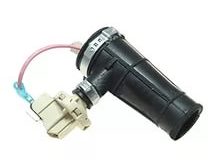 My Bosch dishwasher seems to be humming and the lights are on, but why isn't the water filling? The dishwasher's pressure switch could be the culprit. This device, also known as a water level sensor, is supposed to accurately determine how much water is in the machine at any given time. The problem is, it can fail to function at some point, causing the following to happen:
- water will actually flow into the dishwasher, but the control module will not know about it;
- the machine will overflow and the pump will start pumping out excess water in emergency mode;
- The control module, thinking that water is not entering the machine, generates a system error and stops the program.
It's easy to figure out if this is what's happening with your dishwasher. Check to see if there's water in the dishwasher, if the pump is working, and if there's any gurgling sound in the drain hose and pipe. If all of this is true, the first thing to check is a faulty pressure switch. Learn how to check and replace the pressure switch, you can read in the relevant article published on our website.
Problems with the control module
The reason why water isn't flowing into your dishwasher may be due to problems with the machine's electronics, or more specifically, its control module. Few people can figure out how to troubleshoot and repair this component. Even some specialists aren't willing to undertake such repairs, but it's essential to at least take a look at this component. The control module is one of the most important parts of the dishwasher, as it coordinates and commands other parts and the entire dishwasher to operate or stop.
Important! It's often the case that it's not the entire module that fails, but a specific component. Finding and replacing it will restore the board's functionality, but this is quite difficult.
To remove the control module, you'll need to disassemble the dishwasher door. It's not difficult:
- we open the car door wide;
- we hold it so that it does not start to close at a crucial moment;
- Now we unscrew the small screws that are located on the ends and back of the door;
- We separate the two parts of the door and inside we see a board with fasteners – this is the module.
Visually inspect the board. If there is no visible damage, then don't bother looking any further. Call a specialist who will sort out the problem and possibly recommend replacing this part.
So, in most cases, if your dishwasher isn't getting water for some reason, you can fix the problem yourself, without calling a professional. However, in every tenth instance of such a breakdown, a qualified technician's opinion is absolutely necessary! Good luck!
Interesting:

4 reader comments
Add a comment
Headings
Washing machine repair




For buyers




For users


Dishwasher




We still need to figure this out!
Hello. I have a BOSCH built-in dishwasher. The faucet indicator light is on, and the drain pump runs constantly (even when it's dry and there's no water). All the filters are clean. The screens at the inlet after the faucet are clean. I tried changing programs by holding down two buttons. The modes are selected, but they don't start. Then the same indicator light comes on again. And as soon as you turn the machine on, the pump starts pumping, but there's nothing to drain. Help!
Hello! The faucet light is flashing. We can't find the cause. There are no leaks, the filters are clean, and the car is only 4 months old. SOS!
Turn on the water