
Bosch dishwasher won't drain
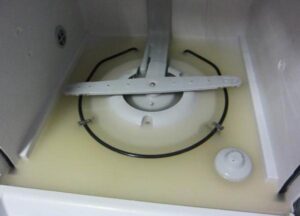 Even though household appliances are becoming more reliable and safer every day, engineers still haven't managed to eliminate many malfunctions. For example, if your Bosch dishwasher isn't draining, you've encountered one of the most common problems associated with modern dishwashers. What should you do if, instead of draining all the waste into the drain, the machine leaves it in the wash chamber under the baskets?
Initial user actions
When a problem occurs with your "home assistant," an error code usually appears on the display. Error codes "E21" through "E25" are used to indicate a problem with the drain, accompanied by a flashing "END" indicator. In most cases, the smart device will automatically detect the fault and notify you. However, if you're using an older model, the sensors may simply flash instead of displaying a digital code.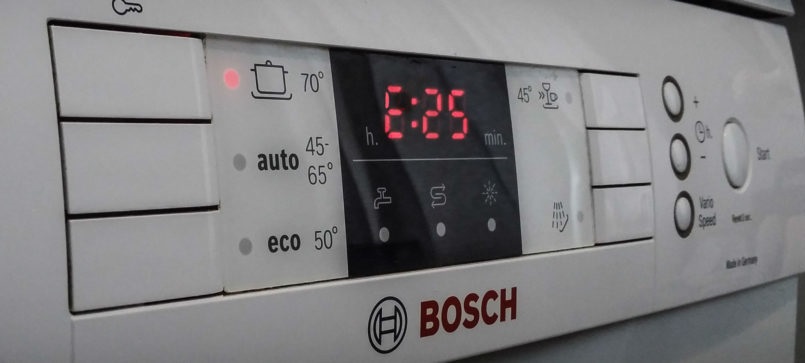
In rare cases, the machine will be unable to detect the error and communicate the error code to the user. In this case, the user will only become aware of residual water in the chamber after opening the door and discovering a pool of residual liquid. The first step to addressing this issue is to try one of the following basic methods:
- turn off household appliances to allow them to reboot;
- Press the power button and hold it until the machine turns off.
If the water doesn't drain from the wash chamber after these steps, the problem lies in an internal component of the dishwasher. While some components can be repaired at home, others will require a call to a service center.
Let's check the drain hose
The first thing to check is the device's hose, which is usually long and narrow, which can cause it to become kinked. This is the most common reason, as users may, due to ignorance, place heavy objects on the hose, which will interfere with the stable flow of water. If this happened to the PMM, what to do next?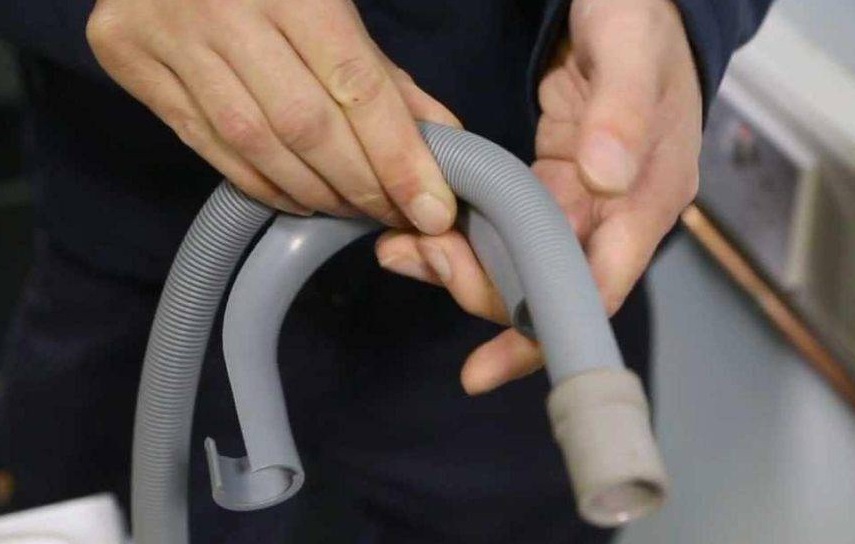
- Disconnect the equipment from the power supply.
- Remove the retaining screws and remove the lower dishwasher door.
- Use pliers to disconnect the hose.
- Place one end of the hose in a bucket and then turn on the drain.
If there's no water, the next step is to check the dishwasher itself. If water flows but with visible difficulty, the hose is clogged. A thorough cleaning of the hose with a powerful jet of water or a long wire will help. If you choose the latter option, be extremely careful and don't rush, as the wire could damage the hose.
The trash filter hasn't been cleaned for a long time.
Another common cause is food residue on dishes. Many housewives mistakenly believe that dishwashers should clean the dishes themselves, even removing food residue. But if you don't remove food from the dishes first and send it to the dishwasher in that condition, it will inevitably cause the internal components of the appliance to become clogged. This will cause the debris filter to become clogged and the water to begin to stagnate.
If this has already happened, you should clean the debris filter yourself to restore normal operation. To do this, carefully follow the instructions: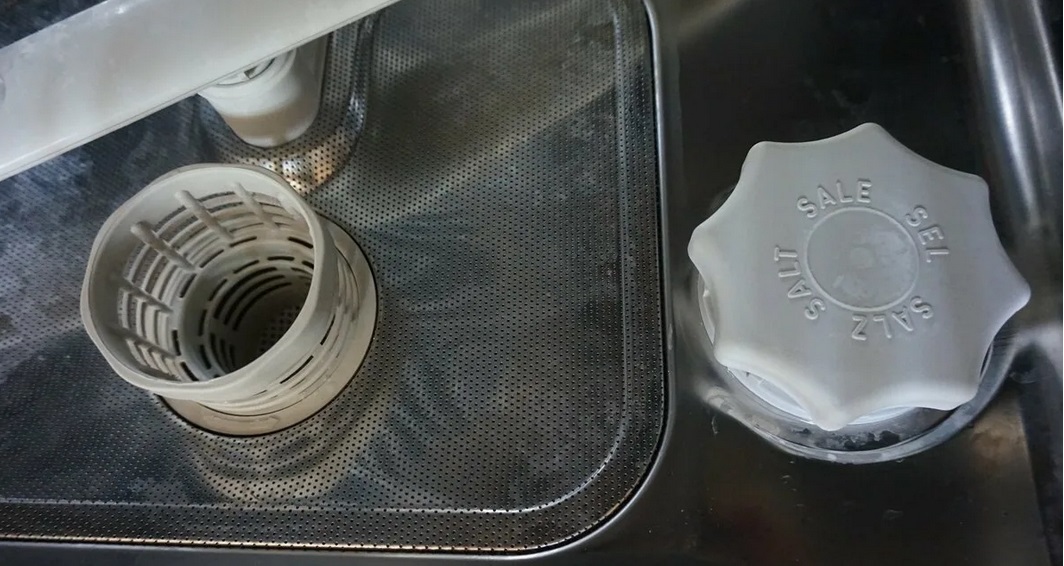
- Remove everything from the appliance chamber, including all dish baskets;
- unscrew the lid located at the bottom;
- take out a glass with edges made in the shape of a grid;
- Wash the debris filter thoroughly using detergent and a small brush that can reach all hard-to-reach places.
Be sure to check the drain pump after cleaning the filter, as debris can also clog the pump, preventing water from draining.
After removing food debris and other contaminants, replace the debris filter by following the instructions in reverse order.
Is the pump working?
The next item to check is the pump, which removes water from the dishwasher's interior. Repairing it is often very difficult or even impossible, so the element most often has to be replaced. To determine if the pump is the problem, listen to the sounds the dishwasher makes during the cycle. The absence of sounds indicates that the pump is not working, as a normally functioning machine makes a characteristic buzzing sound during operation. To replace the pump, follow the instructions: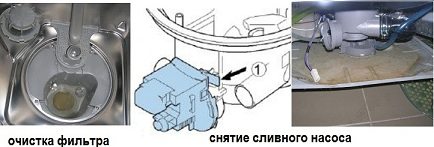
- remove all water accumulated at the bottom of the washing chamber after work;
- remove the filter;
- turn over the "home helper";
- unscrew the retaining screws, remove the pan, disconnect the hoses;
- Using a multimeter in ohmmeter mode, check the resistance of the part, which should be in the range of 200 ohms.
In addition to resistance, it is always worth checking the rotation of the impeller on the pump; it should be slightly strained, but without jamming.
If there's any abnormality, you'll have to discard the pump and buy a new one. In this case, install it according to the instructions in reverse order, but just in case, check the dishwasher wiring and replace the gasket if you've already disassembled the unit and can do so.
The water level sensor is not working
A pressure switch is installed in every dishwasher to detect the water level. The sensor transmits this information to the appliance's control system, which then makes decisions about filling and draining water. Therefore, if the pressure switch is faulty, there is no pressure information, and the dishwasher simply cannot function properly. This typically occurs for one of the following reasons:
- the high pressure tank in the water level sensor is broken;
- the pipe connected to the pressure switch is damaged;
- contacts oxidized due to the negative effects of water;
- mechanical damage to the part has occurred;
- the element has worn out over long periods of use.
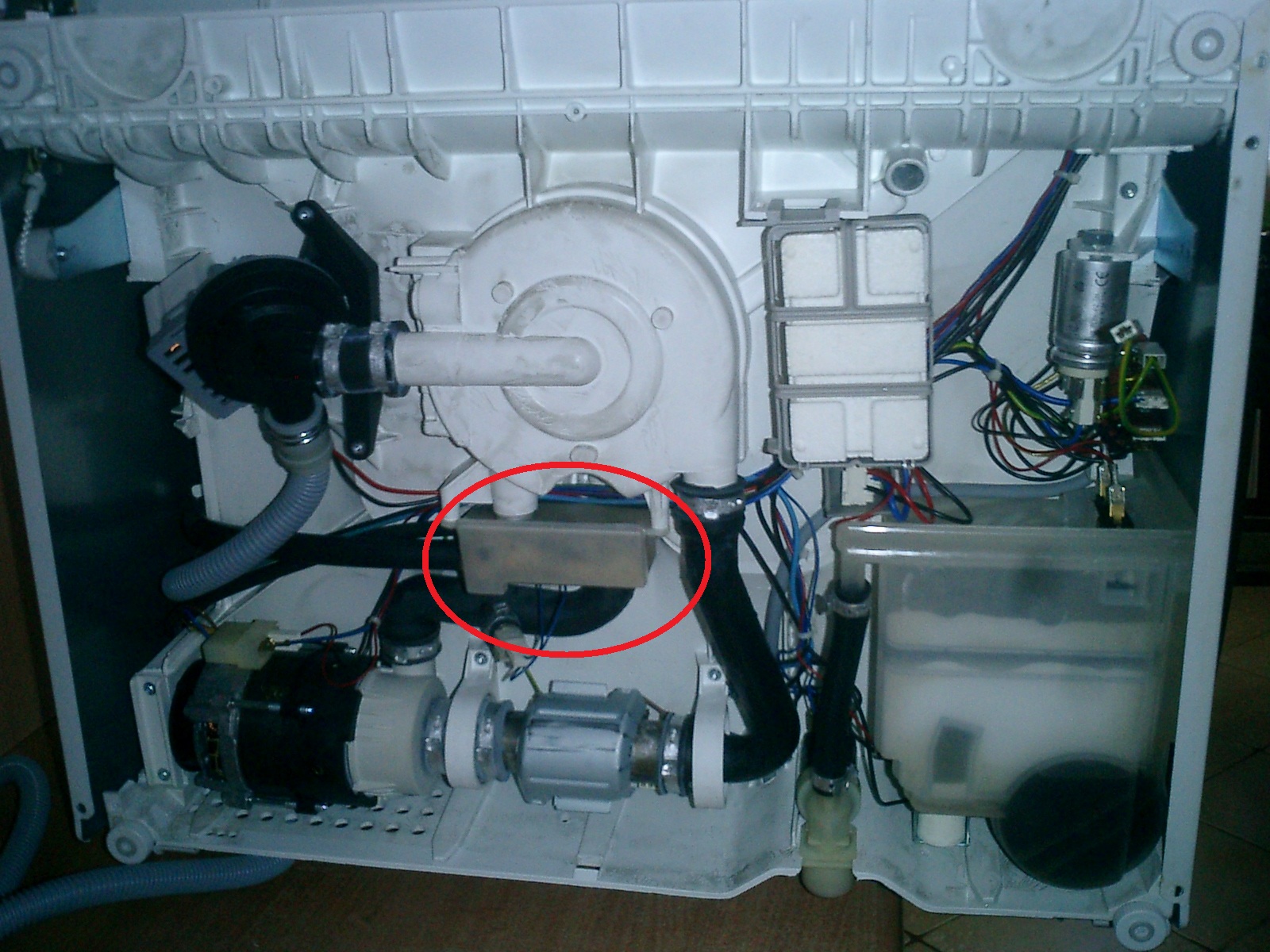
Any of the above reasons could cause the machine to refuse to drain. To find the source of the problem, run a sensor diagnostic.
- Disconnect the device from the power supply.
- For safety, lay towels on the floor in case water leaks from the equipment.
- Place the device on its side.
- Using pliers, remove the tubes and reservoir.
- Inspect the appliance for any debris or other contaminants, which should be removed if found.
- Try blowing into the tube and listening for a slight click. This will help you determine if the pressure switch is working properly.
- Using a multimeter, check the electrical continuity. Normal resistance is when it drops to zero.
If the water level sensor is broken, there's no point in repairing it. In this case, the only solution is to replace the element.
Whenever possible, purchase only official Bosch parts to ensure that the item is 100% compatible with your dishwasher and will last a long time.
But if, even after all the steps described above, the machine still won't drain, the problem most likely lies in the control module. In this case, you won't be able to resolve the issue yourself without experience and professional knowledge, so you'll need to call in a professional.
Interesting:

Readers' comments
Headings
Washing machine repair




For buyers




For users


Dishwasher




Add a comment