
Electrolux dishwasher not draining
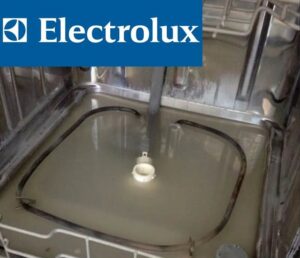 If you find dirty water at the bottom of your dishwasher at the end of a cycle, don't be alarmed. This doesn't always indicate a serious problem. Often, an Electrolux dishwasher won't drain due to a simple clog. Let's figure out how to get your "home helper" back in working order. We'll tell you what to look for first.
Checking the filter
If you notice your dishwasher isn't draining, don't rush to call a repairman. First, rule out common problems. First, check to see if the drain hose is pinched. The corrugated hose may be kinked, and straightening it may be enough.
Check the drain hose for a blockage. It may be clogged internally, preventing water from draining. To clean the element, disconnect it from the machine and the trap. You can clean the corrugated hose with a long metal wire.
Next, make sure the debris filter isn't clogged. Food debris from dishes can easily clog the filter element. The filter element is located at the bottom of the wash chamber.
Electrolux dishwashers, like many others, have not just one filter, but an entire filter assembly. The design consists of several components:
- internal fine filter;
- coarse filter;
- external filter mesh;
- supporting elements.
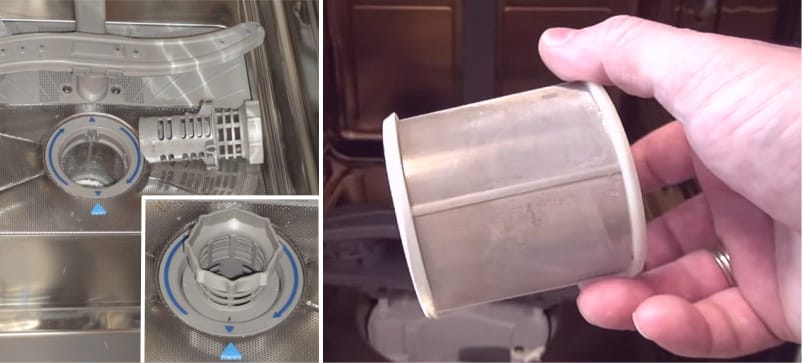
To check the filter unit, you need to:
- de-energize the dishwasher;
- close the shut-off valve responsible for the water supply;
- scoop out stagnant water from the bottom of the washing chamber;
- Unscrew the trash filter and remove the mesh.
You might find more than just food pieces inside. There might also be shards of glass, toothpicks, and fruit pits. It is necessary to clean the recess, and disassemble the filter unit into its components and rinse it in warm water.
If the filter is heavily soiled, it's best to use specialized cleaning agents. You can also soak the parts in water with citric acid or baking soda. Clean the mesh with a toothbrush.
It is recommended to disassemble and clean the dishwasher's debris filter at least once a month.
The more frequently you clean the filter assembly, the easier and faster it will be. Once finished, replace the filter. If it was heavily soiled, the dishwasher will drain without issue.
Eliminating sewer problems
What should you do if your dishwasher's dust filter is clean and it's definitely not the cause? You need to make sure there's no blockage in the drain pipe or trap. To do this:
- disconnect the dishwasher drain hose from the siphon;
- direct the free end of the hose into a basin or other container;
- run a short cycle;
- observe the operation of the dishwasher.
If the cause was a clogged trap or drain pipe, the machine will now begin draining water from the wash chamber. You can pause the cycle and clean the pipes. How do you do this?
First, turn off the water supply to the apartment. Then you'll need to disassemble the trap. Have rubber gloves, a container for the dirty water, and a dry rag ready. Follow these steps: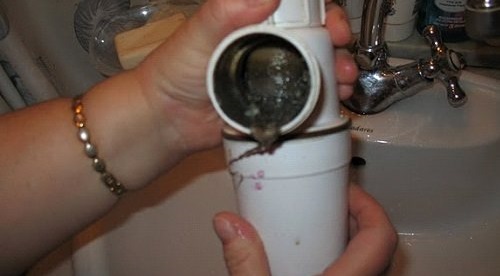
- unscrew the upper and lower rings that secure the parts of the siphon, and then disconnect it from the pipe;
- drain the water that has accumulated inside;
- remove all dirt from the siphon, rinse the part under running warm water;
- assemble the siphon and put it back in place.
If you don't have time to disassemble the trap, you can try cleaning it with a specialized household cleaning product. Dishwashers are typically connected to a device under the kitchen sink. So, buy the cleaning product and pour it into the sink, following the instructions on the packaging.
Sometimes the blockage occurs not in the trap, but in the sewer pipe itself. Removing it yourself can be difficult, so it's best to call a plumber. They'll use specialized tools to remove the blockage.
If the dishwasher doesn't drain even after disconnecting the drain hose, the problem isn't with the trap. The pump is next to check. A foreign object may be lodged between the impeller blades, blocking the pump. Let's figure out what to do next.
The pump impeller is jammed
If water remains in the dishwasher even after cleaning the filter assembly and trap, you'll need to check the drain pump. This pump is responsible for pumping wastewater into the sewer.
You can check the pump on your Electrolux dishwasher yourself. To access the pump, you'll need to partially disassemble the housing of your "home helper." Here's the procedure: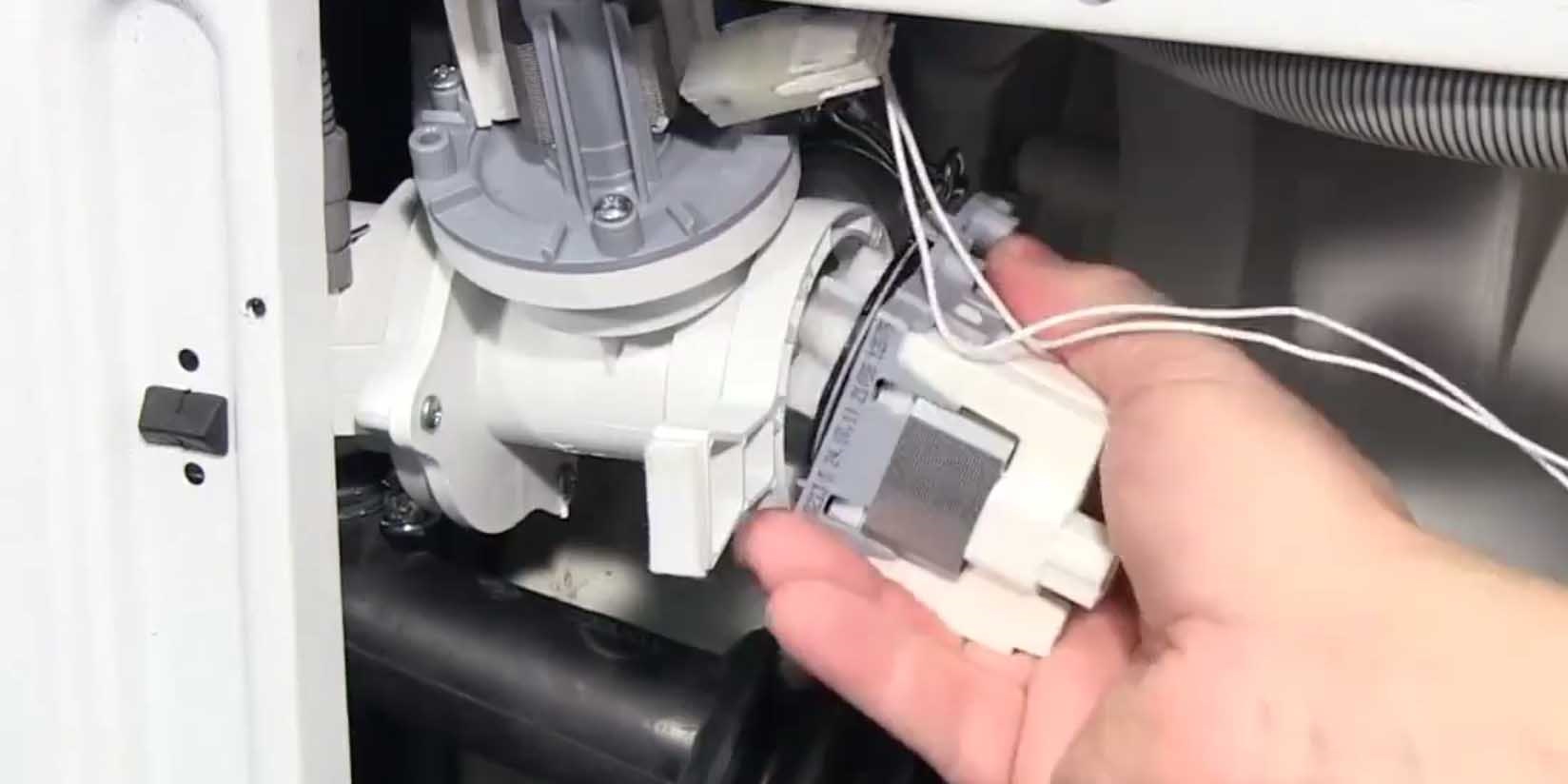
- de-energize the dishwasher;
- disconnect the device from the water supply and sewerage system;
- wipe the wash chamber dry;
- Place the dishwasher on the floor and remove its tray;
- disconnect the drain hose and wiring from the pump;
- unscrew the drain pump;
- Check the rotation of the impeller.
Sometimes a foreign object gets stuck between the impeller blades, blocking the drain pump. In this case, simply cleaning the pump and reinstalling it will suffice.
You can check the drain pump for functionality using a multimeter.
The multimeter will need to be set to resistance measurement mode. Then, the tester probes are placed across the pump terminals. Normally, the device should read approximately 200 ohms. If the reading is significantly different, the pump will need to be replaced; it cannot be repaired.
Install the pump back into the dishwasher in reverse order. Once the drain hose and wires are attached to the pump, you can begin reassembling the housing. Next, run a test cycle—the machine should begin draining water into the drain.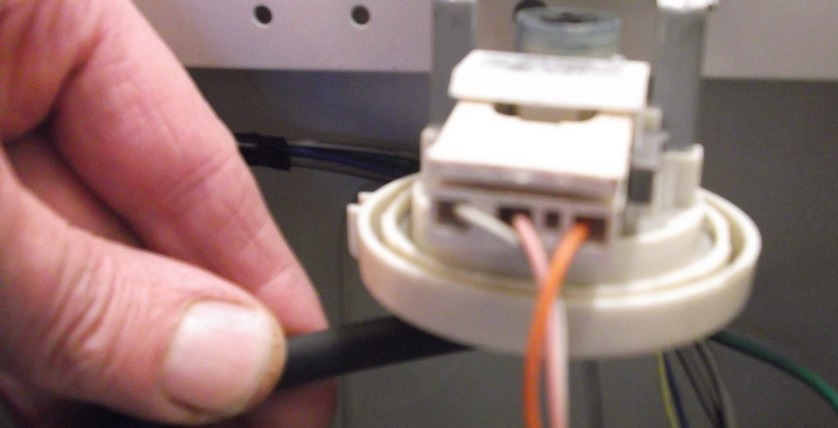
If all the above steps do not produce results, then the problem may be:
- pressure switch;
- control module.
The pressure switch monitors the water level in the wash chamber. If the sensor is malfunctioning, the readings will be inaccurate. Therefore, the control module will not command the machine to drain the waste water. The device will need to be replaced.
The problem may also lie in the dishwasher's software module. Diagnostics and repair of the electronic control unit should be entrusted to specialists. This is a very complex device, consisting of numerous components. Without sufficient experience and skills, you can cause even more damage to the dishwasher.
If you notice your Electrolux dishwasher isn't draining, start with the basics. First, inspect the drain hose, then clean the dishwasher's debris filter. If everything is fine, check the drain system for a blockage. Then, inspect the pump. If none of this helps, it's best to contact a service center for assistance.
Interesting:


Readers' comments
Headings
Washing machine repair




For buyers




For users


Dishwasher




Add a comment