
The dishwasher is buzzing but not working.
 Despite the high reliability of modern household appliances, no one is immune to a sudden dishwasher breakdown. For example, a common occurrence is when a dishwasher hums but doesn't work. While the appliance turns on, it may seem like nothing is wrong, but it's impossible to fully utilize its functions. We'll explain why this happens and what to do in this situation in today's article.
What exactly is buzzing?
First, you need to figure out which part of the appliance is causing the annoying hum, as well as why your dishwasher has stopped washing dishes. To determine the cause, you need to explore a range of possible solutions, which you can either resolve yourself or with the help of a professional.
If you're not mentally prepared to disassemble your appliance and examine its internal components, and are worried about accidentally damaging the parts further than they already are, it's best to call a technician immediately for diagnostics and subsequent repairs.
There are two sources of humming noise: the circulation pump and the water pump. However, the water pump doesn't turn on initially, only at the end of the cycle when the dishwasher needs to be drained, so it's best to address the water pump first. When the circulation pump hums, it means that it is trying to start working, but for some reason it is not able to do so. This could be due to either a lack of water entering the system or a broken mechanical component, such as the impeller. The latter is less common, so let's focus on the first possible cause of the malfunction first.
Water is not supplied to the dishwasher
The most basic solution to the problem might be a situation where there's no water in the water supply. However, if the water supply is fine, it's worth exploring the possibility that the inlet valve is broken or the screen in front of the valve is clogged. What should you do in this case?
- Turn off the water supply so that liquid stops flowing into the dishwasher.
If your hose has an additional flow filter, you should also remove it and clean it of any dirt.
- Remove the inlet hose, take out the standard flow filter located at the entrance to the dishwasher and rinse it under a powerful stream of hot water, thus removing scale and other dirt.
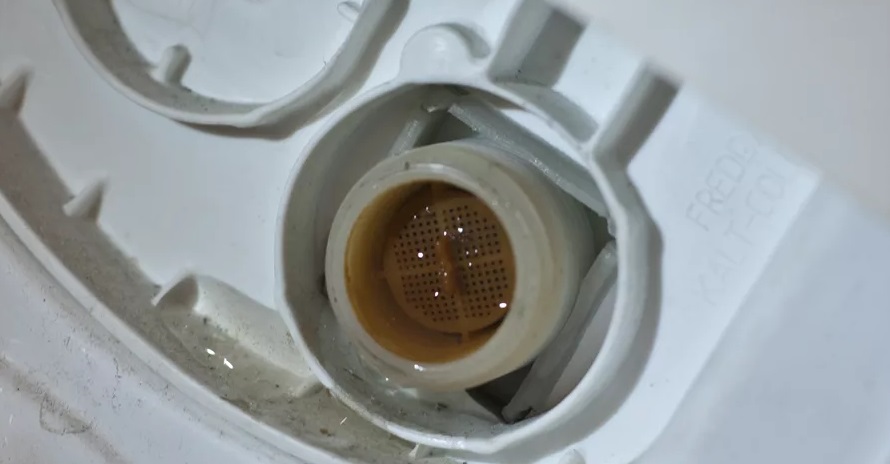
Just two points can solve most problems with water intake, as well as the machine’s refusal to start working. But if these instructions didn't help you, you should further examine the inlet valve. To do this, you must first remove the bottom panel of the machine, and then locate the valve on the front left side of the device. Disconnect the wires from the two valve contacts, use a standard multimeter set to ohmmeter mode, and check the resistance of the element. If the readings are abnormal, the part is faulty and requires replacement.
Let's check the circulation pump
If the water supply is fine, the pump responsible for circulating water inside the dishwasher is most likely at fault. To diagnose and repair the problem, you'll have to partially disassemble the unit.
- Disconnect the unit from all communications.
- Move the machine to a spacious room where it will be easy to disassemble.
- Place household appliances on the floor.
- Remove the bottom of the "home helper".
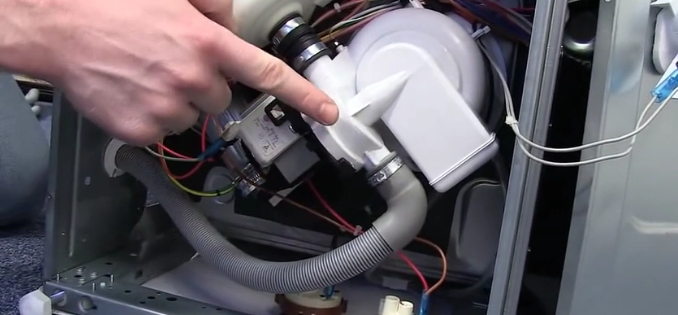
- Remove and temporarily put away the tray so that it is out of the way.
- Do the same with the inlet pipe.
- Remove the circulation pump by disconnecting the wires and unfastening the fasteners.
To be on the safe side, take photos of the wiring so that you can see an example of the connection later.
If an element is damaged, it is much easier to buy a new one and install it in place of the old one. However, repairing this part is not very difficult, so if you want, you can fix the pump yourself and save a little money.
Repair of the PMM circulation pump
It's important to understand that if the unit is damaged due to a power surge or short circuit in the winding, repairing the circulation pump is impossible. However, if a damaged impeller or worn bushings are the culprit, the part can be easily repaired.
The most common cause of failure is worn graphite bushings. To determine this, simply disassemble the pump and check for play. To repair the element, follow the instructions.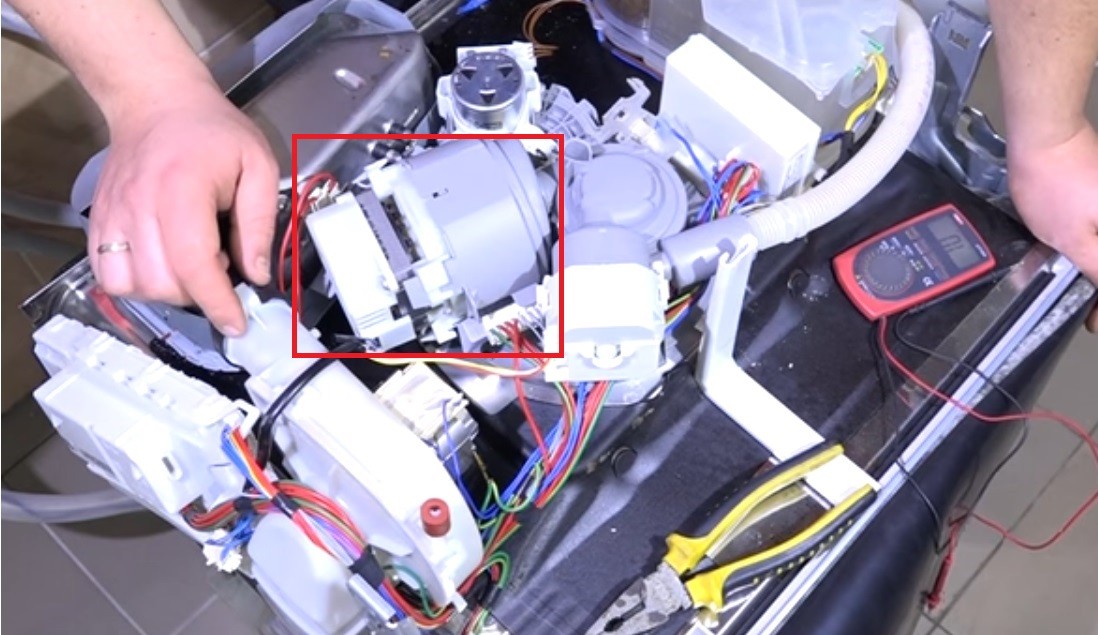
- Remove the pump and disassemble it by unscrewing the nozzle on the rotor.
- Carefully remove the fragile impeller from the shaft, making sure that no cracks form on it.
Graphite bushings and impellers can be purchased at any hardware store, ordered online, or printed on a 3D printer.
- Install new parts.
Now all that's left to do is assemble the pump and install it. To ensure parts ordered online are compatible with your dishwasher, always accurately specify the serial number and model of your dishwasher.
Interesting:




Readers' comments
Headings
Washing machine repair




For buyers




For users


Dishwasher




Add a comment