
Hansa dishwasher does not drain water
 If you discover that your Hansa dishwasher isn't draining, don't panic. In most cases, you can fix the problem yourself. So, calm down, unplug the machine, and empty the dishwasher. There are two possible causes for this problem: a clogged drain or a malfunctioning component. Let's figure out where to begin troubleshooting.
Why doesn't the equipment remove the waste liquid?
There can be various reasons why a dishwasher won't drain. Most problems can be resolved independently. Incorrect drainage of waste water can be caused by:
- clogged drain hose;
- clogging of the filter unit of the machine;
- a failed pressure switch;
- burnt out pump;
- a blockage in the siphon or sewer pipe;
- damaged control module.
You can clear a blockage in the drainage system yourself, without resorting to the help of a specialist.
If the cause of your dishwasher's malfunction isn't immediately clear, you'll have to eliminate one guess after another. Start with the simplest thing—inspecting the drain hose. Check for kinks. Feel it for a blockage. If you clearly feel a debris plug inside, clean the corrugated hose with a long metal wire.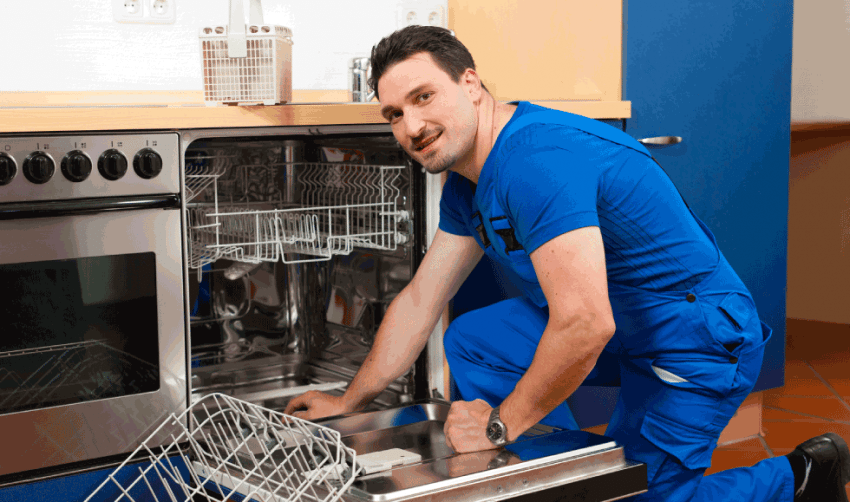
Next, check the dishwasher's debris filter and drain pump. If everything is OK, the pressure switch is next. We'll explain in more detail all the possible problems and how to fix them yourself.
The culprit is a blockage
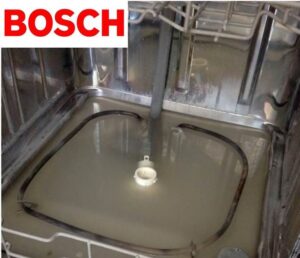
Most often, a dishwasher fails to drain due to a clogged debris filter. It accumulates food debris, fruit pits, shards of glass, pieces of napkins, and other objects that have fallen into the machine. The filter element is located at the bottom of the dishwasher’s washing chamber.
To clean the filter unit of a Hansa dishwasher, you will need:
- de-energize the equipment;
- scoop out the water that has accumulated in the dishwasher tray;
- remove the filter element.
Most modern dishwashers have not just one filter, but an entire filter assembly. It consists of:
- fine-mesh fine filter;
- coarse filter;
- external mesh filter;
- supporting parts.
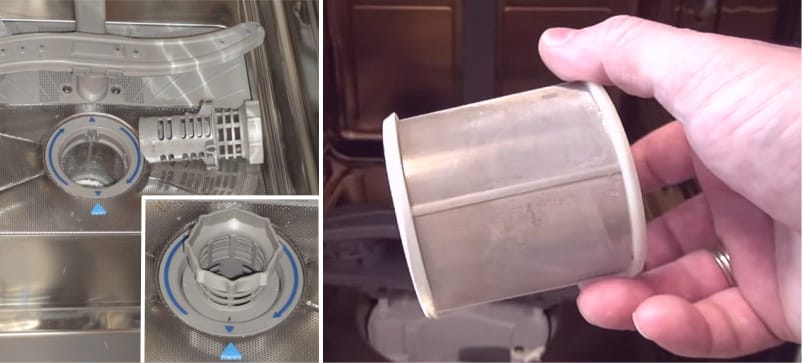
After removing the filter assembly, disassemble it into its component parts. Each element should be washed separately. If the parts are coated with a thick layer of limescale, it's best to soak them for several hours in water with citric acid or baking soda.
Be sure to clean the recess where the dust filter fits. Dirt and food particles can accumulate there, too. Once you're done cleaning, reassemble the unit and replace it. Test the machine—if that doesn't help, the problem lies elsewhere.
It is recommended to clean the dishwasher filter unit at least once a month.
Next, you need to rule out a blockage in the sewer pipe and trap. A clogged drain will typically impede water drainage not only from the washing machine but also from the sink or bathtub. Here's how to check this:
- disconnect the dishwasher drain hose from the siphon;
- direct the end of the corrugated pipe into an empty container;
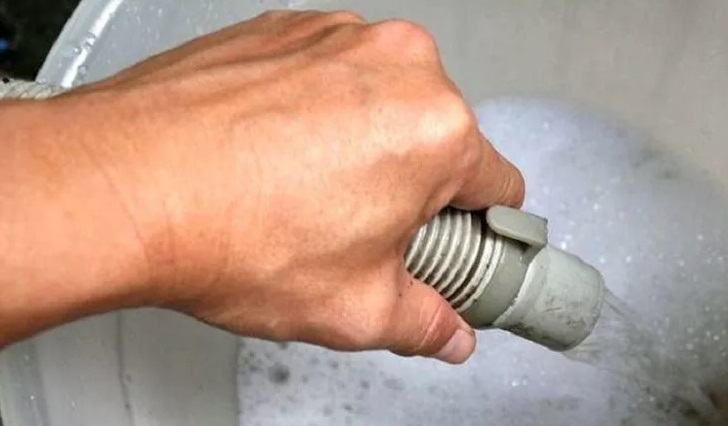
- run a short wash cycle;
- Observe the machine in operation.
If the waste water still remains in the wash chamber, it's not clogged. However, if the water starts to drain, you'll need to clean the trap. Arm yourself with rubber gloves, a dry cloth, and an empty container, and begin disassembling the unit.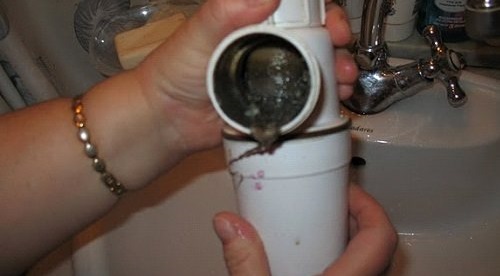
If you don't have time to mess with the trap, you can try cleaning it with specialized store-bought products. Dishwashers are usually connected to the outlet under the kitchen sink. Therefore, buy a special gel and pour it into the sink, following the instructions on the package.
Sometimes a clog forms not in the trap, but in the sewer pipe. If the clog is deep enough, you'll need to call a plumber. A professional will quickly fix the problem.
If the problem isn't a clogged drain system component, you'll need to check each dishwasher component involved in draining water from the chamber. It's recommended to start with the pump. Next, check the pressure switch, followed by the control module.
The pump is not working well
The drain pump is responsible for pumping waste water from the wash chamber to the sewer. What can happen to it? In some cases the pump burns out, in others it gets clogged. To diagnose a part, you will need to remove it from the dishwasher housing.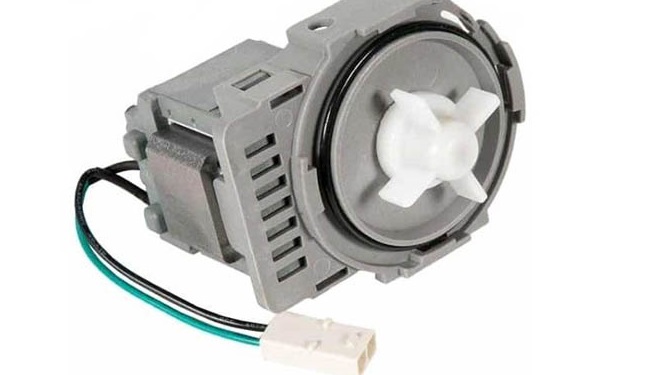
To access the pump, you'll need to partially disassemble the Hansa dishwasher. You can lay the dishwasher flat on the floor and remove the drip tray. Some experts recommend removing the side panel of the dishwasher rather than the bottom. You can choose whichever method is most convenient for you.
Next, remove the drain pump from the machine. To do this, disconnect all pipes and wires. Once the pump is removed, check the impeller's operation—the blades should rotate freely.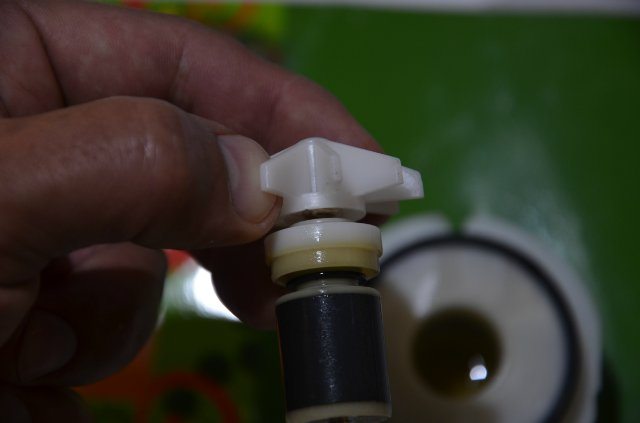
Sometimes a foreign object, such as a shard of glass, can be found between the impeller blades. In this case, simply clean the blades and replace the pump.
If the impeller is undamaged and not blocked, check the pump for proper operation. Measure the resistance of the drain pump contacts with a multimeter. Normally, it should be around 200 ohms. If the readings are significantly different, the part will need to be replaced; it cannot be repaired.
To buy the right drain pump, you need to know the model of your Hansa dishwasher. You can also take the dismantled pump to the store and ask the salesperson to select an alternative. It's best to buy original components.
Let's pay attention to the pressure switch
Another cause of such dishwasher behavior could be a malfunctioning pressure switch. It's necessary for determining the water level in the chamber and transmitting this information to the main control module. If the sensor fails, erroneous data is sent to the dishwasher's electronics.
The pressure switch may not work correctly due to the following:
- contacts are broken;
- the wiring is damaged;
- the pressure hose is clogged;
- the sensor element is damaged.
The location of the level sensor in your Hansa model should be indicated in the equipment instructions. Typically, the pressure switch is installed at the bottom of the dishwasher. To check and, if necessary, replace a part, you will have to “get to it”.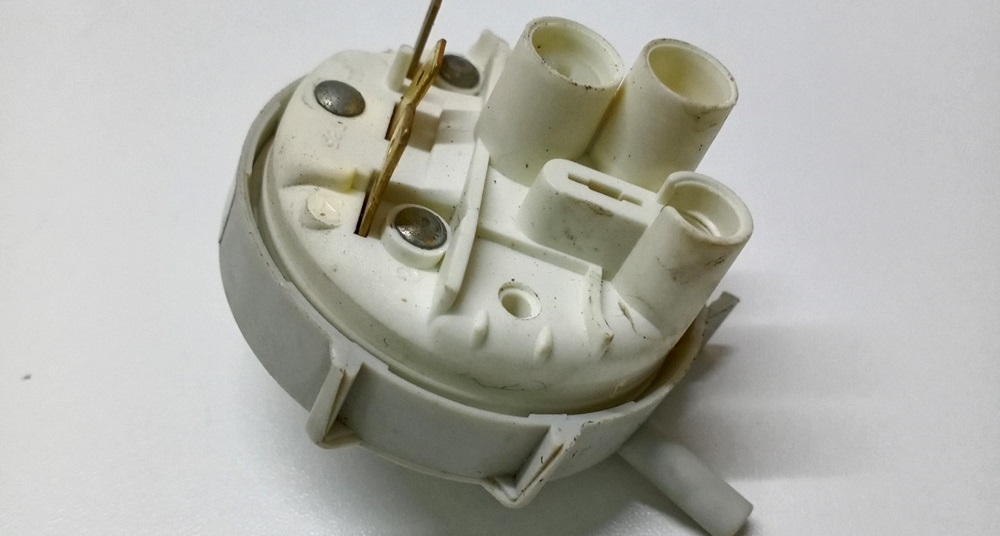
The algorithm of actions will be as follows:
- turn off the power to the dishwasher, disconnect it from the water supply and sewerage system;
- cover the floor and place the machine on the back wall;
- remove the dishwasher tray;
- find the plastic box from which the tube comes out – the pressure switch is located nearby;
- Use pliers to disconnect the pipe from the tank;
- Check if the sensor is clogged.
Diagnosing the mechanical part of the pressure switch is simple: simply blow into the pressure hose. If you hear clicking sounds, the device is working properly. The sensor's electronics are checked with a multimeter.
What to do with a multimeter? Its probes are connected to the pressure switch contacts. If the tester screen displays 0, the water level sensor is working properly. If it malfunctions, the device will need to be replaced. When purchasing components, be sure to select the model of your dishwasher.
Finally, the problem could be with the dishwasher's software. It's recommended to entrust diagnostics and repair of the electronic control module to specialists. This is a complex device, so without sufficient experience and knowledge, the situation could only worsen.
Interesting:
Readers' comments
Headings
Washing machine repair




For buyers




For users


Dishwasher




Add a comment