Almost all Indesit dishwashers are connected to cold water. Therefore, the proper operation of the tubular heating element is crucial. When the heating element fails, the machine cannot wash dishes properly.
It's easy to notice that your Indesit dishwasher isn't heating water. Dishes aren't cleaning properly, leaving grease and grime on them. There could be several reasons for this behavior, from a damaged temperature sensor to a faulty control module. Let's figure out what to do in this situation.
Why doesn't the liquid in the dishwasher heat up?
There are three obvious reasons why a dishwasher does not heat water. The problem could be a faulty heating element, a broken thermostat, or a damaged control module. These are the dishwasher units that are directly responsible for heating the liquid.
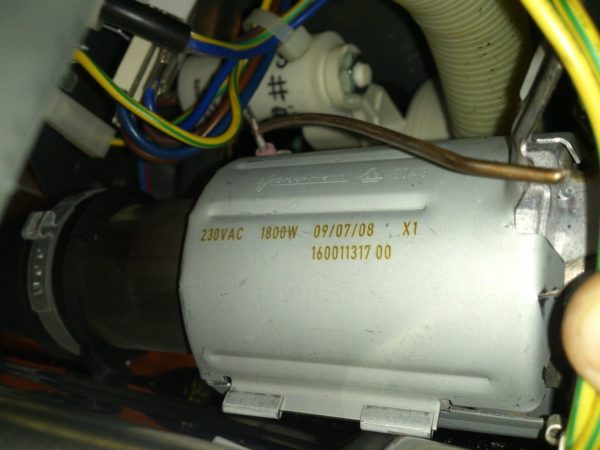
The heating element is straightforward. The tubular element is designed to heat the liquid entering the washing chamber. If the element burns out, the water remains cold. You can diagnose the heater at home using a multimeter.
Many users, noticing that their Indesit dishwasher isn't heating the water, immediately replace the heating element, even though the cause of the problem may be completely different.
The thermostat measures the temperature of the liquid in the system. If the sensor fails, it transmits false information to the control module. For example, it may indicate the desired temperature has been reached, while the water remains cool. This leads to malfunction of the dishwasher.
The control module monitors all processes. Therefore, if the triac responsible for the heating element or temperature sensor burns out, a malfunction occurs. Fortunately, problems with the electronic unit in Indesit dishwashers are extremely rare.
In addition to the obvious causes, there are secondary ones that don't immediately come to mind, as they're not directly related to the heating elements. However, in some cases, they are the problem. These include the following factors:
errors made when connecting the dishwasher to communications;
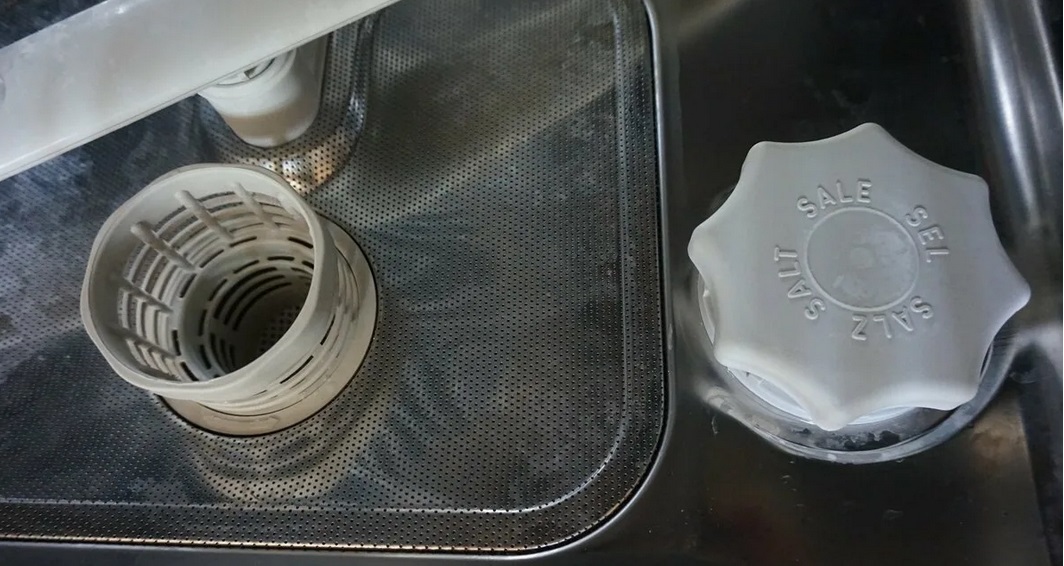
clogged waste filter;
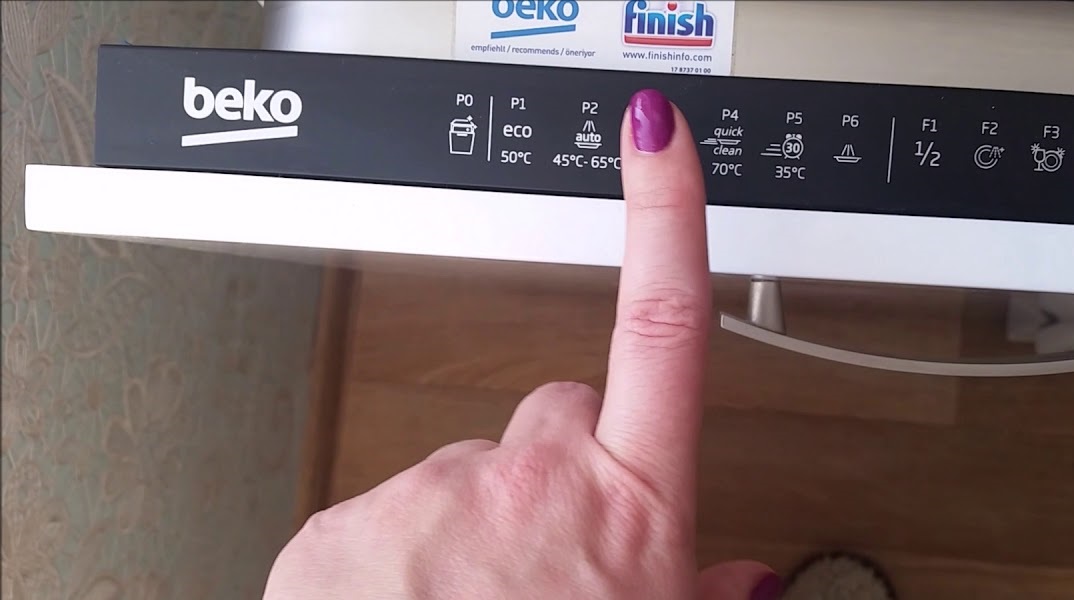
user errors when selecting a washing program;
failed pressure sensor.
When a new dishwasher doesn't heat water right away, it can be blamed on the fact that it wasn't connected to the plumbing system in clear violation of the instructions. This can happen if the dishwasher isn't connected to the drain properly. But how are these two connected?
It's crucial to connect the dishwasher's drain hose correctly. It's essential to provide two bends: one at the bottom, near the base of the dishwasher, and the other directly near the trap. This prevents the "siphon effect"—this prevents wastewater from backing up into the machine.
If the drain hose is incorrectly connected, water will not flow properly throughout the dishwasher. At a minimum, this will result in the water temperature in the dishwasher chamber being slightly different from the temperature set by the wash program. In a worst-case scenario, the water will remain cold.
What should you do in this case? The solution is simple: connect the drain hose correctly. By ensuring proper water circulation in the dishwasher, the user will be able to resolve the issue.
Sometimes the machine won't heat the water because the filter assembly is clogged. At first, it seems there's no connection between the filter and the heating element. However, this isn't the case.
Normally, water should circulate continuously in the wash chamber. A flow-through heater maintains the water's temperature, ensuring high-quality cleaning of cutlery. When the filter unit becomes clogged, circulation slows.
This causes water to accumulate in the wash chamber, preventing it from returning to the water tank. Therefore, the machine is forced to refill from the water supply. In this situation, the heating element simply cannot heat the water back up to the required temperature.
To verify this, observe the dishwasher's cycle. Look into the dishwasher's working chamber during the wash cycle. Normally, water shouldn't accumulate in the tank. If liquid is retained at the bottom of the tank, clean the filter assembly. The water will begin to circulate again, and the problem will be solved.
Sometimes it's a simple user error. For example, a homemaker who's used to washing dishes on the intensive cycle at 60 degrees Celsius (140 degrees Fahrenheit) accidentally selects the delicate cycle with a heating temperature of 30 degrees Celsius (86 degrees Fahrenheit). In this case, the homemaker may think the machine has stopped heating the water, but in fact, this is not the case. It's enough to run the usual cycle next time.
Finally, the dishwasher's pressure sensor could be the issue. It monitors and ensures fluid circulation in the machine. If this element fails, water may drain on its own.
In this situation, the dishwasher will begin refilling the tank with cold water, and the heating element simply won't be able to heat it to the required temperature. To resolve the issue, the element will need to be replaced. Repairing the sensor is impractical; cleaning its contacts is the only option.
Temperature sensor or control module
The temperature sensor is a weak point in Indesit dishwashers. It's often the cause of the dishwasher's failure to heat water. You can check the thermostat yourself. Here's how:
prepare tools: screwdrivers (Phillips and slotted), pliers and a multimeter;
Disconnect the dishwasher from the power supply by unplugging the power cord from the wall outlet;
close the shut-off valve and disconnect the dishwasher from the house utilities;
remove the cutlery baskets from the dishwasher chamber;
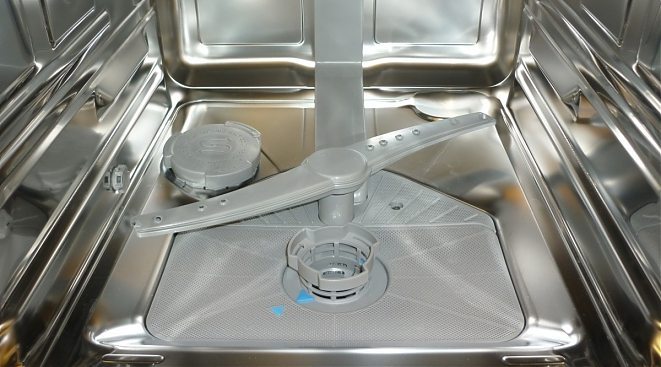
remove the spray arm located at the bottom of the dishwasher tank;
remove the filter element and the metal mesh located underneath it;
unscrew the two fasteners that were hidden under the mesh;
Place the dishwasher on the floor and unscrew the side fasteners;
unhook the drain pipe from the plastic box with the heating element;
find the temperature sensor, it is located in the “box” of the heating unit;
disconnect the wiring from the thermostat contacts;
clean the sensor contacts and measure the resistance it produces;
If the temperature sensor is burnt out, remove it and replace it.
The resistance between the contacts of the temperature sensor is measured with a multimeter.
Sometimes the problem isn't with the temperature sensor itself, but with the wiring that powers it. Therefore, inspect the wires for burnt-out or damaged insulation. If any defects are found, replace the cable.
Very rarely, water does not heat up due to damage to the electronic unit. Only in 1% of cases the control module will be the “culprit” of the problemMore precisely, not the entire board, but some kind of triac located on it.
You can inspect the electronic unit at home. Sometimes defects visible to the naked eye are found on the board. In this case, the module will need to be repaired or replaced.
Attempting to repair the control module yourself is not recommended. It's a very complex unit, so working with it requires a certain level of training. Otherwise, you could only make the situation worse. Diagnosis and repair of the board should be entrusted to a service center.
How is a heating element replaced?
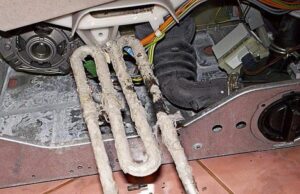
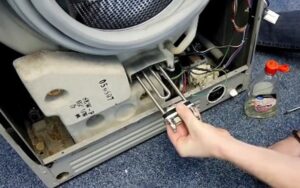
Hard tap water is the main enemy of heating elements in dishwashers and washing machines. Without the use of special water softeners, the heating element will eventually become coated with a thick layer of scale and eventually burn out. This part cannot be repaired and will need to be replaced.
If your dishwasher is still under warranty, don't attempt to repair it yourself – take it to a service center for free diagnostics and repair.
If the warranty has long expired, you can diagnose the heating element yourself using a multimeter. Use a tester to measure the heater's resistance. It should be approximately 21-22 ohms. Other values on the device's screen will indicate a faulty element.
To access the heating element of an Indesit dishwasher, you need to:
disconnect the machine from the power supply, water supply and sewerage system;
remove the cutlery baskets from the washing chamber;
remove the dishwasher spray arm located at the bottom;
remove the trash filter, it is located at the bottom of the washing chamber;
remove the metal mesh located under the filter;
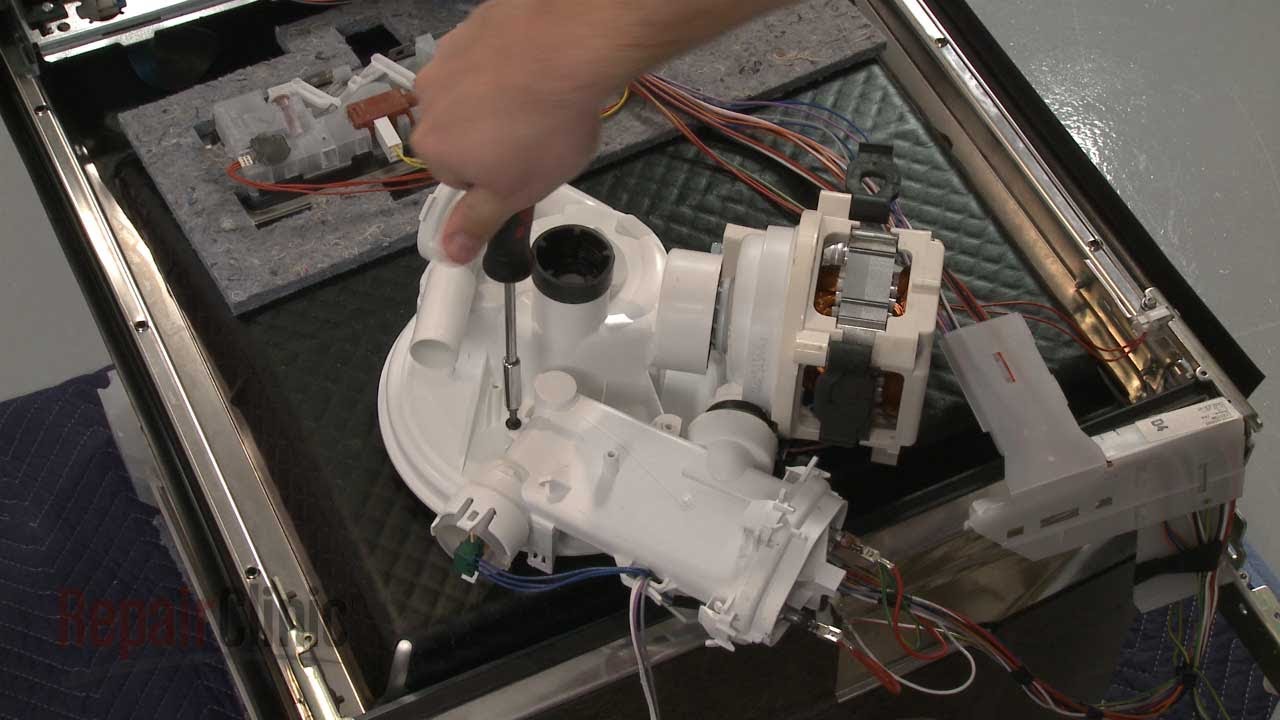
unscrew the 5 bolts securing the pipe and the instantaneous water heater;
turn the dishwasher upside down;
unscrew the bottom panel of the dishwasher;
remove the pump from the machine (to do this, grab the pump with your hands, turn it half a turn from left to right and pull it towards you);
disconnect the rubber gasket that holds the heating element from below;
disconnect all wires and pipes from the heater;
remove the heating element from its socket.
In reality, removing the heating element from the washing machine isn't difficult. Of course, there may be some subtleties along the way, but they're easy to handle. Sometimes you'll need to treat the fasteners with WD-40, sometimes you'll need to grip the hose with pliers.
Next, check the heater with a multimeter. Once the problem is identified, you can proceed with installing the new part. Secure the working heating element in place and begin reassembling the dishwasher. The process is the same, but in reverse order.
Before buying new components, consider whether repairing your dishwasher is cost-effective. Original heating elements for Indesit dishwashers are quite expensive. Heating elements can be purchased for $30–$70, depending on the model.
Therefore, a lack of heating can be caused by both simple user errors and serious problems within the dishwasher. Troubleshooting should proceed from the simple to the complex, eliminating one guess after another. If the dishwasher is still under warranty and you're still eligible for free service, it's best to call a service center and arrange for a specialist to come in.

 Almost all Indesit dishwashers are connected to cold water. Therefore, the proper operation of the tubular heating element is crucial. When the heating element fails, the machine cannot wash dishes properly.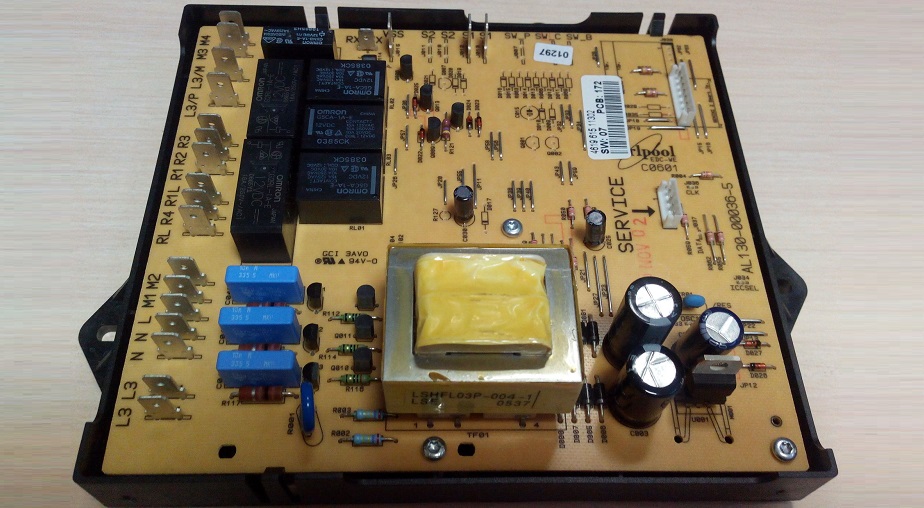
















Add a comment