
The dishwasher fills with water but does not wash the dishes.
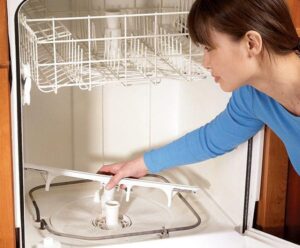 If your dishwasher fills with water but doesn't wash dishes, it doesn't mean you need to rush it in for repairs or even buy a new one. It's quite possible the problem isn't serious and you can fix it yourself. However, there are many possible causes for this problem, so a thorough diagnosis is essential before repairs. We'll explain in detail how to accurately identify and resolve the issue.
Problem with the rocker arm
The rocker arm, also known as the sprinkler or impeller, is a plastic part resembling a propeller with holes for water flow. Most dishwashers have two of these parts, an upper and a lower one, but sometimes manufacturers add a middle rocker arm. This problem is usually caused by clogged impeller nozzles, but this can be easily fixed by following our instructions.
- Remove the spray nozzle secured with a nut.
- Inspect the holes in the part. They may be clogged with food debris or limescale, but it's also common to see no visible dirt.
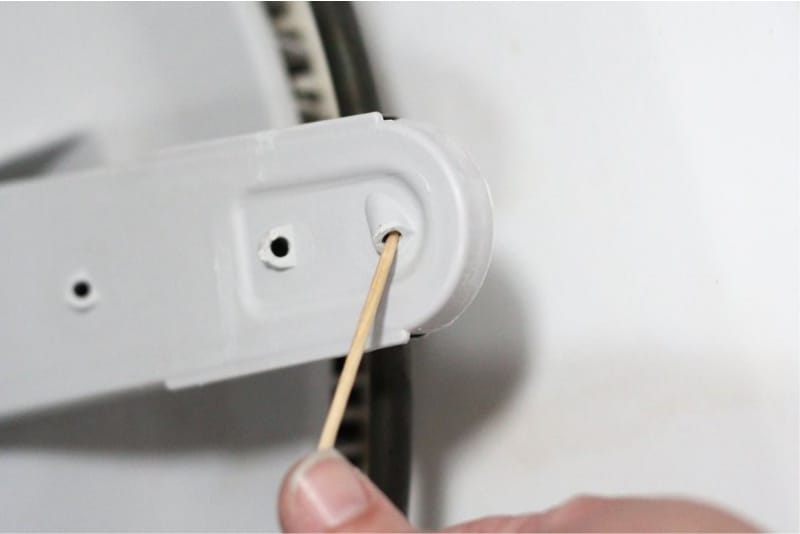
- Even if you can't see any dirt, flush the spray arm inlet with a powerful stream of hot water. Pay attention to the stream from the nozzles—if there's no stream or it's very weak, the element is likely clogged.
- Carefully clean the nozzles with a toothpick or cotton swab, then check the water stream again. If everything is correct, the stream will flow equally from all openings of the part.
If you don't want to clean the element manually, you can soak it in a solution of citric acid. Simply place the rocker arm in a basin of hot water, add about 100 grams of citric acid, and leave the impeller in the solution for several hours.
Most often, one of these cleaning methods will solve the problem. However, sometimes the cause lies in poor rotation of the rocker arm, in which case only replacing the bearing will help.
The rubber seal on the upper rocker arm has worn out.
If the problem wasn't with the spray arm itself, it's time to check the upper spray arm rubber seal. This part is a small rubber circle placed inside the mounting nut. If this rubber element wears out, the water pressure will decrease, liquid will leak, and as a result, the dishwasher will fill much more slowly than usual. Under these conditions, there's a high risk that the dishwasher will simply not start the cycle. Therefore, if the rubber seal is damaged, it cannot be repaired; it can only be replaced.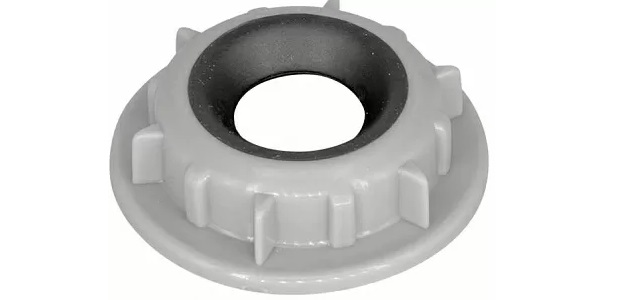
- Remove the upper impeller.
- Remove the rubber gasket from the nut.
Don't rush to install a new rubber element right away - first inspect the area where the part is located to make sure there are no food particles, dirt, or other contaminants that could prevent the elements from fitting tightly.
- Place the rubber band back in place.
Now all that remains is to check the machine’s functionality – whether it has started washing dishes.
The dust filter is clogged with dirt.
What should you do if the second step doesn't solve your dishwasher problem? In this case, it's important to remember one of the main recommendations from appliance manufacturers. The instructions always state that you shouldn't load your "home helper" with heavily soiled dishes containing greasy food residue, as food particles can clog the device's dust filter.
To prevent this, simply remove food from dishes beforehand and clean the drain filter once a month. This applies to dishwashers without a convenient self-cleaning feature, which is often added to more expensive models of household appliances these days. However, this feature doesn't guarantee 100% results, so if your dishwasher suddenly stops working for an unknown reason, it's important to check the waste filter. It easily becomes clogged with grease, dirt, limescale, and other debris, blocking the water drain and preventing the dishwasher from functioning properly.
The debris filter also needs to be cleaned to prevent solid particles from getting inside the dishwasher and damaging important parts of the device.
If you suspect the filter is clogged, you'll need to clean it. Follow these instructions: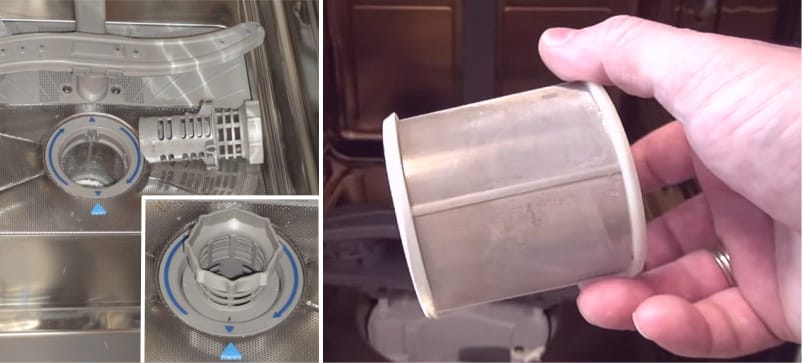
- Unscrew the debris filter from its “nest”, which is located at the bottom of the washing chamber;
- completely disassemble the element and then rinse it under a powerful stream of hot water;
- To be on the safe side, you can additionally wash it, the mesh and the cells using a brush and any powerful detergent.
When cleaning, pay attention to the integrity of the part - if there are cracks or chips on it, then there is nothing left to do but buy a new filter. A damaged part cannot be repaired, so it will never function properly again and will only cause further blockages or breakdowns.
There are problems with the pump
The fourth diagnostic step is to inspect the pump that creates the necessary water pressure in the dishwasher. If it's damaged, the appliance simply won't function properly. Typically, the impeller, a small rotating part, fails. Damage to the impeller causes interruptions in the water supply and prevents the appliance from washing dishes. To fix this, the impeller needs to be examined.
- Disconnect the device from all communications, and then lay it on its side or on the back wall to access the bottom of the device.
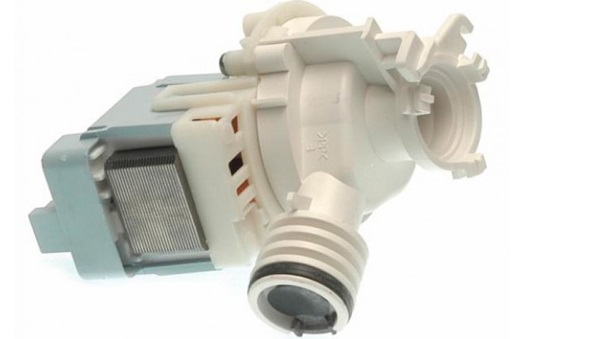
- Remove the bottom cover by unscrewing all the retaining screws.
- Disconnect the wires and pipes that connect the pump to other parts of the machine.
Be sure to take photos of all connections so that you have a connection example at hand later.
- If the impeller is not attached to the shaft by the equipment manufacturer, then for ease of further manipulation it can be removed by unscrewing the thread.
- Clean the part of any debris. If the blades are broken or cracked, the element must be replaced.
After completing all the steps, reinstall the part, following the instructions in reverse order. Test the dishwasher's functionality by running a test cycle.
Middle impeller valves
Finally, the final item on the mandatory equipment inspection list is the middle impeller, which has a docking station. This component directs the water flow to the middle sprayer. It is most often located inside the wash chamber on the rear wall of the machine. Problems arise when the station's valves begin to leak or completely block the water.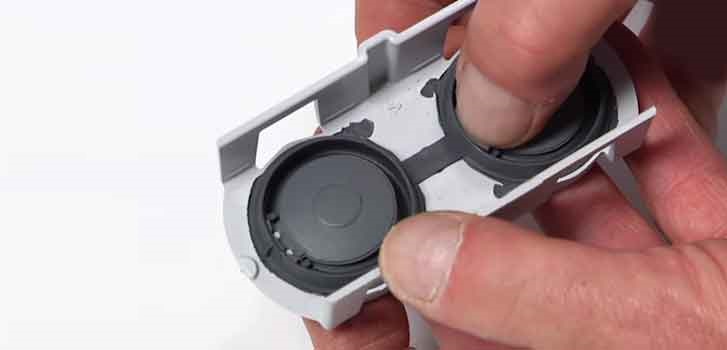
To check this part, it needs to be disconnected from the hose and carefully examined for debris or cracks. Both situations can be quickly corrected by either cleaning the element or purchasing a new one.
Interesting:




2 reader comments
Add a comment
Headings
Washing machine repair




For buyers




For users


Dishwasher




And if the impeller is intact, but the machine does not wash, what other possible malfunction could there be?
I had the same problem. I called a friend at Sevremkom, and he told me roughly the same thing. Luckily, in my case, it was the debris filter. I was able to clean it myself, so I didn't have to take it to a repair shop. 🙂