
Siemens dishwasher not filling with water
 Many users believe that only professionals can repair large household appliances. In fact, you can fix a number of problems yourself. If you notice that your Siemens dishwasher isn't filling with water, try to identify the cause and fix it yourself. We'll explain how to diagnose your dishwasher and where to begin.
What could have broken?
There can be various reasons why a dishwasher isn't filling with water, ranging from simple user errors to serious internal malfunctions. The first step is to inspect the dishwasher to identify the problematic component.
In most cases, Siemens dishwashers do not fill with water due to:
- lack of water in communications;
- a closed shut-off valve at the entrance to the apartment or in front of the inlet hose of the machine;
- clogged filters;
- failed inlet valve;
- broken door lock;
- incorrectly functioning pressure switch;
- activation of the Aquastop sensor;
- damaged electronic control module.
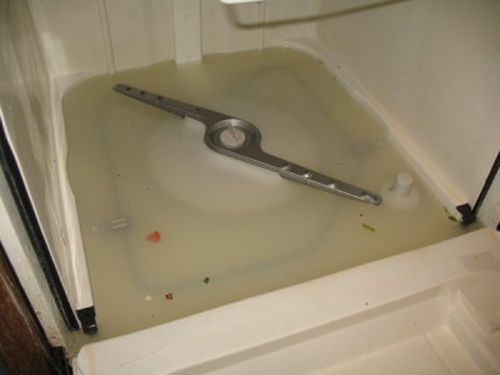
This list of problems is not exhaustive. However, in 96% of cases, dishwashers fail to fill with water due to these factors. It is recommended to proceed with diagnostics from the simplest to the most complex.
Modern dishwashers display an error code on the screen that corresponds to the breakdown.
To narrow down the range of possible problems, you need to decipher the error. A description of each fault code is provided in the equipment manual. You can also find information about a specific dishwasher model on the Internet.
Quite often, water doesn't fill due to simple user errors. People call a repairman for dishwasher repair, only to discover a shutoff valve or a kinked inlet hose. So, first, make sure these aren't the cause.
Sometimes the water supply to a building is simply shut off. Turn on the faucet over the bathtub or sink. If there's no water flow or the pressure is too weak, you'll need to wait until the water supply returns to the apartment.
Another common cause is a loose dishwasher door. This can compromise the system's seal, and the machine won't start the cycle. Be sure to check that the door lock is working properly.
Sometimes the locking mechanism itself breaks. In this situation, you'll need to purchase and install a new lock. When purchasing components, be sure to select the Siemens dishwasher model.
Dirt plug in the filter or leak protection system
Most modern Siemens dishwashers are fully leak-proof. This means they feature not only a float in the tray but also a dedicated inlet hose. The Aquastop hose is equipped with a valve that activates when a leak is detected.
In some cases, water won't enter the dishwasher because the Aquastop inlet hose has malfunctioned. The valve shuts off the flow, preventing even a drop from entering the machine. Replacing the element is the solution.
The inlet hose with the Aquastop valve cannot be repaired; you will have to buy and install a new part.
Water may not be reaching the dishwasher due to a clogged inlet filter. Over time, the mesh becomes clogged with limescale, sand, and other debris. To restore the dishwasher's performance, you'll need to clean the filter element.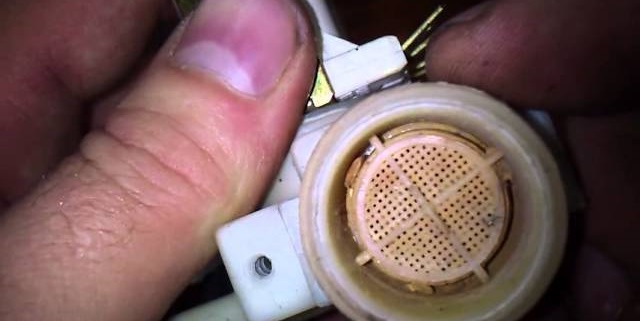
The filter is located where the inlet hose connects to the machine. To remove the filter, follow these steps:
- de-energize the dishwasher;
- close the shut-off valve;
- unscrew the inlet hose;
- remove the filter located in front of the inlet valve.
Next, rinse the mesh under running warm water. If the filter is coated with limescale, clean it with a toothbrush. Then replace the element in its original location.
Experts recommend installing an additional coarse filter before the dishwasher's inlet hose. This will protect the appliance from impurities found in hard tap water. It also needs to be cleaned periodically, approximately every 6-12 months.
The problem could be a faulty inlet valve. Typically, the device's coil is at fault. This component cannot be repaired and will need to be replaced.
The solenoid valve may stop working due to a break in the circuit. You'll need to check the wiring. It's likely that one of the contacts has come loose or a cable is damaged. Restoring the connection will allow you to restore the dishwasher.
Problem with the pressure switch
If your dishwasher is noisy, the LEDs on the control panel are glowing, and you can clearly hear the gurgling of water, but the cycle still doesn't start, it's time to check the pressure switch. A malfunctioning water level sensor can cause this kind of problem. This device measures how much water has filled the wash chamber.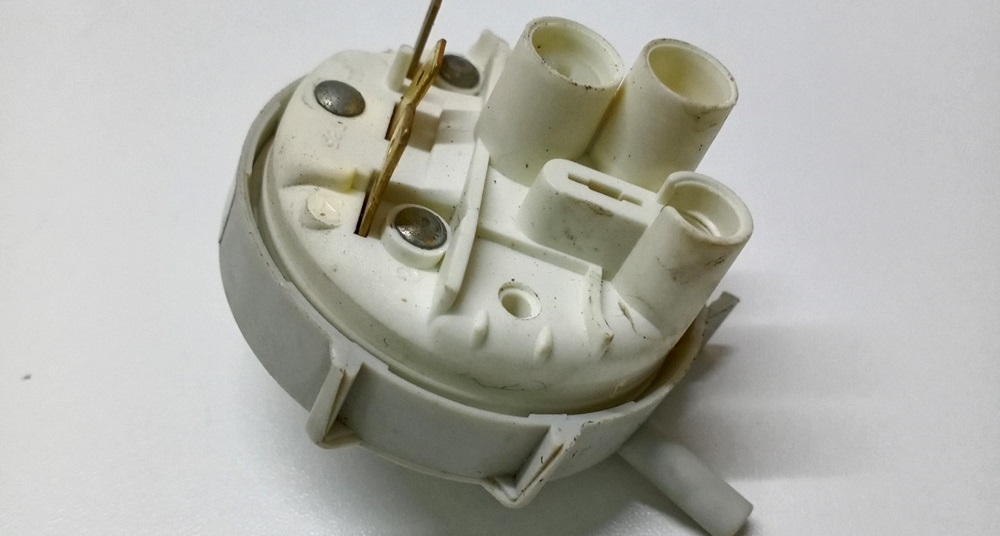
When the pressure switch fails, it cannot measure the volume of water in the chamber. In this situation, the following occurs:
- water is poured into the dishwasher, but the level sensor does not inform the control module about this;
- the washing chamber overflows, the pump starts urgently pumping water into the sewer;
- The control unit, thinking that the machine is not filling, displays a system error and stops the equipment.
Diagnosing such a breakdown is not difficult; you just need to take a closer look at how the dishwasher operates. If you can clearly hear the gurgling of water and the sound of a running pump, then in 90% of cases the pressure switch is to blame. The level sensor cannot be repaired; the element will need to be replaced.
Electronics are to blame for everything
What should you do if the diagnostics haven't revealed any problems so far? The problem could lie in the dishwasher's control module. Few people can figure out how to work with the electronic unit, much less repair it. Not even all technicians are willing to repair this component, let alone regular users.
The control module is the "brain" of the dishwasher. The board itself is small, but it consists of numerous microchips, semiconductors, and other components. Typically, it's not the entire unit that fails, but a specific component. A defect can be detected with the naked eye.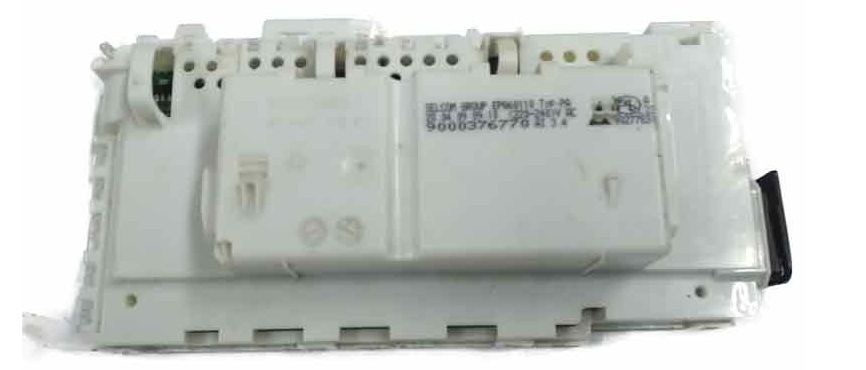
To get the electronic control unit, you will have to:
- de-energize the dishwasher;
- disconnect the device from the water supply and sewerage system;
- open the dishwasher door wide;
- unscrew the screws located on the ends and back of the door;
- "split" the door by removing its upper part.
You can see the control board inside. There's no need to disconnect any wires; simply inspect the module. If there are no obvious defects or carbon deposits, it's best to leave it alone. Diagnostics and repair of the electronic unit should be left to a service center.
If your dishwasher is still under warranty, don't disassemble it yourself. It's best to have it diagnosed at a service center. Once you're no longer eligible for free service, you can try repairing your "home helper" yourself.
Interesting:

Readers' comments
Headings
Washing machine repair




For buyers




For users


Dishwasher




Add a comment