
Where is the fuse located in a Bosch washing machine?
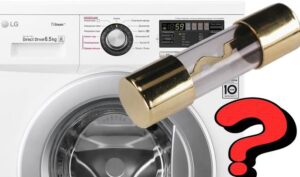
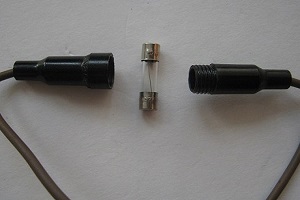 A washing machine is considered a particularly dangerous electrical appliance. Due to its high power and constant contact with water, such a unit requires enhanced fire safety. For this reason, Bosch washing machines are equipped with a fuse, which protects the control board, motor, and the entire washing machine from electrical surges and short circuits. It's important to know which component is responsible for this "safety net" and how to test it for proper operation.
Fuse search algorithm
Before you start looking for a fuse, it's best to find out in which country the Bosch was assembled. If her “homeland” is Europe, in particular Germany, then there is no need to worry about “insurance”. The production and sale of washing machines without protective elements is prohibited by law here. Therefore, a virtually 100% guarantee is given that the machine is fully protected against power surges.
In Russia, Belarus, Kazakhstan, Armenia, and the CIS countries, the rules are less strict. Equipment manufactured before 2000 may have a safety device, but more modern circuit breakers may not. It's best to check the complete equipment beforehand.
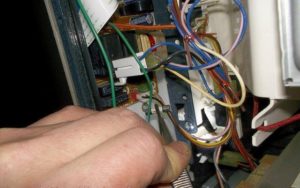
Most often, the fuse is located at the base of the power cord, inside the interference filter.
The fuse is located according to the following algorithm:
- find the instructions for the machine and study its electrical circuit;
- look at the base of the power cord, where it “connects” with the inside of the washing machine body;
- remove the control board by removing the instrument panel and look for the fuse at the input (for example, here it is located at Bosch WLL 2426SOE);
- inspect the inside of the plug, where the fuse is also often hidden.
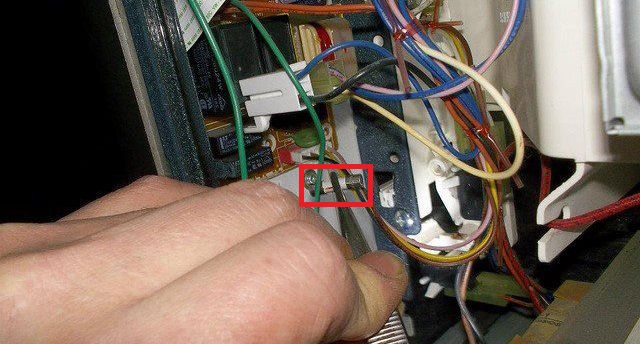
Identifying a fuse can be difficult – it's a small component and comes in a variety of designs and types. If you're having trouble finding one, it's best to consult a professional.
How does it function and why does it burn out?
Modern washing machines are equipped with sensitive electronics. If the power suddenly goes out while the machine is running, or if the current is uneven and intermittent, the consequences can be dire – the circuit board will burn out, the wiring will melt, or the heating element or motor will fail. A fuse prevents such short circuits by detecting interference in the electrical system. When the amperage increases, the machine opens the circuit, absorbing the shock, causing its wire to melt.
If there is a power failure, the fuse opens the electrical circuit, cutting off power to the washing machine.
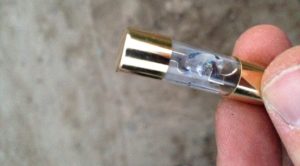
A fuse doesn't always blow due to a poor electrical system. The fuse can also be triggered by internal system malfunctions, such as a software glitch, a broken component, or excessive loads. It's important to regularly check the fuse to ensure it's working properly.
Noise filter
On many Bosch models, the fuse is located inside the interference filter, commonly referred to as the FPS. Some people often equate these two devices, although this is incorrect. The former is merely a component of the latter and is responsible only for triggering external and internal threats.
You can verify the fuse's functionality by testing the interference filter. To do this, remove the component and test it with a multimeter. Here's how:
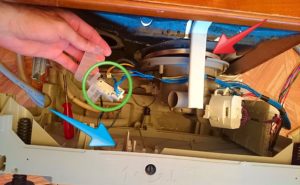
- we find the filter located under the top cover of the case at the junction with the power cord;
- We unscrew the bolts holding the FPS and remove the device from its mounting location;
- We inspect the filter for melted insulation, dark spots, an unpleasant odor, and charred wires – in 98% of cases, signs of a burnt-out FPS can be seen.
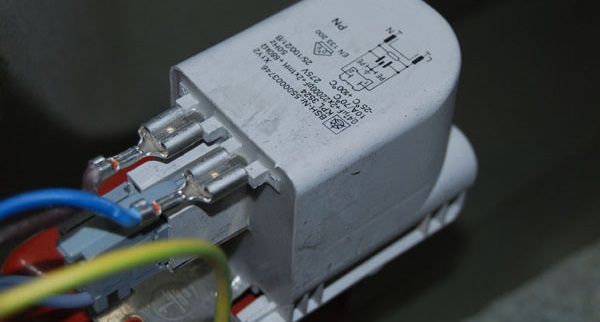
If there are no visible problems with the filter, we move on to advanced diagnostics. Turn the multimeter to ohmmeter mode, touch the tester's probes to the capacitor's contacts, and check the display. If the device doesn't detect any resistance at the output, the device has burned out.
The FPS can't be repaired—the faulty device must be replaced with a new one. Installation is easy: simply place the "box" in the slots and tighten the bolts. It is better to look for a replacement using a removed sample; less reliable - using the Bosch serial number and power. After installation, we check the filter by starting the machine.
Interesting:



Readers' comments
Headings
Washing machine repair




For buyers




For users


Dishwasher




Add a comment