
What is "Prewash" in a washing machine?
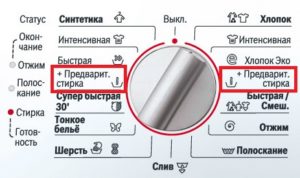 The "prewash" icon or label can be found on almost every modern washing machine's control panel. While this mode or function is undoubtedly popular and in demand, many users still don't understand what it is or how to use it. This feature is briefly mentioned in many informational articles online, but no one discusses it in any detail—let's be the first!
The essence of this function
There are plenty of skeptics who will offer a thousand arguments for why modern washing machine manufacturers are simply piling on new modes and features. Some of these arguments are not without merit, as some features in the latest models are truly unused by users, despite the high price they paid for them. Can the same be said about pre-wash? Absolutely not!
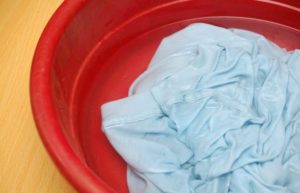 In terms of importance, prewash is comparable to rinsing and spinning. Without it, washing results will occasionally be unsatisfactory. To better understand how this function works, let's compare it to simply soaking laundry in a basin. Everyone knows that if you place very dirty items in a basin of water with pre-dissolved detergent and leave them there for a couple of hours, then wash them by hand or in a washing machine, the results will be much better than if you just wash them without pre-soaking.
The algorithm of the function we're discussing now is based on this simple principle, but everything above is performed automatically, without human intervention. The user simply pours an additional dose of detergent into the pre-wash compartment, located in the drawer marked with the Roman numeral "I," and presses the button indicating the selected mode. Then, within the depths of this "home assistant," the following occurs.
- The washing machine takes in quite a large amount of water and heats it up.
When pre-washing, you don't have to turn on the water heating if you need to, for example, wash items stained with blood.
- While filling with water, the machine washes out the powder from the pre-wash compartment.
 the detergent remains in the main wash compartment (Roman numeral II on the drawer).
 - Next, the machine activates the drum and it begins to slowly spin to better dissolve the powder and exert a slight mechanical effect on the laundry soaked in water.
- This continues for a long time until the washing machine drains the water.
- After this, a new portion of water is poured in, the powder from the main wash compartment is dissolved, and a full wash begins, as provided by the program you selected.
Then everything proceeds as usual: wash, rinse, and spin. If needed, you can turn on an extra rinse, which is also a useful feature, especially if you're washing hard-to-rinse fabrics or baby items. Thus, the pre-wash function can be very roughly and briefly described as a function that simulates soaking. This is not a simple soaking process, but a high-tech one, which occurs automatically with partial mechanical action on the item to ensure better penetration of the powder components into the fabric.
Getting ready for washing
In some cases, even a high-tech prewash function fails to remove stubborn stains, often due to improper prewash preparation. Some may wonder, perplexed: what's the point of prewashing? Just take the laundry out of the basket, throw it in the drum, and wash it? Well, of course, by separating the laundry by color first. In reality, it's not that simple. There are a few rules to follow when preparing the laundry for washing.
- Don't pile laundry of varying degrees of soiling into one large pile or basket. Firstly, items tend to contaminate each other; secondly, heavily faded colored items can stain white items if left compressed in the basket for too long; thirdly, dirty laundry that's left standing can harbor household insects like ants, which is definitely undesirable.
- Do not store dirty laundry for a long time or accumulate it. Try to do a "big wash" at least once a week.
- Items with particularly stubborn stains should be treated with special products before being washed. Otherwise, the stains will set even more firmly after washing.
- Before washing, turn duvet covers and pillowcases inside out, making sure to remove any clumps of lint from the corners. You don't want these clumps to dangle in the washing machine.
- If your items have loose buttons or embellishments, they need to be corrected. A button that comes loose during washing can fall into the washing machine tub and cause a clog.
- Before throwing your clothes into the washing machine drum, sort them into piles, separating them by color, type of fabric, and degree of soiling.
- If you have sneakers among your dirty clothes, take them out shoe washing bag and put them there.
Remember! Shoes, no matter what they are, should be washed separately from other items.
- Don't forget to choose the right washing powder and fabric softener in advance. It's important not
 not only wash things well, but also make them soft and pleasantly smelling.
 - If items to be washed have pockets, they should be checked. Firstly, there's a risk of washing documents, money, or credit cards, and secondly, you could damage the washing machine if a nail or sharp pin falls out of the pocket during the wash cycle.
In short, don't neglect preparing your clothes for washing. All the above recommendations weren't invented out of nowhere; they've been honed by the hard work of many automatic washing machine users, and if you follow them, you'll avoid many problems.
If things are very dirty
 Some users believe that pre-washing is an unnecessary and unnecessary feature. To dissuade these skeptics, our experts have prepared a concrete example demonstrating that this feature truly helps combat stains, and that it's definitely not a sham.
Here's an example. I needed to wash several plain shirts, two of which had stubborn ketchup stains. The stains were pre-soaked in cold water and rubbed with laundry soap. I loaded the shirts into the washing machine and added detergent to both the pre-wash and main wash cycles. I ran the "Quick Cotton" cycle and a cold pre-wash. The washing machine spent 1 hour and 30 minutes on these two cycles, and the stains were completely removed, leaving the shirts looking like new.
Some manufacturers call the pre-wash mode the pre-soak mode; in principle, it is the same thing, but pre-soaking is possible without rotating the drum and adding powder.
In conclusion, we've highlighted the benefits of the pre-wash feature, which is a standard feature in many modern automatic washing machines. We hope people will use it more often now, which will naturally improve the quality of their washing. Good luck!
Interesting:


5 reader comments
Add a comment
Headings
Washing machine repair




For buyers




For users


Dishwasher




Great article
Great, thanks for the info.
Thanks, at least now I know... after five years of use :) Otherwise, there’s no explanation of this function even in the instructions (on Samsung).
Thank you
Thank you for your detailed answer to my questions about pre-washing. It was very informative. It's clear what pre-washing and pre-soaking are.