
Pre-wash in an Indesit washing machine
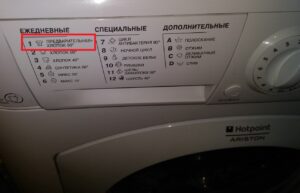
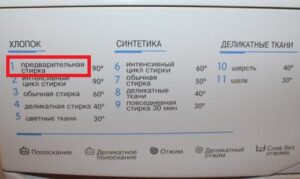 Experts note that prewash in Indesit washing machines is one of the most useful features in modern home appliances, yet many users somehow underestimate or even fail to use it. Yet, this feature is often listed first on the control panel, demonstrating its importance. Let's explore why this feature is so useful and how to use it correctly.
What is the benefit of this algorithm?
These days, washing machines are indeed packing a ton of new features, and while not every one of them significantly improves the washing process, it does significantly increase the price of your "home helper." However, this doesn't apply to pre-wash, which was added to washing machines around the same time manufacturers added modes for synthetics, wool, and silk.
It is noteworthy that today no one criticizes the presence of modes for sportswear, sports shoes and quick wash in the SM, although they appeared much later than the preliminary mode.
This function is almost as important as rinsing and spinning, as without it, washing results will often be subpar. So, what is prewash in simple terms? It can be compared to soaking dirty clothes in a basin of hot water and powder. This ancient method of washing laundry simply involves placing dirty items in a basin of water and allowing them to soak for several hours. This process results in much better cleaning results than simply washing them without soaking.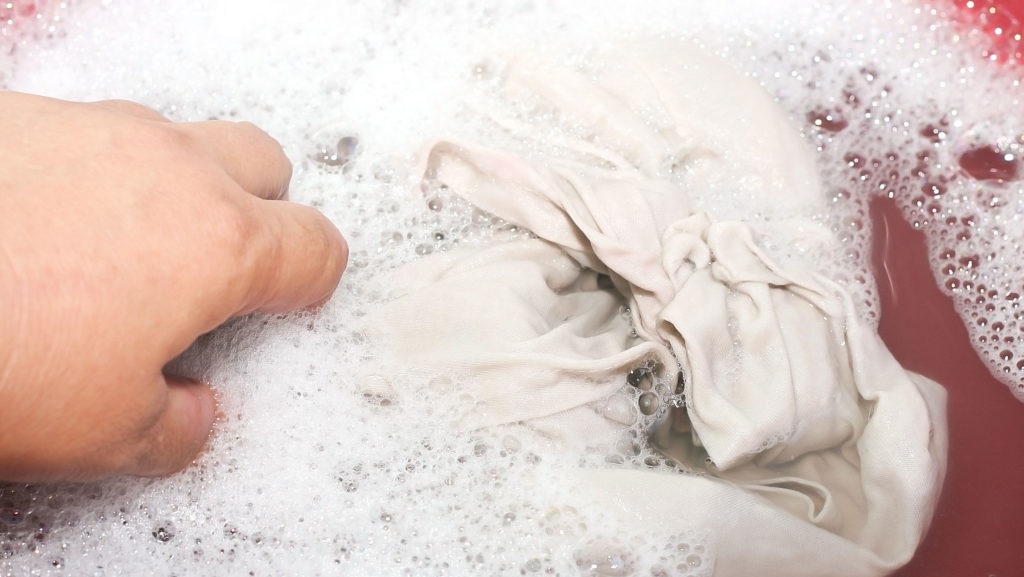
This is roughly what a pre-wash looks like in the latest machines, except that everything happens automatically, without user intervention. With this mode, all you have to do is add an extra dose of detergent into the detergent compartment, usually marked with the Roman numeral I. If you then activate this function and start the cycle, here's what happens inside the washing machine:
- The "home assistant" will collect a large volume of water and heat it to the temperature selected by the user;
It is not necessary to turn on the pre-wash heating, as in some situations it is not needed, for example, when washing items with blood, which should be washed in cold water.
- While the water is being collected, the detergent from the pre-wash compartment will be washed into the drum, creating a cleaning solution. The detergent from the main wash compartment, marked with the Roman numeral II, will remain in place until the next stage;
- After filling with water, the drum is activated and begins to rotate slowly to allow the powder to dissolve and to help the product penetrate better into the fabric fibers;
- after a long time, the machine will get rid of the waste water;
- The full cycle will begin, the washing machine will start filling with water, during which it will wash out all the detergent from the main dispenser for household chemicals.
Further description of the cycle is unnecessary, as it's no different from any other classic cycle, consisting of wash, rinse, and spin. If needed, an additional rinse can be added, which is especially useful for baby clothes and other items that are particularly difficult to rinse. As a result, pre-wash is a mode that, to some extent, imitates and replaces soaking. It allows housewives to save time and improves the quality of washing, because, unlike conventional soaking, dirty clothes do not lie motionless at the bottom of the basin, but are subjected to slight mechanical action by the machine to improve the penetration of the detergent into the fabric.
This useful feature can be used with almost any wash cycle, with the exception of special programs for wool and silk, as well as quick cycles, whose main advantage is speed, so they shouldn't be extended significantly. This is because the prewash itself in Indesit machines can take between 15 and 40 minutes, depending on the washing machine model.
How to use this mode correctly?
Despite the simplicity of modern household appliances, many housewives misuse the prewash function. This is primarily due to improper loading of household chemicals, resulting in the cycle running without detergent. Let's look at how to use this useful feature to avoid any future issues.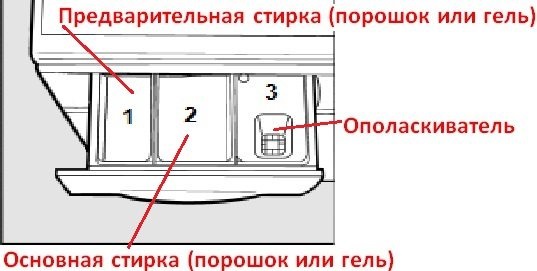
This is because during the pre-wash stage, the machine removes all the detergent from the compartment marked with the Roman numeral I, but leaves the detergent in the dispenser for the main cycle intact. Therefore, if you add detergent only to the compartment marked with the Roman numeral II, as usual, the household detergent will be used only for washing, and the pre-wash stage will proceed without detergent, in crystal-clear water.
Carefully study the instructions for your washing machine model to find information on the location and purpose of each detergent compartment drawer - most often, the pre-wash compartment is located first, counting from the right.
The second mistake is overloading the drum. The pre-wash stage works well when the user has loaded the machine with no more than half the maximum load. If there is too much dirty laundry, the soaking will not be as effective, and the machine will not be able to collect enough liquid to thoroughly wash all the dirty clothes. When washing large, bulky items, you should be especially careful not to put too many of them in the drum.
Finally, when running a pre-wash, avoid adding gel detergents to the main cycle compartment, as they may leak during the pre-wash cycle. When choosing a soak cycle in your washing machine, load the detergent in the compartment marked with the Roman numeral II and avoid overloading the drum, and everything will be fine.
Why might the machine fail to cope with difficult stains?
Sometimes, even the newest washing machine with a pre-wash function can't completely remove heavily soiled clothes with ingrained stains. Often, this isn't due to the washing machine's weak power, but to errors on the part of the owner of the smart device. Even loading laundry has its own rules that must be followed to ensure every wash cycle goes smoothly.
- Try to store and wash clothes with varying degrees of soiling separately. Very dirty items can contaminate relatively clean clothes, and if items are left compressed for too long, they can bleed and stain each other.
- Don't store dirty laundry for too long; it's better to wash it several times a week in small batches. This is especially important for private homes, where insects such as ants and flycatchers can get into the laundry basket.
- If there are stubborn stains on your clothes, it's best to pre-treat them with special cleaning agents to prevent the stains from setting in even more after washing.
The fresher the stain on your clothes, the easier it will be to remove, so never put off cleaning freshly soiled clothes.
- Bedding such as duvet covers and pillowcases should be turned inside out to remove any tangled lint from all corners, which has no place in the washing machine drum.
- Pay attention to buttons and other decorative elements on your clothing – if necessary, sew or secure them to the item to prevent them from falling off during washing and causing clogs.
- Be sure to separate clothes by fabric type, keeping in mind the colors and degree of soiling.
- Never wash shoes with your regular clothes – there are special shoe bags for this purpose.
- Don't forget to use fabric softener to keep your clothes feeling soft and smelling great for a long time after washing.
- Pay close attention to your clothing pockets, as even something as small as a coin, paper clip, or safety pin can damage your washing machine, requiring expensive repairs after a cycle. Furthermore, this routine check will help you avoid accidentally washing your passport, money, or credit cards.
As you can see, the list of recommendations is quite extensive, but that doesn't mean you should skip them and save time. The more carefully you prepare your laundry for the cycle, the better the wash quality will be and the less likely something will go wrong.
Interesting:


Readers' comments
Headings
Washing machine repair




For buyers




For users


Dishwasher




Add a comment