
Replacing the pressure switch in a dishwasher
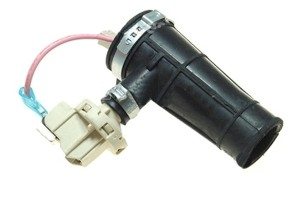 If your dishwasher starts to operate abnormally, don't ignore it. Any malfunction shouldn't be ignored, even if it seems minor at first; over time, it could lead to costly dishwasher repairs. So, let's talk about what to do if the pressure switch isn't working and how to tell if the water level sensor is broken and needs to be replaced.
Pressure switch: types and operating principle
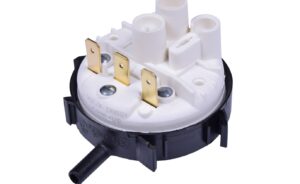
The design of a dishwasher is similar to that of a washing machine, and therefore it also has a built-in water level sensor, also known as a pressure switch. The main task of the pressure switch in a dishwasher is to monitor the water level in its tank, but the sensor does not come into contact with the water.To determine how much water has entered the tank, the pressure switch uses air pressure.
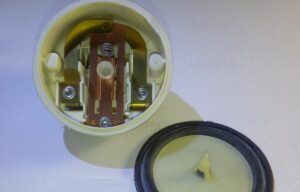
When water is drawn into the dishwasher, air pressure increases in the hose or a special reservoir. This pressure is transmitted through a tube to a pressure switch containing a rubber membrane. The membrane expands under pressure and activates switches that are set to varying air pressures, corresponding to varying amounts of water in the dishwasher.
Pressure switches can have different designs: mechanical and electronic. A mechanical water level sensor has a relay and switch, while an electronic sensor has an electronic circuit board instead of a relay. Both sensors require replacement if they fail.
Please note: Dishwashers with a flow-through heating element are equipped with a paddle-type flow meter instead of a water level sensor.
Signs of a faulty water level sensor
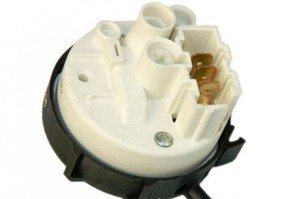 How can you tell if your dishwasher's water level sensor is broken? To do this, carefully monitor the water entering the dishwasher chamber. Signs of a malfunction may include:
- if there is too much or too little water in the machine chamber;
- if water is not collected at all;
- too much water is poured in and it starts to drain;
- The machine stopped while working and water is not pumped out.
The reasons for failure and malfunction of the water level sensor may be:
- wear of the sensor over a long period of operation;
- oxidation of sensor contacts;
- defective pressure switch elements, for example, a puncture in the tube, as a result of which air escapes and the pressure does not reach the required value, the pressure switch does not work;
- clogged pressure tube. Since the pressure in it is very low, Even getting detergent into the tube, not to mention food residue, can cause a malfunction.
Conclusion! If there is no pressure in the hydraulic circuit for any of the reasons described above, the dishwasher will not operate.
Check and Replace Algorithm
Before replacing the pressure switch itself, it's worth checking its functionality. To do this, you'll need to access the sensor. In most dishwasher models, including Bosch, Electrolux, and Ariston, it's located at the bottom of the dishwasher. Here's how:
- disconnect the machine from the water supply, sewerage system and electrical network;
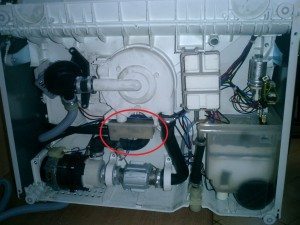
- Turn the dishwasher on its side or upside down. To do this, prepare a place by covering it with a cloth so that any remaining water does not spill onto the floor.
- If your Ariston or Electrolux dishwasher has a lid on the bottom, remove it; you may need to unscrew the back panel;
- Now find the pressure switch from which the tube goes to the pressure reservoir (a small plastic box) secured with two bolts;
- Using pliers, carefully remove the tube from the reservoir. Then, remove the pressure reservoir itself and check it for blockages;
- To check if the sensor is working, blow into the tube and listen. If there's a click, the sensor is working; otherwise, it's not working.
Important! Since the water is constantly moving, the air pressure on the pressure switch membrane constantly changes, meaning it would trigger very frequently. To prevent this, a delay of a couple of seconds has been set, so after blowing into the tube, wait a bit.
- To check the electrical component of the sensor, you will need a multimeter. If you observe a smooth decrease in resistance to zero, this means that everything is working properly;
- If a fault is detected, we replace the sensor with a new original one; there is no point in repairing it. Pressure switches in dishwashers of different brands (Ariston, Bosch, Miele, etc.) may differ, buy only suitable spare parts;
- To replace, disconnect all sensors and the pressure line, and connect the new unit. Reassemble the dishwasher.
So, replacing the level sensor in a dishwasher isn't difficult if you know how it works. If you're unsure, contact a service center. Sometimes, along with the sensor, you'll need replace the dishwasher pumpYou can also do this yourself, although the repair will be more expensive.
Interesting:

1 reader comment
Add a comment
Headings
Washing machine repair




For buyers




For users


Dishwasher




Thank you, blowing out the pressure switch hose helped.