
The principle of operation of a washing machine - automatic
 Modern household appliances are essential for making our lives easier. They free up hours of our lives to spend on the things we enjoy most. They also allow us to relax more. But not everyone is interested in how our technology works, or understands the fundamental principles behind its operation. Incidentally, these principles can be quite interesting. If you find the various technological innovations that progress has brought to our daily lives intriguing, you'll also enjoy this article.
You may remember the days when laundry was washed by hand. It was then rinsed twice, first in warm and then in cold water. Afterwards, it was wrung out and hung to dry. This required a fair amount of time and effort.
Things are different now! These days, to get perfectly clean and pleasantly scented laundry, all you need to do is put it in the drum and set the wash cycle. And after a while, you can take it out! Just a few decades ago, this kind of washing would have seemed like magic! But now it's commonplace. So, let's move on to the principles of washing.
How does a washing machine work?
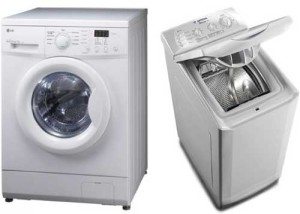 Washing machines come in front-loading and top-loading designs. They all run on electricity. The center of the washing machine is its drum. We throw dirty laundry into it. During the wash cycle, the drum spins, causing the laundry to sink into the water. Water easily enters the drum because it has numerous small holes. When the door is closed, the part of the machine where the washing takes place is sealed. If the machine is working properly, moisture cannot escape.
The washing process itself doesn't have any special secrets or tricks. Everything happens quite simply.
The laundry is immersed in water containing a solution of detergent. The drum then rotates, and the laundry is mechanically cleaned by the resulting solution. After the main wash cycle is complete, the dirty water is drained, and a rinse and spin cycle follow. Some machines also have a drying function, allowing you to remove your laundry dry instead of hanging it up.
The washing machine's drum is located behind the tub. This is the main water reservoir. The drum itself acts as the active rotating part, moving the laundry. This is what causes the washing process.
In front-loading machines, laundry is placed into a hatch opening located at the front of the machine. This type is the most common in Russia and Europe. In America and many Asian countries, top-loading washing machines are more common. The latter have a slightly different design. The laundry is placed on top.
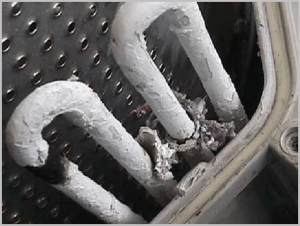
The drum and tub of a washing machine are essentially the main components directly involved in the washing process. But there are other equally important parts. For example, the heating element, also known as the heating element, brings the water to the required temperature. A thermostat is used to control the heating. It measures the temperature and signals when to stop heating. There are also water inlet and outlet systems. They have valves that allow liquid to enter when needed and remove it from the tub when it's no longer needed.
A drain pump operates to ensure water drainage, and an electronic control module ensures everything is in working order.
Stages of washing clothes
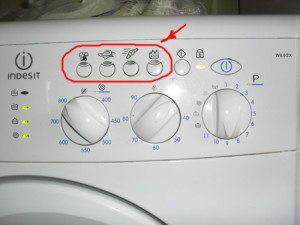 An automatic washing machine is a household appliance that can independently carry out all washing processes from start to finish. It fully controls its operation according to the program's settings. If it's working properly, every step of the washing process will proceed smoothly and efficiently. If problems arise, it's time to call a technician or fix the problem yourself. Luckily, our website, guide.washerhouse.com, is here to help you troubleshoot many problems yourself.
Washing begins with loading the laundry. Just in case, we remind you to empty pockets before loading the laundry. Next, add the detergent. Place it in the designated compartment of the dispenser. Then, plug in the power cord (by the way, you can do this earlier). Then, make sure the water supply isn't shut off. Select the desired wash cycle and start the wash.
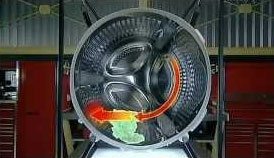
The machine follows the set parameters and, without your intervention, begins filling with water and washing. The dispenser is also rinsed during the process, and the detergent is released into the compartment with the laundry and water. The thermostat activates the heating element and heats the water to the required temperature. When the drum is filled with enough water and has reached the required temperature, the main wash begins. During this process, the drum rotates, moving the laundry through the water and detergent solution.
The resulting solution, along with the rotation of the drum, removes dirt from the items. Then a special valve opens, the drain pump is activated, and water flows out of the tank. Once the water has drained, the water inlet valve opens, and fresh, clean water fills the tank.
Once the required level is reached, which, by the way, is monitored by a level sensor, the rinse cycle begins. This rinse cycle is repeated several times. Once the required number of rinses has been completed, the spin cycle begins. During the spin cycle, the machine's drum rotates vigorously. Water drains through the drum opening into the tub. It is then pumped out of the tub by the drain pump.
Some washing machine models have a drying function. This occurs after the spin cycle. If your machine doesn't have this option or is simply disabled, the wash cycle is complete after the spin cycle. You can remove the laundry when the door lock allows it. This usually occurs within three minutes of the end of the cycle.
The video shows the machine's operating principle.
Interesting:

Readers' comments
Headings
Washing machine repair




For buyers




For users


Dishwasher




Add a comment