Replacing the shock absorber assembly in a modern washing machine takes about half an hour, even for users with no experience in appliance repair. However, this component of your "home helper" doesn't always need replacing; sometimes it can be easily repaired, saving you money. Let's take a closer look at how a washing machine's shock absorber works, which will help you better understand the appliance and make independent repair decisions if the shock absorbers are damaged.
How does a damper work?
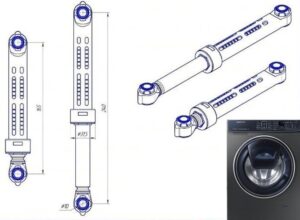
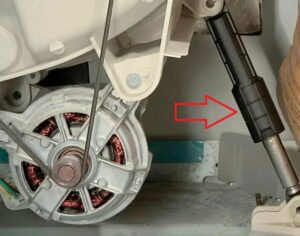
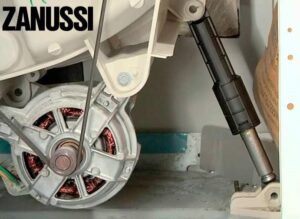
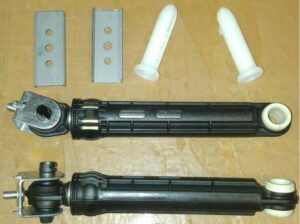
Today, dampers are most often responsible for absorbing excessive vibration that occurs during the washing and spin cycles. This shock-absorbing system works in conjunction with suspension springs. This unit resembles a steel cylinder, but without the piston rod inside. Instead, it's essentially a piston with holes on the sides to eliminate air pockets.
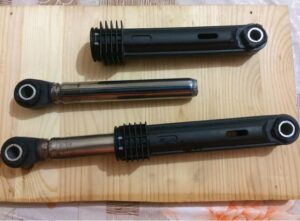
This piston device contains one or two friction pads, the number of which varies in washing machines of different models and manufacturers. These gaskets are made of a porous polymer coated with a special non-drying lubricant, which allows for the creation of additional friction during movement. Rubber bushings located along the edges of the cylinder and the damper installed within act as fasteners for the shock-absorbing elements, attaching to the bottom of the automatic washing machine on one side and to the bottom of the wash tub on the other. There are two types of dampers:
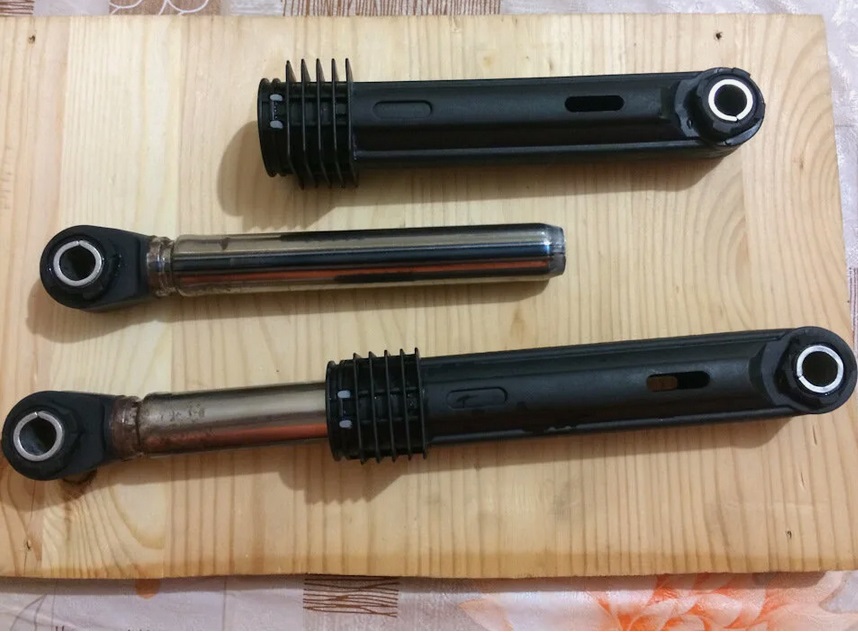
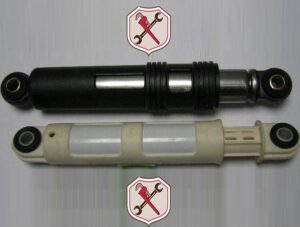
Disassemblable. They have a replaceable gasket, so the element can usually be repaired simply by replacing the worn-out friction gasket.
Non-removable. These parts are metal-faced on the edges, so it's impossible to remove a deformed gasket, meaning you'll have to buy new dampers and install them in place of the ones you removed.
Try to buy only original spare parts so that they not only fit your "home assistant" perfectly, but also last a long time.
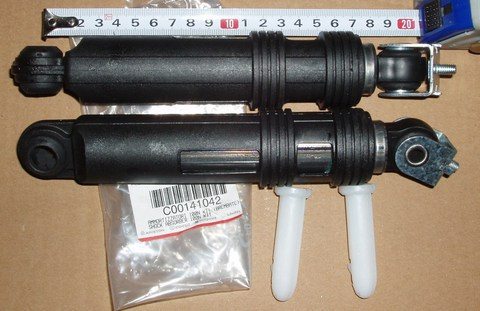
When replacing a damper, you should also consider the operating force, which has its own limits, which can be found on the element's body. Most often, the load is measured in the range of 50 to 150 Newtons. These values should be used as a guide when purchasing a new damper—buy a product with the same maximum load as the failed damper. If you follow the manufacturer's recommendations and install the correct damper, the washing machine will not exceed the permissible load limits.
How does a shock absorber work?
We've explored the operating principle of modern dampers, and now we're ready to explore how a shock absorber works in a washing machine. This spring-piston design is also commonly found in household appliances. It looks like a metal cylinder with a polymer bushing installed on top, which guides the rod into the cylinder cavities.
The element is secured to the washing machine drum with polymer spacers or liners that are installed in the upper part of the shock absorber rod. The piston, with its gasket, is secured to the base of the rod. The gasket in this design is also generously coated with a special lubricant, which creates additional friction and prevents it from drying out over time. What exactly does this shock absorber do in the system?
During the oscillation of the CM body, the rod moves linearly.
This pushes the piston, which begins to move in the metal cylinder.
The lubricant slows down the piston, preventing it from sliding freely.
When the pressure becomes weaker, the rod returns to its original position and stops.
When the oscillation returns, all the described actions occur again.
Preparing holes in the piston walls prevents air locks from creating additional resistance, because when the piston is pressed, all air escapes freely through the holes, without slowing or stopping the piston's movement.
Since the shock absorption of a home appliance relies on the constant friction of its components against each other, they will wear out and fail over time. When this system consists of several spring elements, they typically deform simultaneously, so they all need to be replaced at once to avoid creating a difference in the appliance's vibration damping. The final wear of an element occurs when a gap appears between the elements. A malfunction can also be detected by excessive vibration during the wash and spin cycles, as well as an unusual knocking sound from the wash tub against the interior surfaces of the washing machine.
Often, a simple gasket replacement can fix the problem, but occasionally the shock absorber fails due to deformation or even separation, causing the drive belt to slip and other problems. In this situation, purchasing new shock absorbers is unavoidable.
It's worth noting that the operation of shock absorbers in washing machines doesn't depend on the damper's design, as not only the design of the element but also its installation location often differs across machines. For example, not every shock absorber includes a spring system that holds the washing machine's drum in place.
As for the dampers, they also vary in size, location, and angle. Some machines feature not two suspensions supporting the tank from above, but a single large counterweight connected to the tank by a pair of small springs. The standard shock-absorbing system, however, is a double tank supported by a damper underneath.

 Replacing the shock absorber assembly in a modern washing machine takes about half an hour, even for users with no experience in appliance repair. However, this component of your "home helper" doesn't always need replacing; sometimes it can be easily repaired, saving you money. Let's take a closer look at how a washing machine's shock absorber works, which will help you better understand the appliance and make independent repair decisions if the shock absorbers are damaged.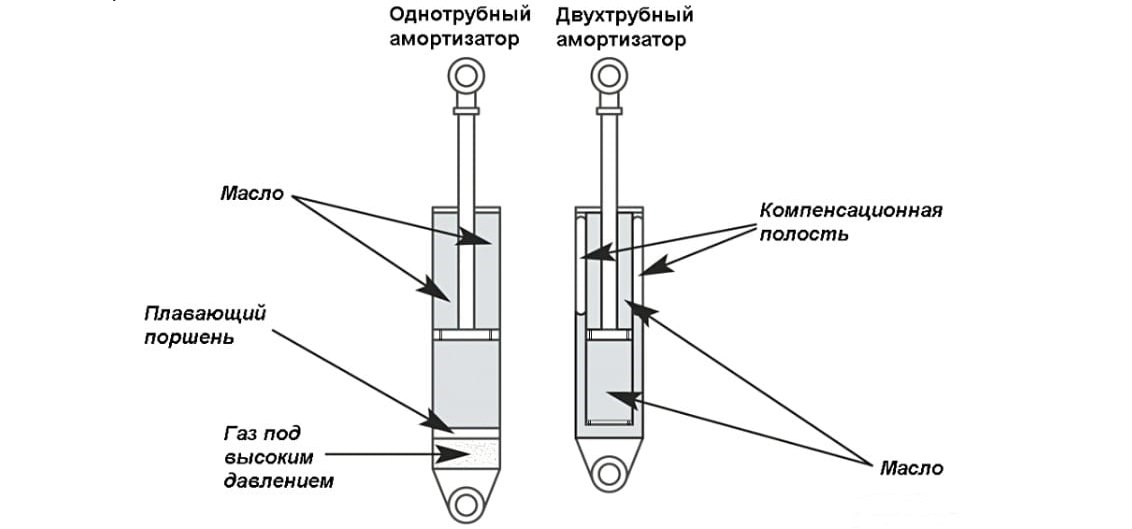














Add a comment