
Signs of a broken washing machine bearing
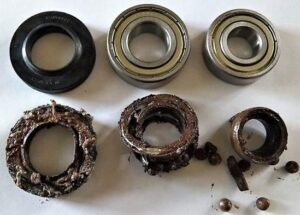 Despite the high reliability of modern household appliances, they can still fail during heavy use. This is often due to the bearing assembly, which is very difficult to access for the average user. That's why it's important to know the main signs of bearing wear in a washing machine so you don't have to disassemble the appliance unnecessarily if the bearings turn out to be fine. Let's learn how to identify damage at home, without the help of a professional.
We determine the problem without disassembling the machine
Of course, only a repair service employee can accurately determine the malfunction without disassembling the equipment. If the unit has only recently begun to deteriorate, even a service center specialist will not be able to identify it without completely disassembling the washing machine. However, there are a number of signs that may indicate a breakdown.
- Unusual noises during the cycle. Pay close attention to any unusual noises that occur during the wash and rinse cycles. These include strange clanking sounds, loud knocking, grinding, and other sounds.
Do not try to look for a breakdown during the spin cycle, as the machine makes extremely loud sounds in this mode, making it impossible to recognize any unusual noise.
- Poor spin quality. If the bearings are damaged, the drum will not be able to reach maximum speed during the final stage of the cycle. Due to the reduced RPM, the spin quality will suffer.
- Imbalance. A malfunction like this will also disrupt the washing machine's balance. If the bearing assembly is truly faulty, the machine will begin to wobble. This isn't always easy to notice, as if the bearing assembly is just beginning to fail, the imbalance may be almost invisible to the naked eye.
- Damage to the seal. Finally, it's worth examining the seal edges, as if they're worn, this is further evidence that there may be a problem with the bearing assembly.
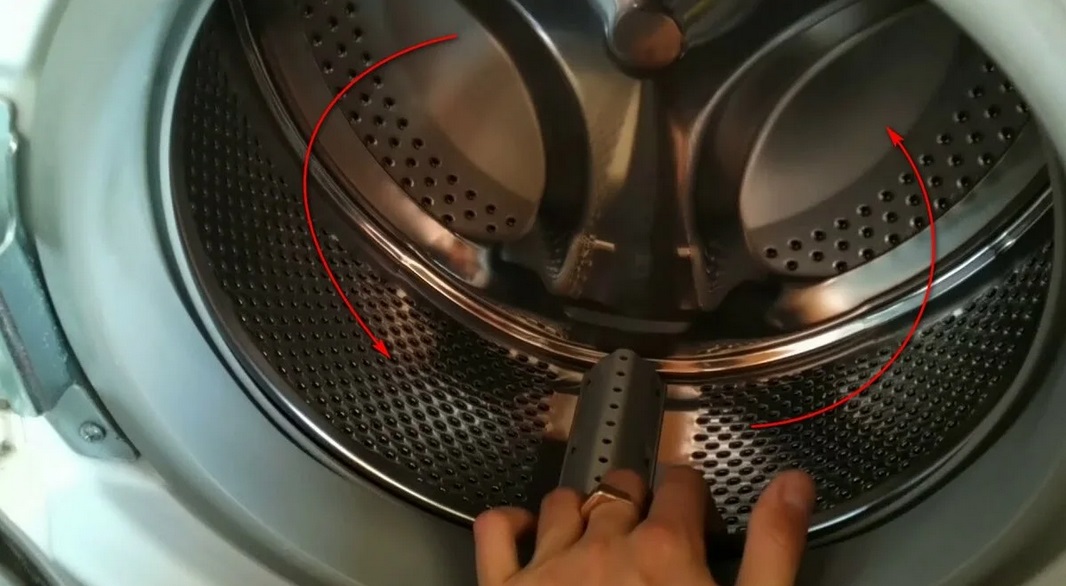
There's another method for testing your "home helper" without completely disassembling it. To do this, first unplug the appliance, open the door, reach into the drum, and place three fingers on its top edge. Next, rock the drum so that it swings with the tub on the springs, but there's no play between them. If you feel any play during these movements, the component has begun to fail.
Finally, you can try spinning the drum as hard as you can until it begins to spin relatively freely with a gentle hum. If, instead of a gentle hum, you hear a beating sound or even an unpleasant clanking noise, the bearings need urgent replacement. This could be due to a manufacturing defect or normal wear and tear caused by heavy use of the washing machine.
Let's remove the back panel of the case
If there are no obvious signs of damage, you can try to determine the fault by partially disassembling the bearing. This will save time and provide evidence that the bearing truly needs replacing. How can you inspect the component relatively quickly?
- Disconnect the unit from the power supply, water supply and sewerage system.
- Move it away from the wall to allow free access to the back wall.
- Remove the back panel of the machine.
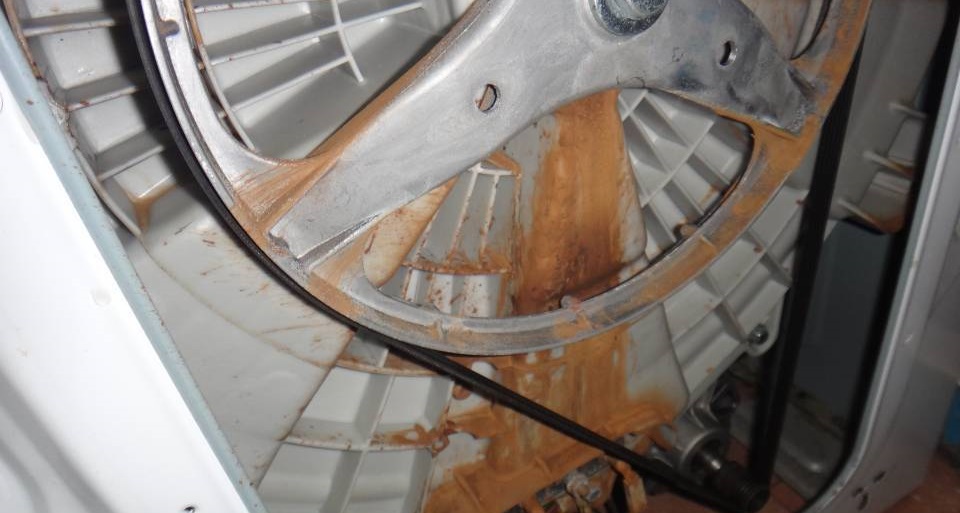
- Carefully inspect the back wall of the tank.
To accurately determine the fault, it is permissible to remove the drive belt.
If the bearing assembly begins to deteriorate, grease leaks and corrosion will almost certainly occur. Therefore, if the back wall of the tank is covered with rusty streaks and obvious traces of grease, the bearings need immediate replacement. Using the appliance in this condition is not recommended, so don't rush to return it.
Estimate the complexity of the repair
Most often, users immediately call a repair service after suspecting bearing failure. This makes sense, as experts are better at handling repairs, but sometimes you can do it yourself, which will save time and the family budget. First, you need to examine the specific situation, because depending on the model of the washing machine, replacement can be either relatively easy or extremely difficult.
If your "home helper" has a non-detachable tank, like in Indesit products, it's best to entrust the repair to a service center.
When bearings fail in a washing machine with a non-detachable drum, you have to either dispose of the damaged appliance or replace the entire drum-tub assembly. While you can certainly try cutting the drum apart, replacing the broken parts, and then reassembling the drum using clamps and glue, this repair often results in the drum leaking heavily during the cycle. This will require additional repairs, and the initial cost of replacing the drum assembly, which involves cutting the drum apart, can reach half the price of a new Indesit washing machine. Therefore, many housewives forego this procedure and simply buy a new appliance.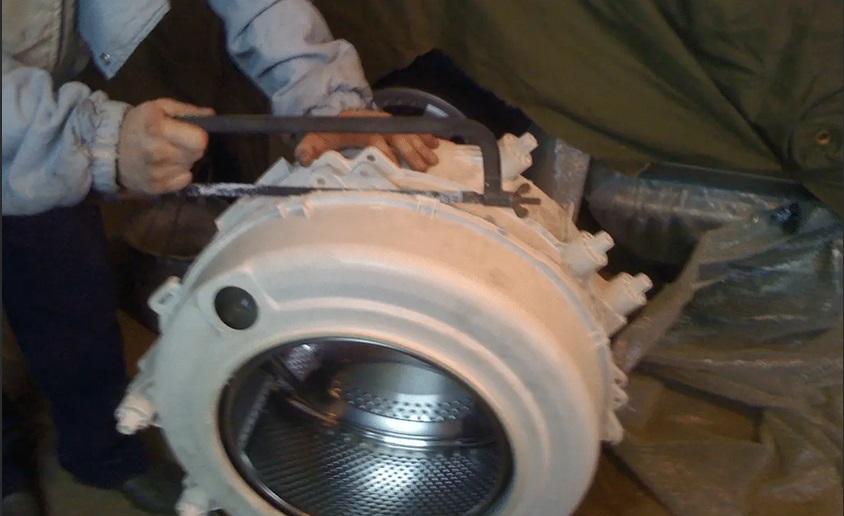
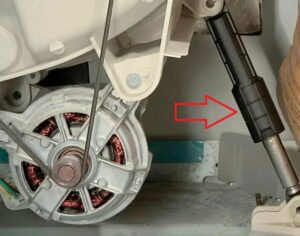
There's a downside to this, too—if you're using a top-loading "home helper." This type of machine is easy to repair yourself: simply remove the side panels, loosen the pulley screw, remove the drive belt, pull out the pulley, unscrew the calipers, screw in new ones, and then reassemble the appliance. The entire repair takes about 15 minutes with a professional, and about 45 minutes with someone inexperienced in washing machine repair.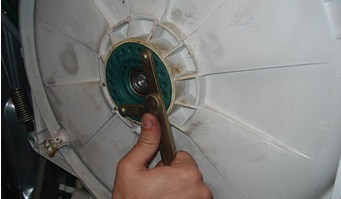
That's why you should never rush into a home repair or a service call. First, identify the problem, accurately assess the difficulty of fixing it, and only then decide whether to repair it.
Interesting:


Readers' comments
Headings
Washing machine repair




For buyers




For users


Dishwasher




Add a comment