
Extend the life of your washing machine yourself!
 When buying household appliances, most of us expect them to work reliably for a long time. Some are lucky and have no problems, while others experience breakdowns within the first few years of use. People often ask, "What is the lifespan of a washing machine?"
Manufacturers and sellers rarely offer warranties longer than three years, and experts agree that the first breakdowns occur after approximately five years of service. It's impossible to pinpoint the exact period, as many factors determine the longevity of a unit.
What affects the service life of a washing machine?
Think it's just a matter of the manufacturer's brand? Not so, reliability and service life depend on:
- Defects. Unfortunately, even products from expensive, popular brands aren't immune to this. While you can certainly return and exchange such a product, to save time and effort, carefully examine the condition of the equipment before purchasing. Defects can affect the equipment's operation both initially (during the first few uses) and later.
- Natural wear and tear. This factor becomes apparent after just five years if the machine has been used frequently;
- Careless use. If you turn off the machine during a wash cycle, try to open the door, or suddenly turn off the power, this could lead to unpredictable negative consequences;
- Force majeure circumstances such as power surges or accidental mechanical damage. Unfortunately, this is impossible to control.
So what can you do to extend the life of your washing machine? In fact,  First of all, you should read the instructions included with the device. Many people think they're already well-versed in its operation, but that little book also contains important secrets about how to properly care for the device and what to avoid when using it.
How to fix breakdowns or avoid them?
Of course, few washing machine owners attempt repairs themselves, preferring to entrust the job to a technician. However, it's important to know the possible causes of breakdowns and damage to prevent them from occurring later.
| Breaking | Possible causes and solutions |
| Wear of parts | Typically, the functional components of a washing machine wear out due to strong vibrations. To reduce vibrations, place the machine on a level, hard floor so there are no gaps between the feet and the surface. Also, avoid packing the drum too tightly with clothes or placing heavy items alongside lighter ones—this shifts the center of gravity and causes vibration. |
| Blockage | The most common cause is small objects (buttons, zippers, fasteners, coins, pins, etc.) getting caught in the drum or pump filter. Avoiding this problem is easy: simply carefully check your clothes and pockets and fasten buttons and zippers before washing. If you've checked the drum and pump for foreign objects and removed them, but the strange noises persist, it's time to call a professional. |
| Heating element burns out | Although experts don't rule out wear and tear, the main factor is overheating of the element due to scale buildup. According to statistics, the heating element burns out around the eighth year of a washing machine's service life. The only solution in this situation is repair and replacement of the element, which, incidentally, is not that expensive. |
| Computer crashes | Computer problems are usually caused by sudden power surges or a dropped computer. Few are immune to this. If some buttons stop working, or the screen goes blank for no apparent reason, call a technician before the system breaks down completely. |
Prevention of failures and breakdowns
Of course, problems don't occur unless they're provoked. To ensure your washing machine remains reliable, follow a few simple rules.
- Leave the machine open to allow it to dry inside after washing. This will prevent both limescale and mold buildup;
- Periodically clean the detergent drawer and other detergent compartment, as well as the drawer recess. Blockages can accumulate there and interfere with the suction;
- Regularly inspect the hose and drainage system for damage and cracks. They should also be replaced every few years, as scale can build up inside, causing unpleasant odors and sometimes even staining your clothes.
- Clean the filter near the drain pump. Bad odors often come from there;
- Use descaler once or twice a year or hard water softener with every wash;
- Choose a moderate temperature setting if you're satisfied with the wash results. There's no need to waste energy, hot water, or cause unnecessary limescale buildup;
- Clean with bleach and detergent. You can pour them into the drum and run the machine empty. This helps remove bacteria from both the drum and the hose.
How to prevent scale formation?
First, determine how susceptible your heating element is to scale buildup. If you wash in hard water, almost daily, and at temperatures over 60 degrees Celsius, then you need to protect your unit like the apple of your eye.
Not sure what kind of water you have? It's simple. If soap rinses off your skin and hair quickly, your water is hard, as the calcium and magnesium ions it contains coat and block the soap molecules, preventing it from lathering. If the opposite is true, and you're having trouble completely rinsing out your shampoo or clothes, your water is soft and clean, meaning there's less to worry about. Want exact numbers? Contact your local water company.
The right water temperature depends on the type of clothing. Think about how often you need to wash your clothes at 60 or 90 degrees Celsius. In fact, not that often, except perhaps for light-colored items. In general, frequent washing in very hot water damages clothing. So if you're happy with the washing results at lower temperatures, there's no point in wasting energy and hot water.
However, the choice of laundry detergent also plays a significant role here. If possible, switch to a more expensive and higher-quality brand, and this will help save money on both hot water and new clothes. Try to keep the washing temperature to a maximum of 60-70 degrees Celsius (140-158 degrees Fahrenheit), and limescale will build up much less frequently.
Anti-scale powders – myth or not?
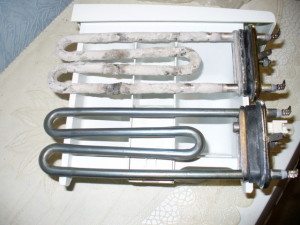 Nowadays, you increasingly see advertisements for special powders that protect the heating element from scale. The creators claim that only their miracle product can save a washing machine from certain destruction. So, is Calgon and other similar products really effective?
In fact, their effectiveness is greatly exaggerated. Firstly, such powder won't protect against every breakdown (as we've already established, there are various causes) and won't prevent scale buildup if it has already begun to settle on the heating element. Secondly, it doesn't completely dissolve scale, but only prevents its formation by softening the water.
It turns out that if the heating element has already accumulated a significant layer of scale over several years, it's best not to use this powder at all. Besides, simply cleaning the element will be much cheaper.
Calgon is truly a way to extend the life of your washing machine for those willing to spend a little extra. In fact, many other high-quality laundry detergents already contain a water softener, albeit in smaller quantities.
There's also something called an anti-scale product, specifically designed for thoroughly removing limescale from the heating element and drum walls. Simply pour it into the dispenser and run the empty machine for a short time at 90 degrees Celsius. This procedure is performed once or twice a year, the key being choosing the right product. Whether it's worth the extra expense of a separate product for every wash is, of course, up to you.
Interesting:






Readers' comments
Headings
Washing machine repair




For buyers




For users


Dishwasher




Add a comment