
Automatic washing machine maintenance
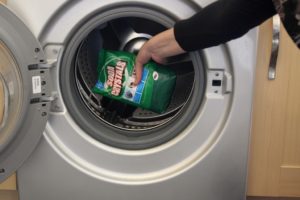 Washing machine maintenance—many people hear this phrase, but few fully understand what it means. Preventive measures in this case are aimed at extending the washing machine's lifespan without breakdowns and consist of three areas: daily maintenance, periodic physical and chemical cleaning, and routine inspection. We'll discuss these topics in this article.
Is it possible to avoid breakdowns?
No one is immune to natural wear and tear of parts and manufacturing defects. Even the most expensive and reliable automatic washing machine cannot guarantee long-term operation; too many factors influence this:
- water quality;
- electrical network condition;
- operating features;
- assembly;
- quality of parts;
- various accidents (forgot to take change out of a pocket, etc.).
However, if you follow the basic operating rules for your automatic washing machine and perform regular preventative maintenance, your machine is likely to last much longer than its warranty period. While you'll need to pay a little more attention to your washing machine than usual, it's worth it.
Ideally, approximately every three years, technicians recommend partially disassembling the washing machine and inspecting it for faults. You don't have to do it yourself; you can call a specialist who will check the hoses, motor, pump, and other important parts, especially for wear. A promptly replaced hose will save you and your neighbors from flooding and a ton of money.
Before, during and after washing
Preventative measures to protect your washing machine from breakdowns should be taken before and after each wash. Almost everyone knows these precautions, but we thought we'd reiterate. People often use very hard tap water for washing. The minerals in this water settle on the drum, pipes, and hoses, and end up inside the pump, ultimately damaging the machine.
Please note! Repairmen often find kilograms of so-called "water scale" in broken old cars. If left untreated, your car will suffer the same fate, and it will fail prematurely.
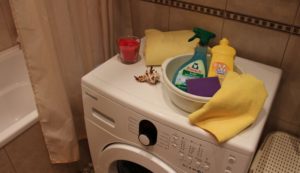 To avoid such consequences, it's necessary to soften the water before washing by adding special detergents to the detergent dispenser. One such detergent is the well-known Calgon detergent. We discussed its use in more detail in the publication How to use CalgonWater softening is a necessary daily preventative measure, but it's not the only one.
- Before putting items in the washing machine, check their pockets carefully. Small change, keys, toothpicks, or any other sharp objects stuck in the machine can cause it to break down.
- When loading items into the drum, pay attention to their quantity and distribution. Unevenly distributed items in the drum, as well as overloading it, can cause damage.
- Don't get carried away with washing at 950C, the more often you use the "boil" mode, the shorter the life of the washing machine.
- Any potentially dangerous items containing metal locks, buckles, or large buttons should be washed in a special bag. Shoes should always be washed in bags.
- Don't leave the washing machine unattended for long periods of time while it's running. Firstly, you'll be able to take emergency measures in the event of a leak or similar issue. Secondly, if the machine starts showing signs of trouble, you'll hear or see it. This doesn't mean you have to stand next to it for hours while it's running; it's enough to be home and approach it at least once while it's running.
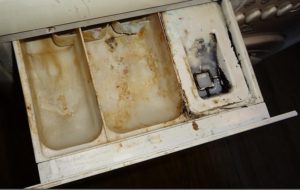
- After washing, you need to open the door of the automatic machine wide open and be sure to remove and wipe the powder compartment.
- After each wash you will also need cleaning the washing machine filterIn addition, the remaining waste water must be removed from the machine through this same filter or through the emergency drain hose.
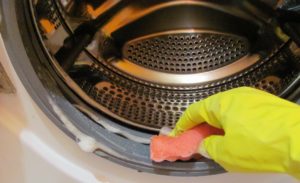
- After washing, wipe the rubber seal with a dry cloth. Don't allow water to stagnate in the seal's grooves, as this can cause the rubber to tear, requiring replacement.
Important! Avoid unplugging the washing machine during the wash cycle. A sudden power outage can damage the control module.
Chemical and mechanical cleaning
 Just because you add water softener before every wash doesn't mean your machine doesn't need to be cleaned occasionally. According to experts' recommendations, a full mechanical cleaning of the car should be done by hand approximately once every 2-3 years, and the car should be dry-cleaned once every 6 months.
The basic idea behind dry cleaning a washing machine is as follows. We add a special cleaning agent to the washing machine's detergent drawer; there are a plethora of these available on the market. Run the machine on a long cycle at a high temperature without any laundry and wait for the cleaning agent to cleanse the insides of all dirt.
Dry cleaning requires no labor, just time. Mechanical cleaning, however, is a much more labor-intensive process. The following steps are necessary.
- Remove the top cover of the washing machine, the tray (if any) and the back wall.
- Remove and clean the drain pipe of the machine with your own hands.
- Remove and clean the pump.
- Remove and clean the pipe running from the powder receiver to the tank.
- Remove and clean the pipe running from the fill valve to the powder receptacle.
- Remove and rinse the debris filter.
- Remove and clean the inlet and drain hoses.
So, by taking the above preventative measures yourself, you'll almost certainly extend the life of your washing machine. Just don't overdo it when removing parts; remember to put them back in place and screw them securely. Good luck!
Interesting:

1 reader comment
Add a comment
Headings
Washing machine repair




For buyers




For users


Dishwasher




I divide this once every six months using citric acid at maximum temperature.