
The dishwasher is leaking
 A broken dishwasher is an unpleasant situation that can lead to costly repairs. So what should you do if you find a puddle of water in front of the machine and the leak protection is missing or hasn't worked? The most important thing is not to panic, as any problem should be addressed step by step. In most cases, if you have time, you can fix the problem yourself. We'll do our best to help.
Assessing the situation
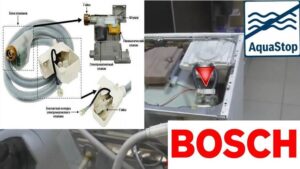
A modern dishwasher has a self-diagnostic system that alerts you to any malfunctions with a code on the display. If the machine has Aqua-Stop leak protection, such as in Bosch dishwashers, an alert will appear when it's triggered. error code E15.
But it may also be that there is no error, and the water has somehow leaked out of the machine. The first thing you need to do is unplug the dishwasher from the outlet, just in case you get electrocuted. Next, carefully inspect the dishwasher door, running your hand over it to check for any drips. If the door is wet, water is leaking through the rubber seal.
Be sure to check that your appliance is level, as if it's tilted, water will leak from the tray once it reaches a certain level. Also, open the tray and check how much water is in it. If it's above the threshold, the problem is a faulty water sensor.
Important! One of the reasons for water appearing in the dishwasher's tray could be an excess of detergent. To resolve this, run a test cycle with a dishwasher descaler.
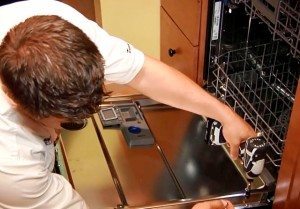 Water can spill onto the floor in front of the dishwasher if you open the door immediately after the wash cycle. This is because condensation collects on the door and drips onto the floor. Don't rush to unload clean dishes; wait a bit until they cool and the temperature inside and outside the dishwasher is roughly equal. If you do open the door immediately, simply wipe it dry with a towel.
If your washing machine is standing in a puddle of water, it's likely leaking from underneath or through the ventilation holes. This could be due to:
- in a faulty hose;
- in weak pipe connections.
Please note! Faulty hoses in Electrolux dishwashers may only appear after several years of use, and this is quite rare.
The least common causes of a leak may be:
- tank breakdown;
- depressurization of the pallet;
- sprinkler malfunction.
We eliminate water leaks from the door
So, water leakage from under the dishwasher door is the most common and easily fixed. To do this, you need to open the door and tear off the old rubber seal around the perimeter of the machine with your hands; even a child can do this.
Now take a new rubber seal suitable for your specific dishwasher model. Electrolux dishwashers require one seal, while AEG dishwashers may require a completely different one. Manually insert the rubber seal into the area where you removed the old one, carefully working your way around the perimeter of the dishwasher.
Note! If the seal is too long, you'll need to cut it with scissors.
In addition to the seal around the perimeter of the dishwasher, there's also a seal at the bottom of the door. We'll describe replacing it using an Electrolux dishwasher as an example.
- Open the door and unscrew the bolts around the perimeter.
- Close the door and remove the front panel.
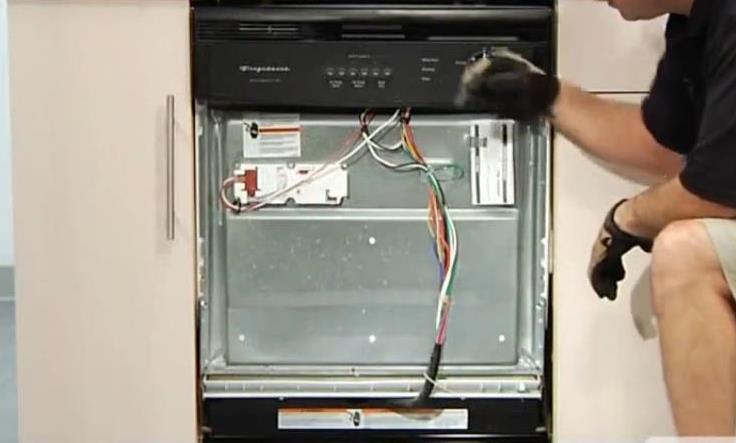
- Next, open the door, remove the lower dish rack so that it is out of the way, and carefully pull out the rubber seal at the bottom of the door using tweezers.
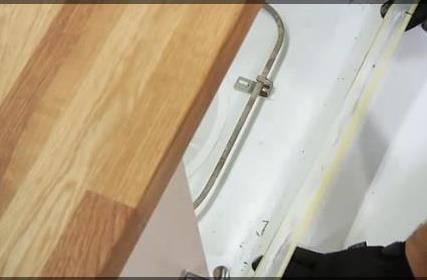
- Then take the new seal and insert it so that the end is aligned with the edge of the tank. Push the seal into the door until it stops, making sure it fits snugly into the groove, then screw the panel onto the door.
We check the hoses and pipes
One of the probable causes of water leaking into the dishwasher tray may be a clogged sewer and drainage system. That is why it is necessary to check regularly and 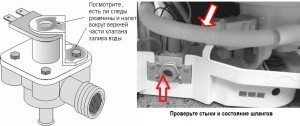 clean filters and hoses from food residues. Cleaning the filter is easy; it's located at the bottom of the tank. Simply remove the fine mesh, unscrew the cup, and rinse everything under running water. The manual for any machine, whether Bosch, Electrolux, or another, will detail the cleaning procedure.
To check the hose and connection for leaks, look inside. To do this, turn the dishwasher upside down and remove the drip tray. It's usually secured with bolts at the front and latches on the sides.
Under the tray, you will immediately see the "insides." Check how tightly the hoses are connected to the devices and, if necessary, replace the connecting clamps or the pipes themselves.
How to replace a valve, water sensor, and sprinkler
When checking the hoses, inspect the inlet valve. If there are any signs of rust, this is the first sign that it needs to be replaced. If you've opened the dishwasher and found the inlet valve, replacing it is easy. Disconnect the sensors and hoses from it, and replace the old valve with a new one suitable for your dishwasher model.
Although rare, it can happen that the plastic spray arm delaminates due to the water pressure when the machine is injected into the tank after prolonged use. This causes water to leak into the tray, which triggers the safety device. The spray arm is a replaceable part that can be easily purchased in-store or ordered online. To replace it in an Electrolux machine, remove the lower basket. There is a paddle sprinkler at the bottom, which is held in place by latches. You pull it out with a screwdriver and insert a new one in its place.
The water level sensor is located on the shower tray itself, in the same area as the Aqua-Stop leak protection system. If a water leak occurs, the valve either fails or sticks, preventing the water level signal from reaching the controller. Consequently, the pump doesn't start, and the Aqua-Stop protection system is activated. If there's a lot of water, it leaks from the shower tray onto the floor. Replacing the sensor solves this problem.
What to do if the tank bursts?
Very rarely, a leak occurs when the dishwasher's tank ruptures. This can occur if the machine has been in use for a very long time, or if there's a manufacturing defect. In this case, it's best to contact a specialist who can assess the complexity of the repair. In such cases, repairs usually involve purchasing a new dishwasher, as repairs can be expensive.
So, a dishwasher leak is a problem that, in most cases, can be fixed by yourself. The key is to approach the issue wisely and patiently. Repair it yourself or work with us!
Interesting:



Readers' comments
Headings
Washing machine repair




For buyers




For users


Dishwasher




Add a comment