Checking the shock absorbers and dampers on a washing machine
If your washing machine has shock absorber issues, it's immediately obvious. The machine will bang during the spin cycle, vibrate heavily, and bounce around the room. This "dancing" won't stop there—over time, the constant impact will cause the drum to rupture and leak. It's best to check the functionality of your washing machine's shock absorbers immediately. We'll explain in detail how to test the dampers and replace them if necessary.
Testing shock absorbers
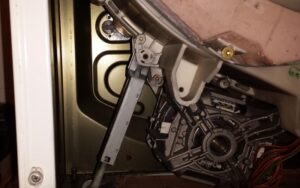
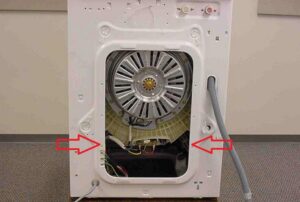
Don't immediately install new shock absorbers on your washing machine—you need to first verify that the old ones are faulty. This "diagnosis" can't be made by eye: you'll have to remove the shock absorbers, inspect them, and test them. The dampers are located at the bottom of the machine under the tank, and to get to them, you will need to partially disassemble the equipment. The procedure depends on the brand and type of the car.
There's no need to completely disassemble the automatic transmission. On most models, such as the Bosch, you only need to remove the front panel. The shock absorbers here are standard in design, attached to the housing at the bottom with a single bolt and secured to the plastic tank at the top with a latch located on the strut. To remove the shock absorbers, follow these steps:
the machine is disconnected from the power supply and water supply;
the screws securing the front cover are unscrewed;
the end is removed to the side;
a long drill with a diameter of 13 mm is used to drill out the bolt that holds the damper from below;
the top latch snaps off;
The stand is removed from the washing machine.
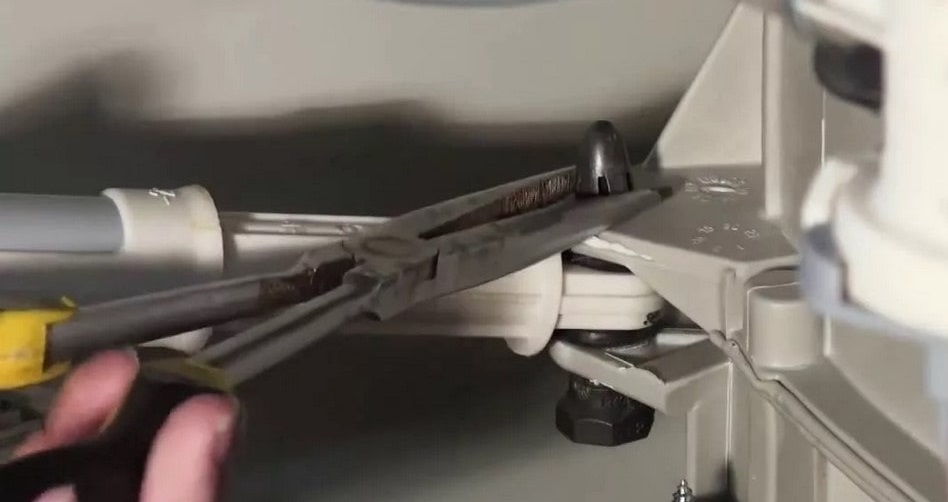
On other washing machines, including LG models, disassembling the housing is not required. The shock-absorbing system can be accessed through the bottom. Simply unplug the washing machine and lay it on its left side. Then, press the plastic "pins" securing the posts at each end. If the pin is difficult to remove, generously lubricate it with WD-40 cleaner; the pin should release.
The dampers are located at the bottom of the washing machine.
It depends on the brand of the washing machine and the mounting type. On Samsung, Miele, and AEG models, the shock absorbers are connected to the body and drum with M8 and M10 bolts, which require 12mm and 13mm open-end wrenches or socket heads, respectively, to remove. On Whirlpool machines, the shock absorbers are secured with special latches that can be easily released without tools.
Shock absorbers must be removed and inspected with extreme care. Loosen and unscrew fasteners carefully, avoiding excessive pressure and using heavy tools. It's important to maintain the integrity of the shock absorbers themselves, the plastic tank, and other adjacent components.
The removed racks are tested for serviceability as follows:
press the rod;
pull the rod out of the body;
evaluate the stress exerted by the rack.
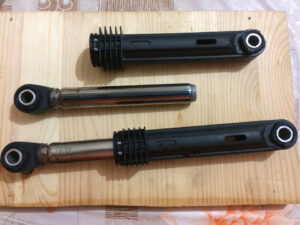
If the piston rod slides in easily or even pops out of the housing, the shock absorber is faulty and no longer able to dampen outgoing vibrations. On some struts, it's also important to check the amount of sealing grease in the piston: a lack of fluid indicates worn dampers. Traces of rust also indicate worn components.
How to change these parts?
If the diagnostics revealed that the shock absorbers are worn out, they need to be replaced with new ones. The ideal solution would be to install an original spare part with identical characteristics. But finding genuine parts is difficult or the waiting time is too long.
When repairing the shock absorbers of a washing machine, it is recommended to use original spare parts from the manufacturer.
Another option is to use third-party shock absorbers. This is possible if you choose the right replacement. Three key parameters should be considered: resistance, length, and mounting type.
Resistance. Varies from 80 to 120N. Finding its value is easy—the number is always printed on the element's body.
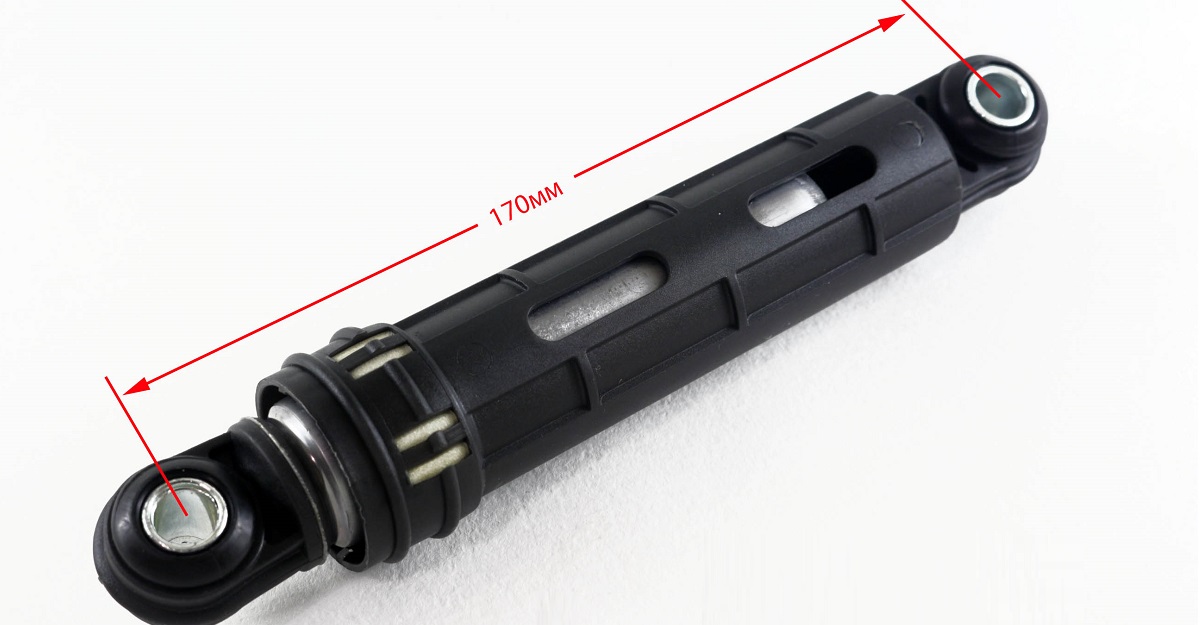
Length. You need to look at the distance between the mounting axes, both in the folded and compressed positions.
Fasteners. Fasteners include latches, bolts, and plastic pins. Silent block bushings are typically designed for diameters of M8-10.
The recovered shock absorbers are installed in place of the old ones. The struts are attached to the body and tank, after which the machine is assembled, connected to the utilities, and run for a test wash.

 If your washing machine has shock absorber issues, it's immediately obvious. The machine will bang during the spin cycle, vibrate heavily, and bounce around the room. This "dancing" won't stop there—over time, the constant impact will cause the drum to rupture and leak. It's best to check the functionality of your washing machine's shock absorbers immediately. We'll explain in detail how to test the dampers and replace them if necessary.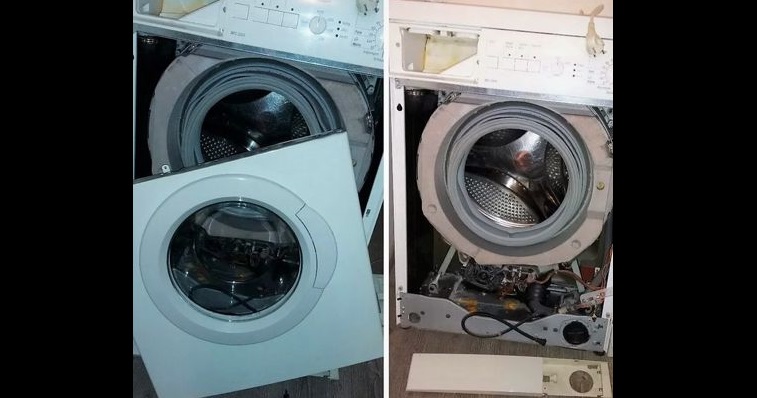














Add a comment