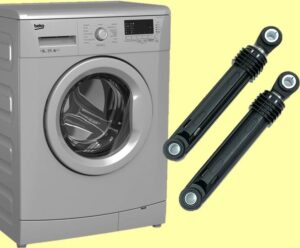
Checking the functionality of the washing machine shock absorbers
It's easy to notice that your automatic washing machine has a problem with its shock absorbers. When running at high speeds, the washing machine will rattle, shake, and "jump" around the room. Therefore, if after each wash you find your "house helper" some distance from its installation location, it's best to get it diagnosed immediately.
Failure to check and replace your washing machine's shock absorbers promptly can lead to more serious problems. For example, constant shaking can cause the machine's drum to crack. We'll explain how to test the shock absorbers.
How to tell if the shock absorber is broken?
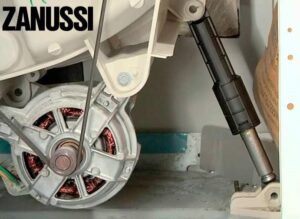
Don't rush to the store for new shock absorbers. First, check the functionality of the old parts. To inspect the dampers, you will have to partially disassemble the machine body, since they are installed below, under the washing machine tank. The algorithm of actions will differ depending on the washing machine model.
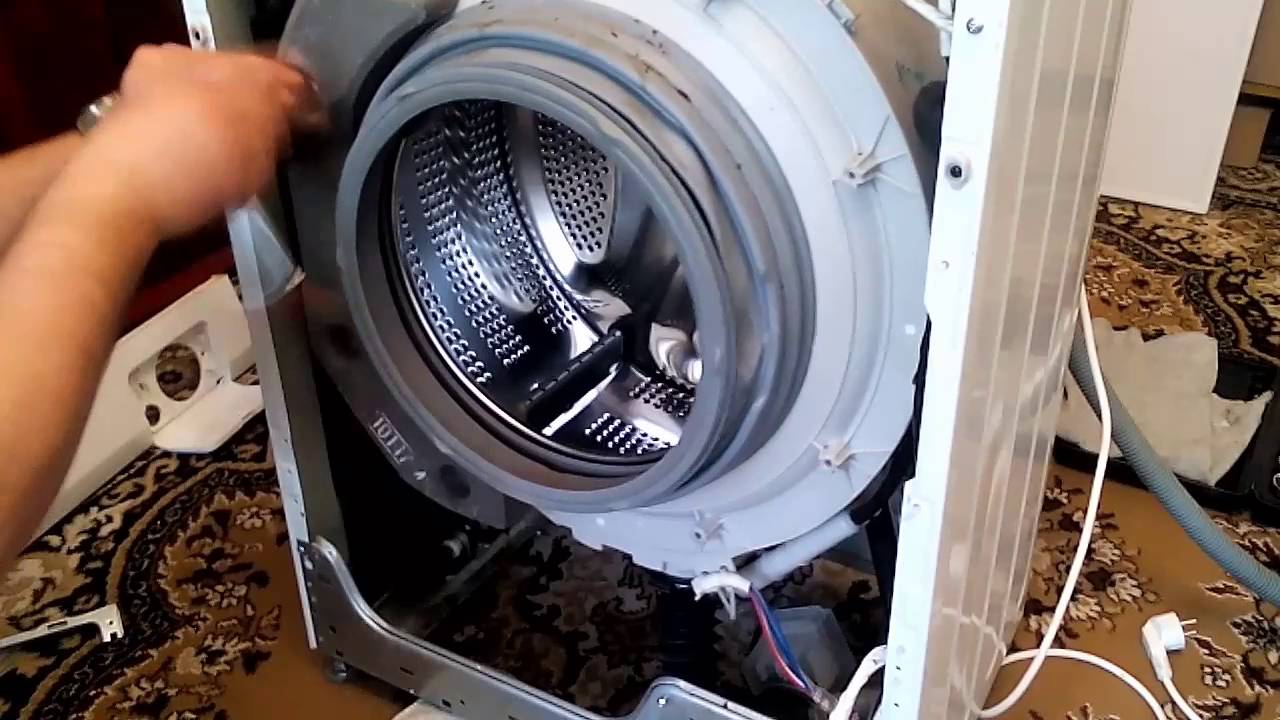
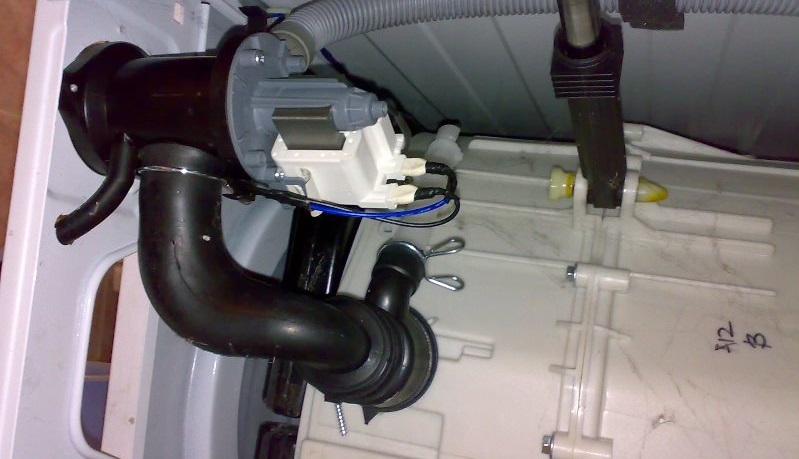
On many washing machine models, such as Bosch, it's enough to remove the front panel of the machine. On these machines, the shock absorbers are attached to the bottom of the machine with a bolt and to the top of the drum with a latch. To access the shock absorbers, you'll need to:
de-energize the washing machine;
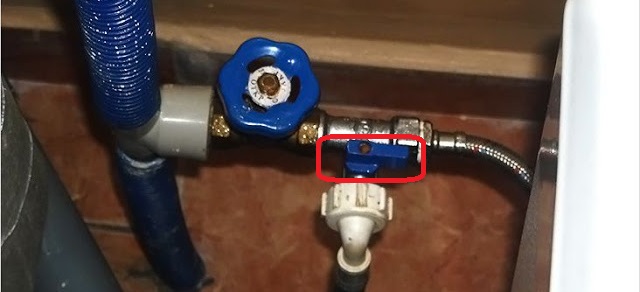
close the shut-off valve;
disconnect the machine from communications;
unscrew the bolts holding the front panel of the case;
remove the front wall so that it doesn’t get in the way;
prepare a long drill of the required diameter (usually 13 mm);
drill out the bolt that secures the shock absorber from below;
deal with the latch that holds the rack to the tank.
After this, you can remove the shock absorber from the housing. On other automatic machines, such as LG, disassembling the washing machine isn't necessary at all. The shock absorbers are accessible through the bottom. The procedure is as follows:
turn off the power to the machine, disconnect it from the water supply and sewerage system;
cover the floor with a blanket;
Place the washing machine on its left side (not on the right, otherwise you may flood the control board with water from the detergent dispenser);
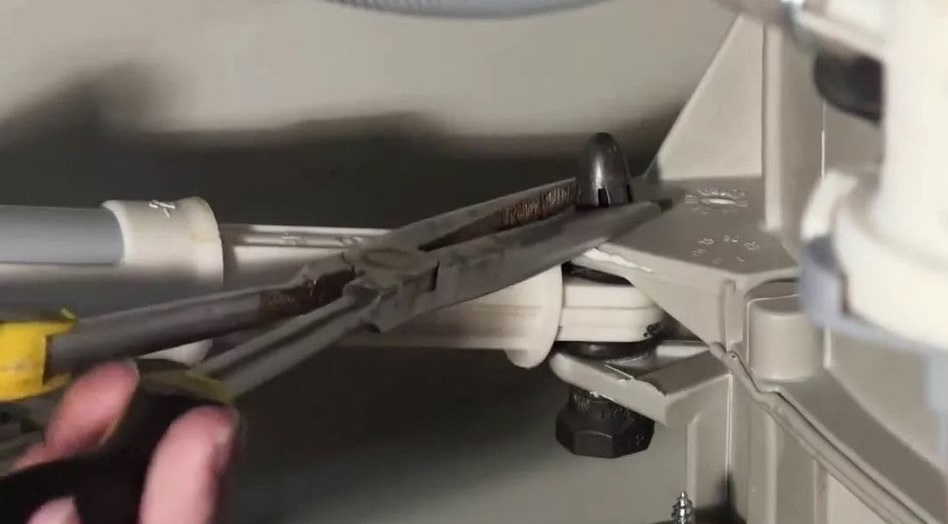
Press the plastic clips on both ends of the shock absorber.
If the damper mounts do not budge, treat them with a special liquid WD-40 and try again after 10-15 minutes.
The type of shock absorber mount also depends on the brand and model. For example, Samsung, AEG, and Miele washing machines use M8 and M10 bolts to secure the shock absorbers. To remove them, you'll need socket wrenches of the appropriate size. LG and Whirlpool machines use plastic clips that are easy to remove without the need for special tools.
When removing the shock absorbers, be careful not to damage the fasteners. Avoid applying excessive pressure to the latches or using heavy or sharp tools. Care must be taken not only to secure the fasteners, but also to ensure the integrity of the fuel tank, adjacent wires and pipes, and the integrity of the struts themselves.
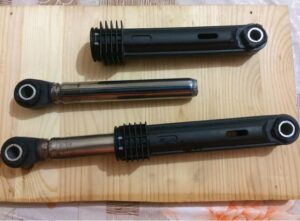
Each shock absorber should be checked for proper operation. This is done as follows:
press the rod;
try to pull the rod out of the rack;
estimate the resistance provided by the element.
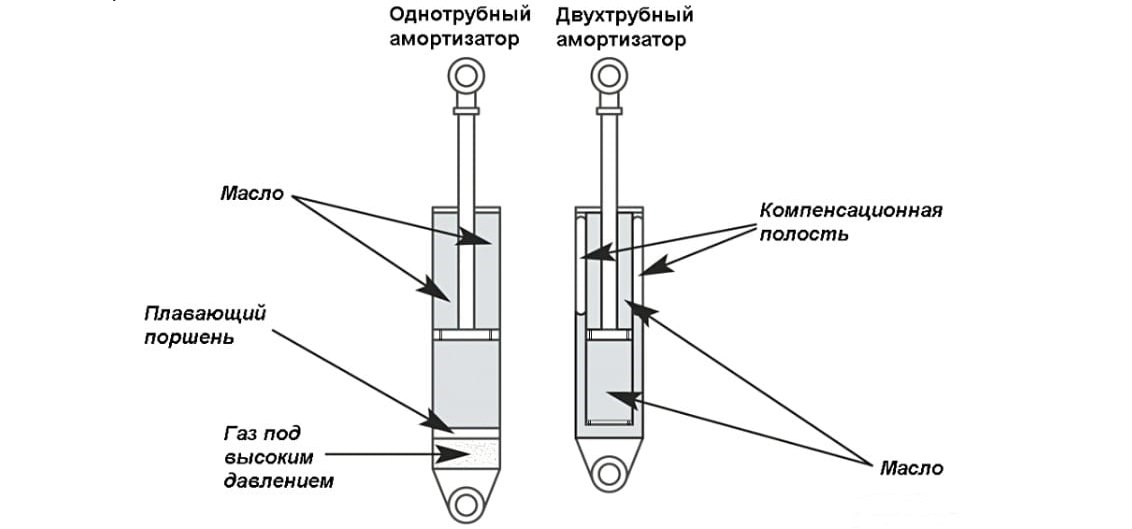
When the piston rod moves freely within the strut, the shock absorbers need to be replaced. These dampers are no longer able to fully dampen the car's vibrations. For individual components, you should also check whether there's lubricant in the piston. A lack of lubricant indicates wear. Another unpleasant sign is rust on the housing.
Is it possible to repair a shock absorber?
Having discovered that your shock absorbers are faulty, the question arises: what to do next? Should you buy new ones or try to repair the old ones? Dampers can be repaired if the following problems occur:
the liner or sealing gasket is worn out;
The shock absorber mounting bolts are worn out.
However, not all parts can be repaired. If the strut is defective or mechanically damaged, the dampers will need to be replaced. Experts do not recommend using an automatic washing machine until the problems with the shock absorbers have been resolved.
So, after removing the shock absorbers from the housing, first check the piston stroke. If it compresses and expands freely, replacement is essential. Such a damper cannot be repaired.
A shock absorber whose piston rod moves with force is fully functional. The component needs further inspection:
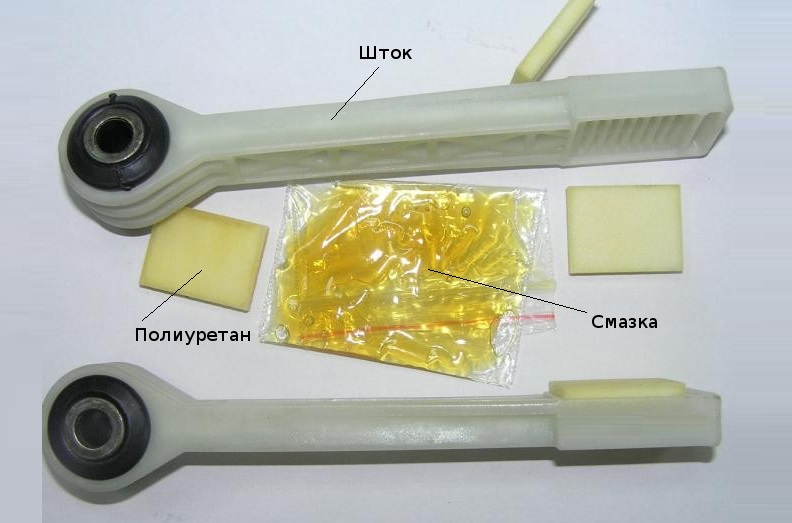
remove the damper insert;
If the piston rod moves easily without the insert, replace the gasket.
Buying such a small part would be problematic; it's much easier to make a new gasket yourself. Take a belt about 3 mm thick. Cut a piece from it that matches the shape and size of the removed seal.
The homemade gasket is installed in the shock absorber. It needs to be lubricated first. Then the piston rod and insert can be reinstalled.
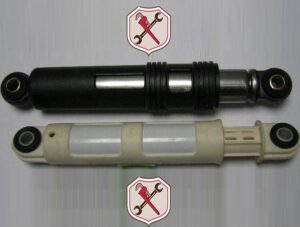
If the shock absorber shows visible mechanical defects (caused by normal wear and tear, manufacturing defects, etc.), there's only one solution: purchase and install new dampers. When selecting components, refer to the markings on the old parts. Purchasing shock absorbers at random is unacceptable.
Therefore, when you go to the store, take the removed shock absorbers with you. This will ensure you buy the perfect shock absorbers for your washing machine. Installing the shock absorbers is similar, but in reverse order.

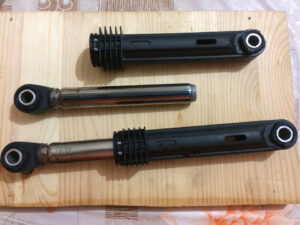 It's easy to notice that your automatic washing machine has a problem with its shock absorbers. When running at high speeds, the washing machine will rattle, shake, and "jump" around the room. Therefore, if after each wash you find your "house helper" some distance from its installation location, it's best to get it diagnosed immediately.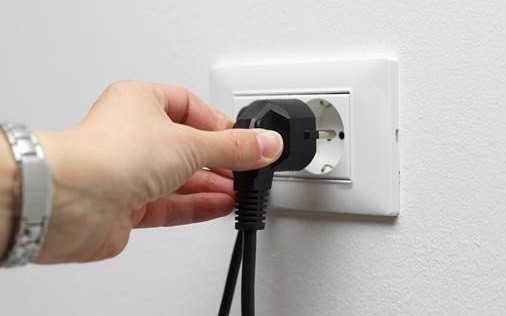














Add a comment