
Checking the dishwasher temperature sensor
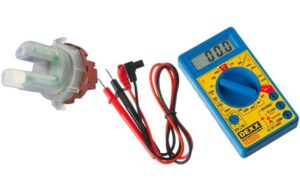 Modern dishwashers are so advanced that they're safe for washing even the most fragile items, such as glass, porcelain, or ceramic dishes. However, even such sophisticated appliances aren't immune to breakdowns, such as problems with heating the water. If this happens, it's important to check the dishwasher's temperature sensor immediately, which is what we'll discuss today.
What types of temperature sensors are there?
Temperature sensors are needed to constantly maintain the desired water or air temperature. These days, they're installed in many household appliances, including dishwashers, where they monitor the temperature of the water used for washing dishes. There are three types of thermostats: gas-filled, bimetallic, and thermistors (thermistors).
- Gas-filled sensors consist of a sensitive sensor, a cylinder with a tube filled with freon, and a control device. As the water temperature rises, the thermostat expands, thereby pressing on the plate, which opens the contacts and turns off the water heater.
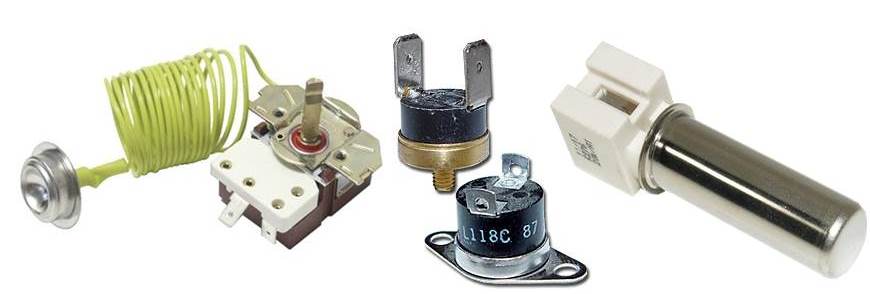
- The principle of bimetallic devices is similar: they close and open contacts during the heating and cooling of a plate made from two metals with different thermal expansion coefficients.
- Today, devices typically use thermistors, which change their resistivity as the water or air temperature rises, transmitting a corresponding signal to the control board. The module then shuts off the water heating element.
The thermistor is considered safer than its two counterparts because it does not have a mechanical circuit, meaning it is less likely to fail.
How do you know if the temperature sensor is broken?
The temperature sensor is usually located in the appliance's drip tray. It's easy to find, but many people don't know what signs indicate a faulty part or how to check it. Most often, a thermistor indicates a breakdown when there is either no heating at all or it is excessive. If the water in the dishwasher sometimes heats up to boiling point, even though that's not the operating mode selected, then there's definitely a problem with the sensor.
If there is a problem with strong heating, then during operation the body of the device will also become very hot and will spray hot steam when the door is opened.
In this case, the thermistor needs urgent inspection, as it has somehow stopped sending signals to the electronic board, which is preventing the water heater from shutting off in a timely manner. Fortunately, most dishwashers can perform automatic diagnostics, which will display an error code on the display. For example, Miele appliances display errors "F01" and "F02" for problems with the temperature sensor.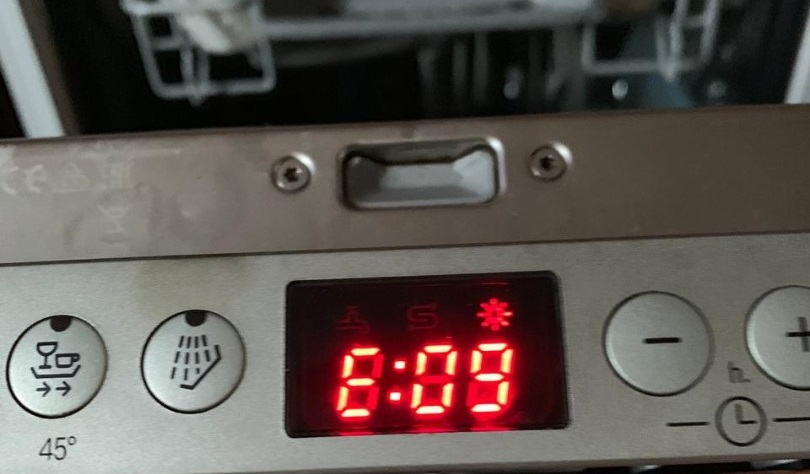
Testing the temperature sensor
First, test the component's functionality before purchasing a new one. Prepare tools for disassembling the appliance, as well as the furniture if your model is built-in rather than freestanding. You'll also need a multimeter with a thermometer and a basin of water for testing.
We need to test the thermistor for resistance changes as the temperature rises and falls. Connect the meter's probes to the component being tested and measure the resistance under different conditions. If everything is OK, the values should be as follows:
- approximately 6000 Ohm at +20 degrees Celsius;
- about 1350 Ohm at +50 degrees;
- finally, 1200 Ohm at +60 degrees.
Please note that different temperature sensors have different tolerance fields, so measurement deviations of 5-10% are normal.
For an accurate test, it's important to take two resistance measurements: one at room temperature, i.e., 20-25 degrees Celsius, and one with the water heated to 50-60 degrees Celsius. For the second test, place the temperature sensor in a basin of hot water and wait about five minutes for the thermistor to reach the temperature of the water in the basin.
If the test shows that the resistance decreases as the temperature increases, then the device is normal. However, if there is no resistance on the sensor at all, then it has burned out. These components are reliable and rarely require replacement, so a failure like this could be due to a manufacturing defect, mechanical damage, or natural wear and tear during long-term use. In this case, there's nothing to be done—the thermistor will have to be replaced.
How to replace a broken part?
If the thermistor needs urgent replacement due to a fault, the dishwasher will notify you by displaying the error code "F01." This signal not only that the temperature sensor is damaged but also that heating is no longer available. Therefore, when the water does not heat up due to the absence of a signal in the thermistor circuit, the dishwasher will simply skip the heating and rinsing stages, blocking the heating and rinsing functions, and immediately activate the user alert system - the code "F01" on the display and an audible signal.
Replacing a faulty part is easy, so dishwasher owners can do the job themselves. Our instructions will help you do just that.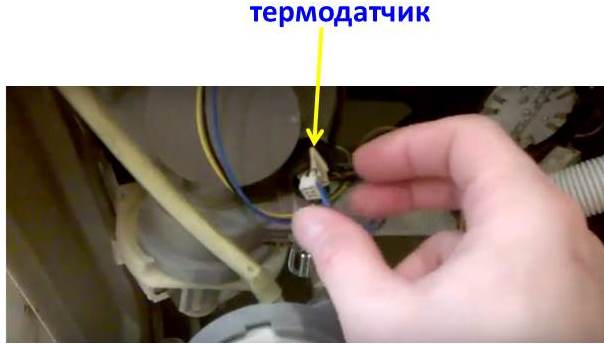
- We disconnect household appliances from the network and turn off the water supply.
- We drain the remaining water from the tray.
- At this stage, carefully remove the machine from the furniture if you have a built-in version.
- We unscrew the screws to remove the bottom panel.
- The sensor is most often built into the base of the heating element, so you need to use a wrench to loosen the fastening of the water heating element.
- We disconnect the wiring of the part.
It is advisable to take a photo of how the wires are connected, so that there are no problems with the reverse connection later.
- We measure the resistance of the thermistor using a multimeter.
From here on, everything is simple: if the element is broken, then we buy a similar part and connect it, following the instructions in reverse order. After replacing the appliance, be sure to check its functionality. If you find that a new sensor has been installed and the heating element is in good working order, but the water still doesn't heat up, the cause may be a damaged electronic control module. In this case, you will have to call a service center specialist, because a novice will definitely not be able to handle repairing the electronic unit.
Interesting:

Readers' comments
Headings
Washing machine repair




For buyers




For users


Dishwasher




Add a comment