
Checking the temperature sensor of a Bosch washing machine
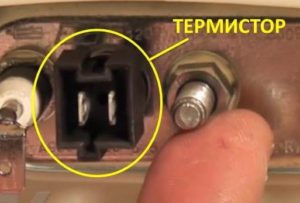 There are two situations in which you might need to check the temperature sensor in your Bosch washing machine: if the machine stops washing in hot water or, conversely, if it overheats to unexpected temperatures. The thermistor is responsible for maintaining the machine's temperature within the specified limits, activating or deactivating the heating element. If it malfunctions, it should be tested first, and if it's faulty, replaced. We'll explain how and what to do, step by step.
Finding and testing the sensor
In modern Bosch models, the temperature sensor is a metal tube 3 cm long and 1 cm in diameter. The thermistor is located on the heating element body, “held” by several wires and bolts. Heating of water to a set temperature is achieved by changing the resistance in the sensor.
To test the thermistor for proper operation, remove it from the washing machine along with the heating element. First, disconnect the machine from the power supply, then begin disassembling it. Follow these instructions:
- we detach the back panel of the washing machine from the body;
- we find the heating element’s “feature” – a round plate under the drum with the wiring connected;
- We take photos of the location of the wires to avoid mistakes during reassembly;
- disconnect the wires from the heater;
- loosen the central screw;
- By rocking the heating element housing, we remove it from the machine.
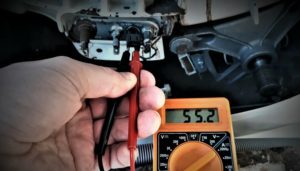 Now we loosen the fasteners holding the temperature sensor and disconnect it from the heating element. Next, we begin testing the device with a multimeter:
- set the tester to the “Resistance” mode;
- connect the probes to the contacts;
- we lower the sensor into hot water (the contacts must not get wet!);
- We evaluate the readings on the device.
The thermistor is located on the heating element and controls the heating of the water.
We compare the resulting reading with the normal value. For example, when immersed in water at 100 degrees Celsius, the thermostat will read approximately 6000 ohms. As the liquid cools, the reading will drop, and as it heats up, it will rise. If the reading is far from ideal or doesn't change, the thermostat is faulty. The device cannot be repaired; it must be replaced.
A new temperature sensor can be purchased at a specialized store or ordered online directly from the manufacturer. To avoid mistakes, show the seller the old device. Then, install the thermostat in the washing machine and reinstall everything, following the reverse procedure.
How does the breakdown manifest itself?
A high-quality, thorough wash is only possible with a functioning thermistor. It ensures the machine heats the water precisely to the set temperature, without risking damage to the laundry or itself. If there is a malfunction in the sensor, the machine will start acting up. In the best case, it will stop heating water at high temperatures; in the worst case, it will lead to the heating element burning out.
There are several signs that may indicate a faulty temperature sensor:
- when starting the 60-90 degree mode, the sunroof glass remains cold after 15-20 minutes of the cycle;
- with any program, even fast and delicate, the machine heats the water to boiling water;
- When washing, the machine gets very hot and hot steam comes out of the door.
Ignoring this kind of circuit breaker behavior is dangerous. A faulty thermistor can cause the heating element to overheat, even burning out. The cost of a new heater is several times higher than the sensor, so it's best to replace it immediately and address heating issues immediately.
Interesting:



Readers' comments
Headings
Washing machine repair




For buyers




For users


Dishwasher




Add a comment